The day your supplier sells direct to the customer

The day the vendor you have bought from for so many years starts selling direct to the public, what will you do? Don't think it will happen? Remember all those wholesale nurseries that promised to only sell to Independent Garden Centers. They are now selling to the box stores, and not looking back.

The problem for the box stores? As these vendors get squeezed on costs, shipping, and everything else by the chains they will become less profitable. The market for their garden products continues to shrink. The need for much of the stuff sold is diminishing as the public continues to turn away from much of ornamental gardening. Please don't mis-undestand. There will always be people looking for these products, but not in the quantities needed to maintain the status quo as it stands today.

Business these days need to cut out as many middle-men as possible to maintain and grow profits. Who is a middle man? Lot's of box stores, garden centers, re-wholesale operations, sales people, and more. If you don't manufacturer or grow the stuff yourself, your a middleman.  How can you stay viable in this environment? I hope to discuss some of the options here, but the first step is accept that businesses will very quickly realize that many wholesale operations will find dealing direct with the customer may be on way to stay viable.

The British are worried about horticulture

It appears the British are concerned because, "research has suggested that many teenagers believe careers in the sector (horticulture) are for those who have failed academically." According to The BBC, "72% of horticulture firms cannot find skilled workers, with teens viewing the job as 'unskilled'".

A hopeful sign was the last paragraph from the article. According to a spokesman for the Department for Environment, Food and Rural Affairs, "through our 'Future of Farming Initiative' we are working with the industry to help more talented, entrepreneurial young people build careers across the agriculture sector, including horticulture."

Just wording it , "The Future of Farming" is a good start.  We need to show that horticulture also includes the future of what we eat. Then the young people will show more interest. They are not necessarily interested in ornamental horticulture as much their parents we're. If the younger generation can understand that by becoming involved in horticulture they can change the world, then they might show interest. If they think horticulture is only about the perennial beds,  foundation shrubs, or lawn care, we won’t get the interest.

Get them hooked on the food side of horticulture, then the ornamental side may show more promise to them.  And forget about initiatives that are government supported. That will just bog the whole thing down. The trade needs to see what’s happening, and make the changes necessary themselves. Then you'll attract the type of new horticulturists we so desperately need going into the future.

Avoiding the real work

Here is a great 20 minute video from Seth Godins recent talk at Creative Mornings/New York. The key takeaways for me. Most people who are over using the social media platforms like Twitter or Facebook are doing so in an attempt to avoid doing the “real work” necessary for change. These platforms for some have turned into the 21’st century’s version of “watching the tube”. I enjoy using these tools, but do realize that they have a way of taking up your time if you’re not careful.

The other take away for me is, "we each own a media company." Our ability to broadcast ideas has never been easier, or so within reach for each of us. What are we doing with that ability? Broadcasting more noise, or changing the world?

There is also a twenty minute clip of Seth answering questions at the same talk. Here is that video. Useless factoid, Seth and I we’re born on the same day, same year. Enjoy the talk, and your weekend.

Don't follow the herd

Trouble Maker Rapids, South Fork American River 1985 I think it’s wise for many gardening businesses to have a presence on the various social media sites like Facebook, Twitter, and Google+.  Many of your customers are there, and perhaps you should be too. However, I do think it’s wise to try and get people to use your website, or subscribe to your e-news as an overall theme. My concerns are, as popular as some of these social media sites think they are, they may be doomed in the long run. Then what?

Social media has started to take an odd turn, but one that wasn't unexpected. As we talked about in the last post, “The Customer as Garden Celebrity”, social media sites are becoming filled with advertisements disguised as “social media”. It’s starting to become all so predictable that it’s boring. Frankly, when everything you Tweet, or put on Facebook is some form of advertisement, it’s time to move on.

I’ll be a bit bold and say that blogs and personal websites owned by the writer will never go away, and will slowly grow in importance once again. One of the reasons my family bought into TIVO when it first came out, back in 1999, was the ability to tune out the commercials. Facebook and Twitter are starting to resemble old school media with its constant commercials.

What's happened are many fell for the “instant celebrity” aspect of social media. The more followers you amassed, and the more you tweeted about any old thing the higher your Klout score, or ego would climb. Some people are using social media as a type of “popular currency” that may lead to you being offered goods or money, in exchange for talking about whatever they want you to talk about. I fell for some of this, until the people paying my way showed their true colors.

It’s not worth the loss of freedom to speak one’s mind. This is what concerns me with the present trajectory of social media. There seems to be too much following the herd, and less real discussion going on these days. The really great conversations are getting drowned out by the #hashtagging and commercializing. For me it’s time to focus more on my blog, and do a bit less scrolling through the feed looking for something that likely isn't there anyway.

The customer as "garden celebrity"

I receive Green Profit Magazine, published by Ball Publishing. It's a trade journal for people involved in the garden businesses. The last issue contained a article titled, "Get to Know the Garden Celebrities" in which we are introduced to 6 "personalities". According to Green Profit, "Knowing these garden gurus appearing on television, online, and in books and magazines can help you serve your customers and better meet their needs. Green Profit asked a few for their take on gardening and how the garden centers and gardening personalities can work together."

P. Allen Smith, "garden and lifestyle expert..."sums up the point of the article when asked what retailers can do to harness these personalities powerful brand. " The first step to bridge the gap is for retailers to carry the products and plants that personalities are using and endorsing. Manufacturers and breeders have national marketing programs that retailers can tap into. This gives the retailer the benefit of having a better idea of what is going to be promoted. For instance, my Platinum Collection of plants with Proven Winners is being promoted 24/7 through all of our media platforms."

Interestingly enough an article was written for the same publication in February of this year. Written by Merrideth  Jiles, general manager of The Great Outdoors in Austin Texas it's titled, "The New Trendsetters". In that post Merrideth say's, "Step back five or more years. Close to 100% of the trends in gardening were being set by our industry. National trends were presented on television by the Marthas, Jamies and P. Allens, or maybe an inspired set designed for a TV or movie studio. You could also see them in the latest issue of 'Better Southern Home & Fine Garden Living.'”

He continues, "Today, with tablet ownership estimated at 25% and sometimes even higher (I’m sure it’s higher for our target demographic!), garden trends are coming from all over the place. Pinterest, Facebook, Instagram, Tumblr, the list grows every day. And don’t forget all the Garden Bloggers. The biggest difference? It’s not Martha or Jamie or P. Allen out there trending. It’s artists, homemakers and many of the afore-mentioned screwballs that are sharing their ideas and creations for the home and garden with an online community."

So I ask the folks at Green Profit,  which advice do we follow? Follow and do as the "personalities" tell us, or follow and do as our "customers" tell us?

Our future customers are in debt, and out of work

The greatest challenge garden centers face is the declining size of the next generation, as well as the enormous debt the next generation is responsible for. The New York Times had this article concerning the student debt the next generation is amassing. Imagine coming out of college owing 150,000 USD and trying to find work in one of the worst job markets in decades. These are the people who are going to buy houses and shop at the local garden center?

Not only is the next generation in debt, and facing an awful job market, but there are just fewer of this generation to replace the boomer generation who is retiring. If the garden center trade is waiting for economic recovery to take place and get back to the way things we’re, it’s going to be waiting a long time. There are just too many garden centers, home stores, box stores, and wholesale suppliers selling plants for the market. Further shrinkage of the trade is inevitable.

I know most in our trade are tired of hearing about how the next generation doesn't want to garden like their parents did. I imagine it’s because we just don’t know what to do. I was talking to a friend who is a wine maker, and that industry is looking at the same thing. They are not buying or drinking wine like their parents did. There is way too much acreage in this State of California growing grapes for the need. How many of these young people can afford $20 USD on wine? How many just don’t drink wine? That trade is shrinking just like the garden center trade.

The younger generation is interested in growing food to eat, and some of the same gardening their parents did. There just isn't enough of them with homes and steady jobs to support the trade. I expect to see the results of this trend first in Europe where the youth unemployment is skyrocketing. It’s already begun and those of us who wish to stay in this trade will have to figure out how to service a shrinking demographic who's interests are different than the generations who helped build the trade.

The only certainty is a smaller and poorer demographic will be our next generation of customers. What can be done to survive and prosper in this environment? I think the future is very bright for those who can figure out which path to take. There will just be a lot fewer of us on that path.

Garden shops, do you sell this cool tool?

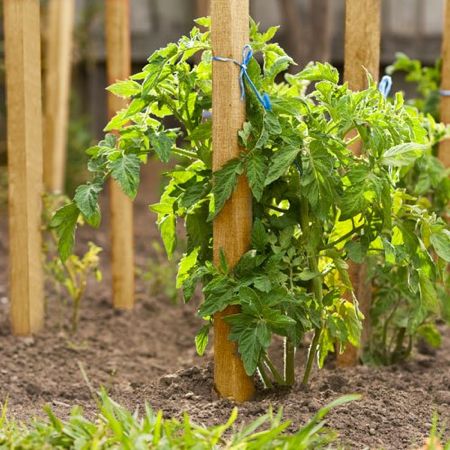
The amazing cedar stake. Sometimes the stuff we already sell is cool and unusual to those who don't know we sell them. Take these 4'tall cedar stakes which we're featured in a blog I follow called, "Cool Tools". Here is what the author say's about these "cool tools"." I used to buy tomato cages — open-ended, circular wire cages—to secure the plants — but they were never strong enough once the tomato plants got taller than 4 feet. The cages would slowly collapse, taking the plants with them, which was worse than if I hadn't used anything. Last summer I happened upon a simple, yet effective device to keep the tomato jungle under control: the cedar stake."

Did you hear that? The amazing cool tool known a 4' cedar stake. "Cedar stakes come in various lengths and can be found at any home-improvement or garden store. They are inexpensive, especially compared to tomato cages. I bought 6-foot stakes, one for each plant, and some stretchy vinyl tie that expands with the growth of plants." Wow!

The author mentions that you can buy them at home improvement stores and "garden stores" (notice we are not called "garden centers" any more). At the end of the post Amazon is mentioned as a place to by these amazing stakes at "12 4-foot stakes, $25" 

I found the post interesting since we in the garden center, I mean "garden shop" business, would likely never have looked at the lowly plant stake the way our potential customers might. We see them as a obvious choice when staking tomatoes while our potential customers see them as an amazing new way to hold up their vegetable plants.

We need to look at our businesses in a whole new light. Not the light of years of horticultural experience, but the eyes of potential new customers where everything about gardening is magical and full of fantastic devices to make gardening more successful   Sometimes those fantastic new new devices and ways of doing things are just something we forgot about in our efforts to keep abreast of "whats new".


SummerWinds Nursery and Target

0451.JPG Looks like Bay Area nursery chain "SummerWinds" is looking to occupy the now shuttered Target Garden Center locations. According to todaysgardencenter.com, "The first store, which opened in Albany, Calif., in early March, is on schedule to succeed." Sure beats being on schedule to fail.

SummerWinds is leasing the locations with the entrance into Target being closed. Target is the landlord leasing out the space to SummerWinds. "Target will still have a seasonal department that will carry gardening goods during certain times of the year. The primary overlap would be fertilizers and controls. SummerWinds is emphasizing its organic lines to avoid any overlap."

Here is where I think a mistake is being made on SummerWinds part. According to Leo Goria, who is heading up the Target project, "SummerWinds is using a different pricing strategy with this store than it does with its current stores, to the point that if the Target store turns into multiple stores, it will create a new division for SummerWinds. 'The profit margin for this store is just over 40 percent,' Goria says. 'The initial margin at a traditional location is more than 50 percent.' How does that play out in prices? A common perennial in a quart pot is normally $4.99 at a traditional location; at the Target store, it is $3.99.'"

Why the different pricing strategy? Are Target shoppers unable to afford the $1.00 more for a quality plant? Once you start to segregate your shoppers based on perceived ability to pay you have started down the rabbit hole of diminishing profits. It's almost like they are saying, "Target shoppers can't or won't afford plants unless they pay a 40% markup instead of a 50% markup?"

I like the idea of leasing the space out, but why price your stuff differently than your garden center stores? What happens when people walk in and ask that the same plant they saw at your SummerWinds Garden Shop be marked down like the same plant they saw at Target?

If people don't buy stuff, how are we going to stay in business?

Fella alley San Fancisco I found this Fast Company article titled, "Why Millennials Don't Want to Buy Stuff" interesting (it's not just Millennials doing this either). From the first paragraph we read, "Millennials seem to have some very different habits that have taken both established companies and small businesses by surprise. One of these is that Generation Y doesn't seem to enjoy purchasing things."

As the owner of a small garden shop business this kind of news can be quite disturbing, or liberating. We also read that, "The biggest insight we can glean from the death of ownership is about connection. This is the thing which is now scarce, because when we can easily acquire anything, the question becomes, 'What do we do with this?' The value now lies in the doing."

Last week I had a discussion with some folks on Facebook after I posted this,"Seems customers with the most gardening experience use the least amount of fertilizer, They've figured out the 'nature' of their garden". Someone said, "nice, but not good for business is it?" I believe my answer may be a way forward for those who see this new "non-ownership" mentality showing up around them.

Here is my answer, "what's happened is those successful gardeners we're in many cases taught their methods here. We showed them a way to grow better without the use of synthetic fertilizers. Now that they are successful the're more into gardening than ever, and as such are expanding their gardens or trying new varieties. So by saving them the time and money on unsustainable gardening (and unhappy gardeners), we have enthusiastic customers who come in time and time again."

How will your business or venture survive and thrive in this new "non-ownership" world. It's not just the Millennial generation that is doing this. I see it with many people who are tired of the responsibility and costs associated with the owning of objects. It's a trend I don't see abating any time soon. It's actually a huge plus for small garden businesses who see the positives of this. It's about the process of helping someone become a better gardener (the experience), not selling a bag of fertilizer (stuff) when they really don't need it.

Day Trip to Half Moon Bay

Took a rare spring break and headed to our old stomping grounds of  Half Moon Bay. It was one of those rare days when the sun was shinning, and the temperatures we're in the low 70's F. Purple place, Half Moon Bay

The flower show was amazing. Spring has arrived here in glorious color.

Tom & Pete's Produce, Half Moon Bay

The only nursery we got close to was closed on Monday. Good for them.

2013-04-22 12.55.53

So much color that even the parking lot's with their blowing bits of garbage seemed OK.

Phlox and Arctotis in parking lot, Half Moon Bay

If it hasn't already arrived where you live, spring should be on its way to you soon.

Master Gardener?

Susan at Garden Rant has a post today titled, "When Master Gardeners Break The Rules and Say They Are Master Gardeners."  Susan say's, " I received an email complaining about two Illinois Master Gardeners identifying themselves as such on the Directory of Garden Coaches. " According to Monica from the Illinois Master Gardener program, "all states have similar policies and Master Gardeners are not allowed to use their title in any form of commercial advertisement." If your sign up for the Master Gardener program you also sign up to abide by the rules. Seems pretty clear.  More to my interest is why people who sign up and complete these courses can call themselves "Master Gardeners"? Imagine taking a class on cooking for a  50 hour cumulative period of time, taking a test, and then calling yourself a "Master Chef?" I have been in the nursery trade for over 30 years and I don't even consider myself a "Master Horticulturist."

This is not to diminish what Master Gardeners do, or the fact that some in the program might very well be "Master Gardeners." Perhaps it's time to think about changing the name of the program to something that more accurately describes what they do? With so many people newly interested in gardening it might be less intimidating to them if the didn't have to consult with "Masters" when asking questions. In their minds it might be like having to call Emeril Lagasse, who is most certainly a Master Chef,  to ask what it means to add a "dash" of seasoning to a dish. They likely would be too intimidated, and not call. If we in the gardening professions are having discussions about this you can only imagine what the newly excited gardener might thinking.

It's time for the Master Gardener program to ask itself if it might be more beneficial to change the name to something more descriptive of what they actually do. It's a great program, and the people who complete it are to be congratulated. Let's come up with a title less intimidating to the public who are the beneficiaries of the knowledge gained by the "extension volunteers" hard work.

Horticulture is a trade for the future

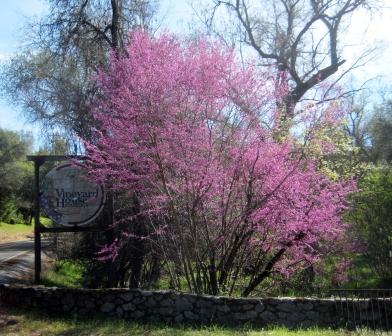
8595593248_12635d52fa_o Spring has arrived here in the mountains of Northern California. The Redbuds have just finished blooming and the native Ceanothus are in full bloom. Customers have returned, and many are anxious to get the garden going. Thank goodness for our trade and our communities that people have taken such an interest in food production. It's a lifeline for some business that had depended on "ornamental" (plants that cannot be consumed) sales in the past.

In my opinion the trend towards bringing food production closer to the end user will intensify. The time will come when even city dwellers will have the option to rent an apartment in a building that, as part of the rental agreement  includes a supply of food grown in the building. We could see the roof utilized when the weather is appropriate,  and when it's not a floor dedicated to the production of food under lights. Who will operate and grow this food? The next generation of horticulturist.

It's a fantastic time to be involved in horticulture. That may sound odd given the number of closing garden centers and suppliers. Make no doubt that the trade is in the throes of huge change. We know that change often occurs during times of social and economic upheaval when the only choice is to "change or die".

It's a trade that's made for the future, once we "in the trade" see that things have changed and doing business the way we learned may not work in this new environment. We must be open to new ideas, as well as new definitions of what it means to be a "gardener". I think the plant businesses that will flourish will be those who recognize this, and not be held back by what we "think" a garden center should be. The key is to look at the change going on around us, and use it as an  opportunity for making things better.

The future of community supported agriculture

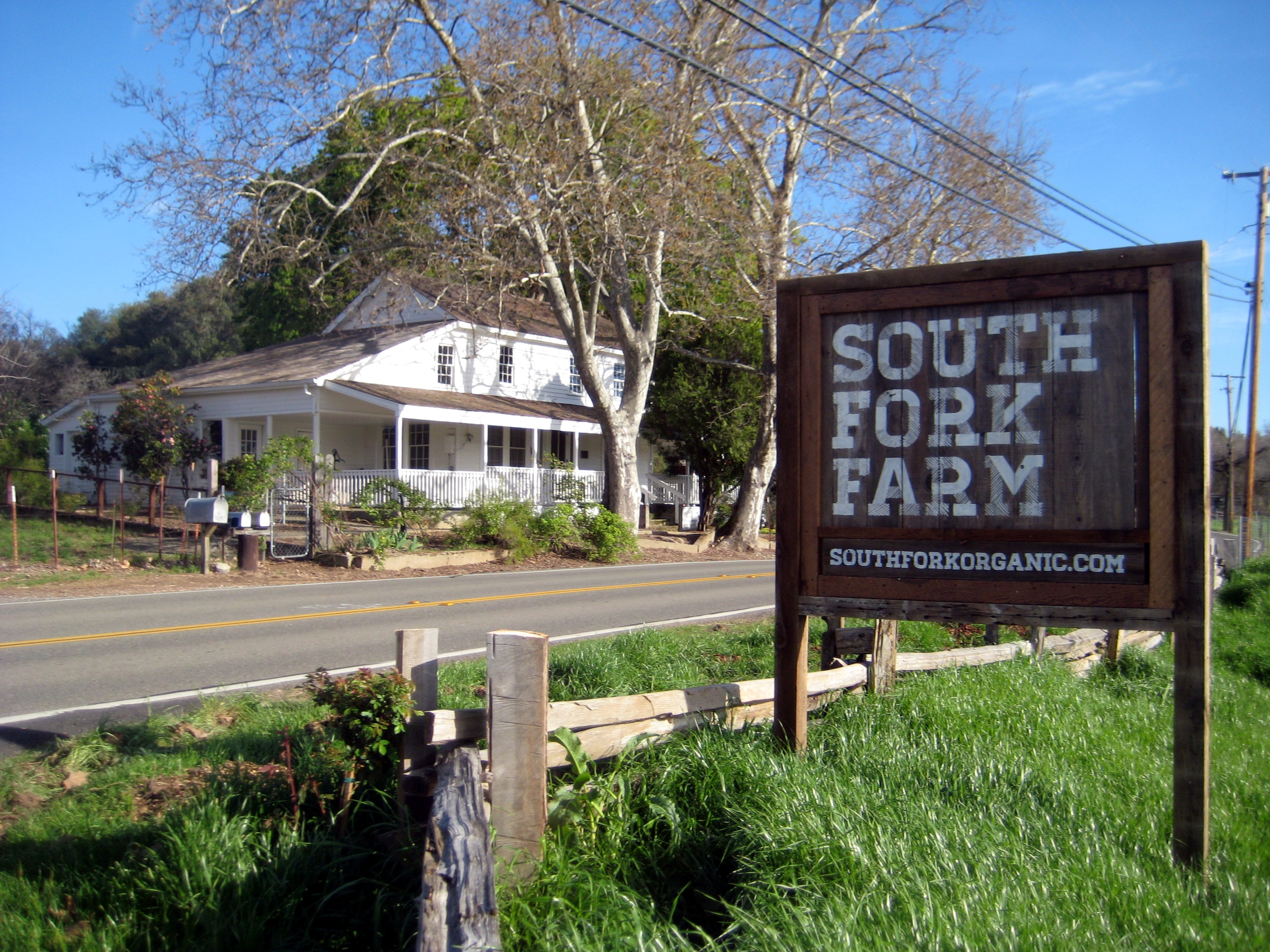
South Fork Farm There is a lot of talk about changing the way food gets to market. It's nice to see people who are willing to put the time, and effort to see if they can make it work. Farming, whether it's "old school" dirt farming or soil less hydroponic farming is hard work. Will the younger generation be willing to put in the immense effort needed to bring our food to table?

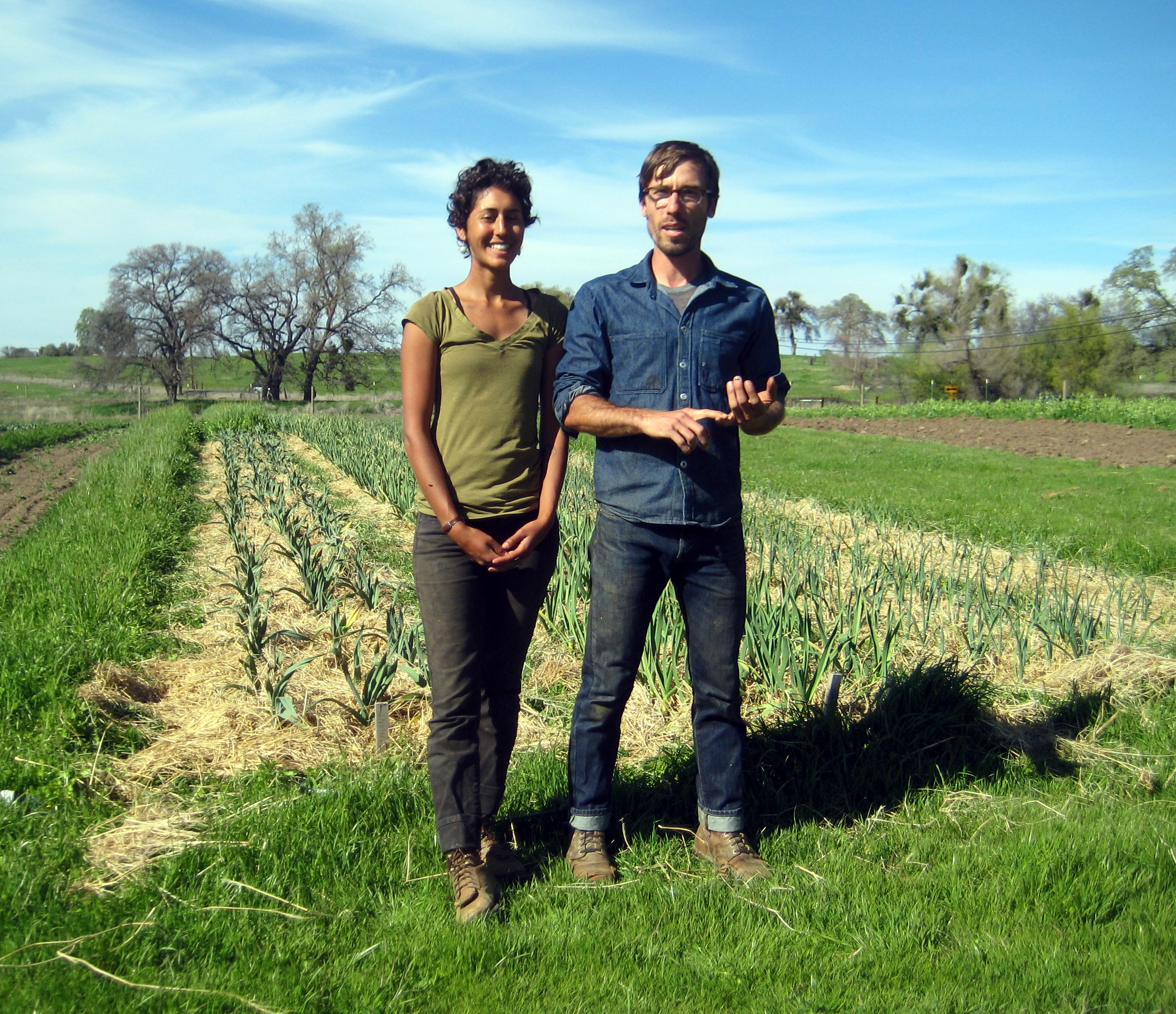
Jackie and Ryan of South Fork Farm

South Fork Farm at Gold Hill is owned and operated by Jaclyn Moyer and Ryan Dorsey. The couple lease 12 acres from The American River Conservancy, which recently purchased the historic 272 Veerkamp property at Gold Hill. The property is the site of the first Japanese colony in North America, The Wakamatsu Tea and Silk Colony.  As we drive by the farm twice a day on the way to and from work my curiosity brought me to the farm. I was met by Jaclyn and Ryan who took the time out of their busy day to show me around.

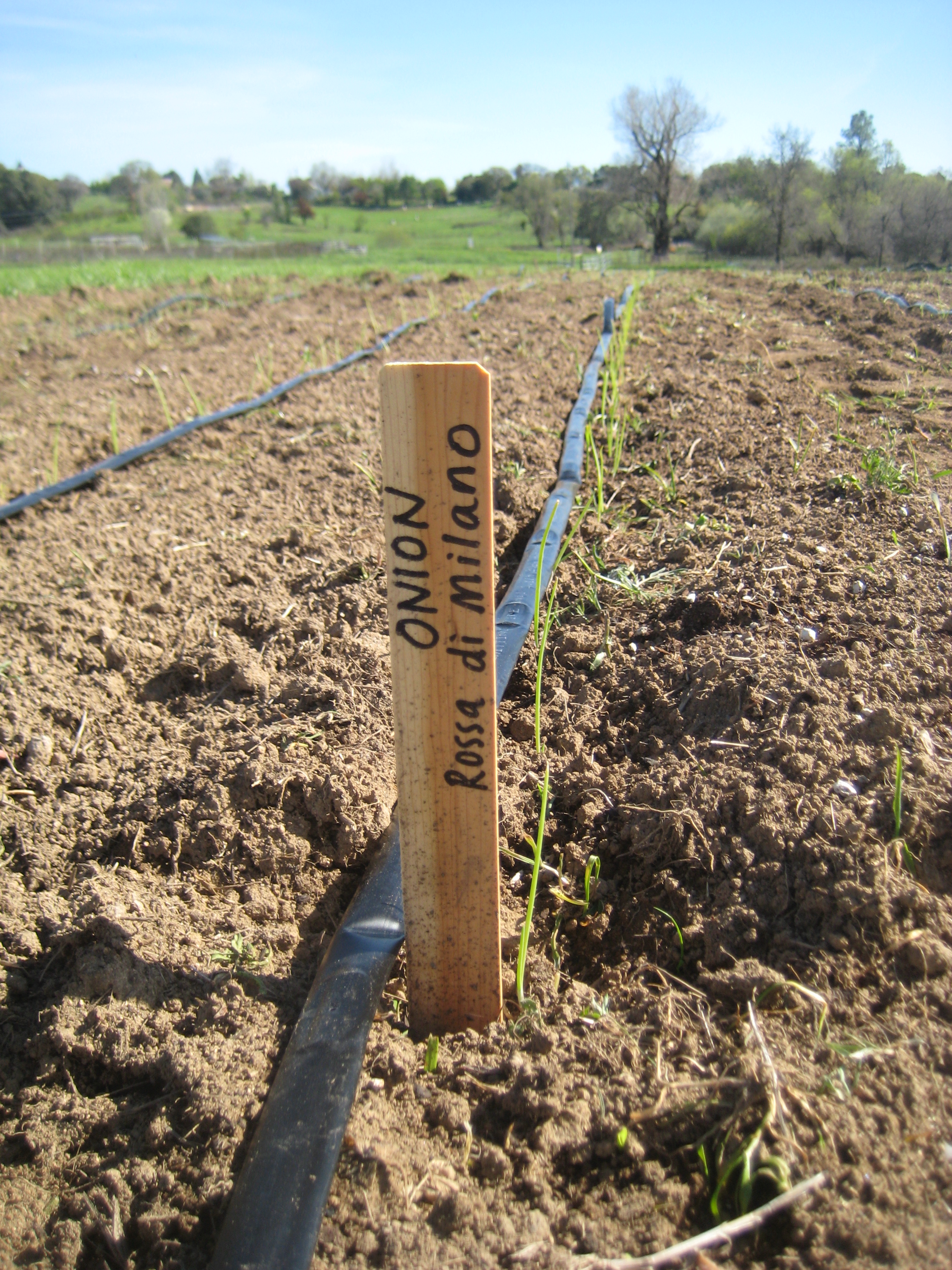
Heirloom onions planted

The farm is certified organic and a Community Supported Agriculture enterprise.We walked through the fields where their first crops we're growing and being harvested. Since this is early spring there was lot's of lettuce varieties as well as other leafy greens. Onions we're planted as well as garlic. Inside a hoop house built over the soil we're young seedlings of heirloom tomatoes, many of which will be planted in the hoop house so as to provide an earlier crop.

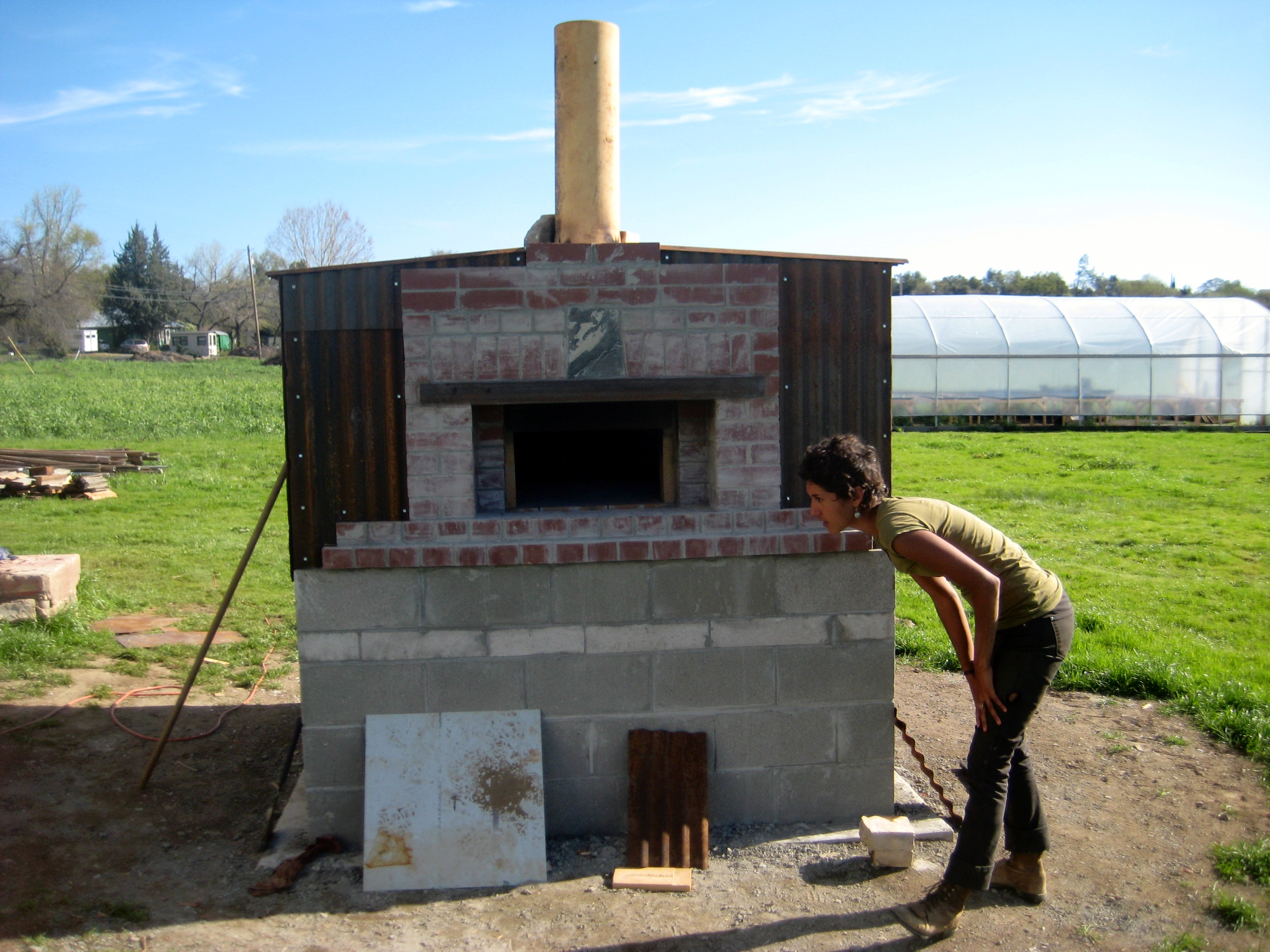
New wood fired oven

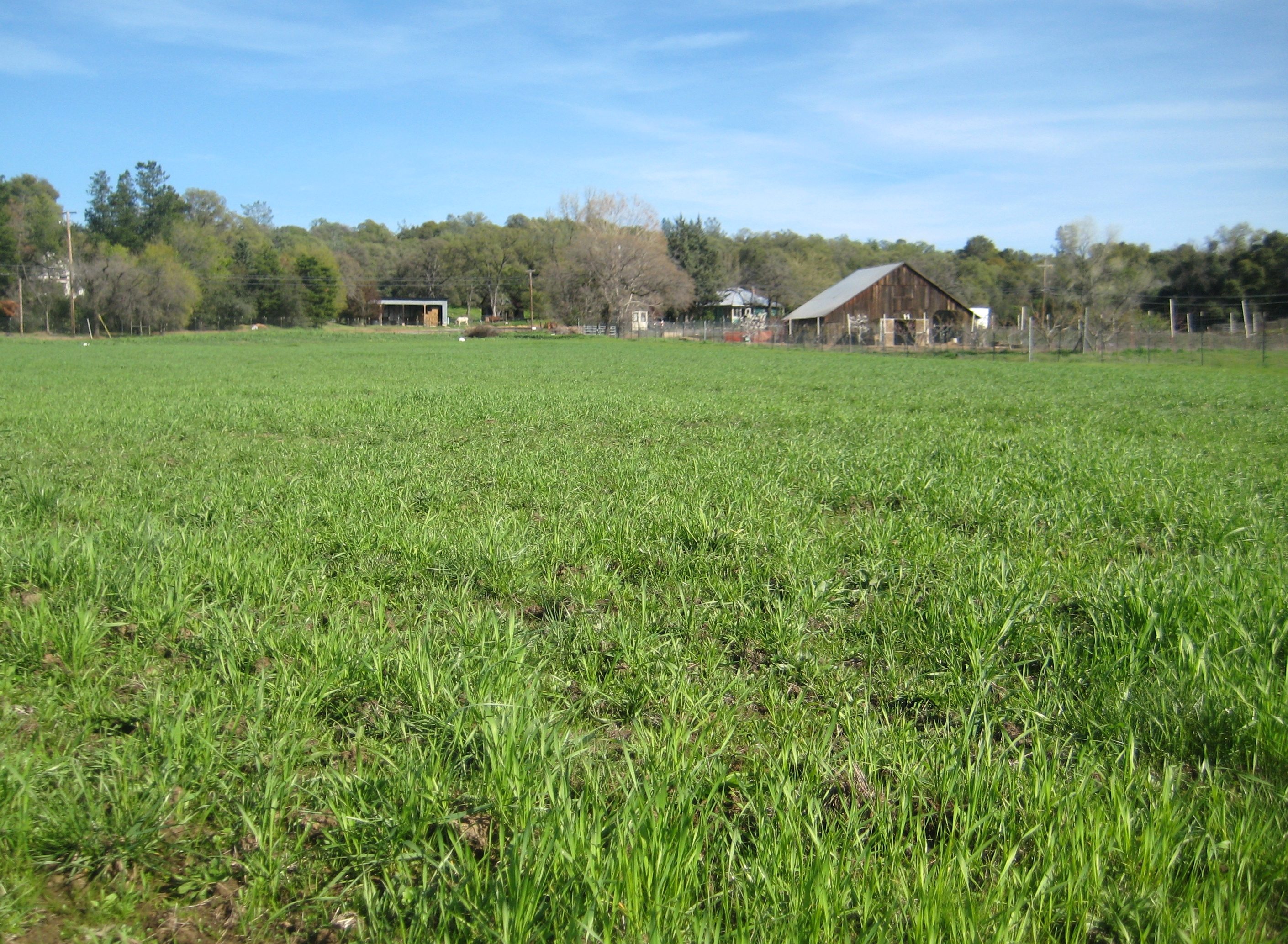
A wood fired oven has been built to bake bread that will be made out of heirloom wheat being grown on the farm.  This is interesting  in light of renewed interest in heirloom wheat. Some people feel it may be an answer for our current problems with obesity and diabetes, which we talked about last year. They have planted the majority this year in Sonora Wheat. According to slowfoodusa.org Sonoma Wheat"comprised the majority of production by 1880 in California’s Central Valley, where 2,550,000 acres of wheat were grown, the largest wheat enterprise in history at that time...Since the 1950's "it has not been used in commercial production anywhere on the continent."

Sonora Wheat growing at South Fork Farm

The last couple of days we have driven past the farm where we could see smoke rising from the oven as it's being "cured" in preparation for it's first loaves, this fall.  It will be fun to try the bread baked from this grain, and grown just down the road from us. I would like to see this type of enterprise replicated in other communities, both urban and rural. While there is like no doubt the commercial mega farms are not going away, the rise of these smaller farms producing organic food closer to the market should be a growing trend. Even more exciting is to find younger people like Jaclyn and Ryan who are willing to make the commitment to try this new enterprise. It's from these efforts that we will carve out a new way forward in growing our safe food supply.

Lose what doesn't work

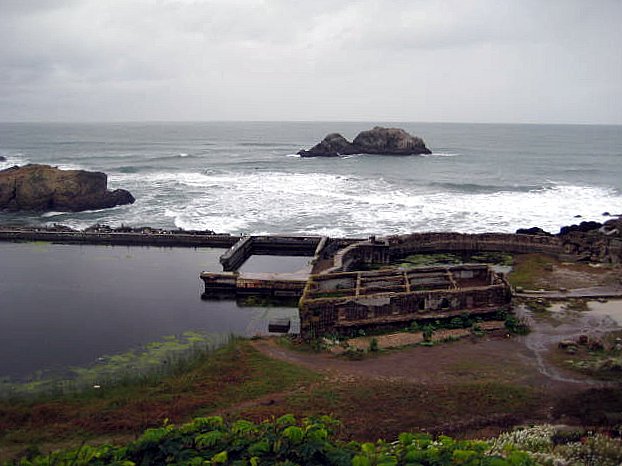
Sutro bath ruins, San Francisco, CA What could you give up and not miss? Is there stuff or an attitude that could be dropped for something better? We have been doing this not only at home, but throughout our business. In the past garden centers we're the places you went for all things related to gardening. Now you can pick up some vegetable starts while shopping at Trader Joe's, pick up trees at Costco, and finish off with fertilizer bought online. Who needs a one stop garden center?

Lot's of garden shops have categories or departments that are relics from the past. Perhaps its that that  tool department that always needs dusting, or rose department that always needs pesticide applications? Don't even get me started on that gift department. Some stores do well with their gift department, and others do well with tools, but they might not be for you.

I find it useful to also ask regularly what department, item, or attitude could be discarded to the benefit of the company, and ourselves. We recently went paperless, and it's only made things easier. When we get invoices, business cards, or other papers we need to save they are scanned and stored digitally in "the cloud." I still have the information we need, but without the paper filling up filling cabinets and space. Gifts are another area that never worked for us, so we have no gift department! I don't miss dusting them at all.

It's harder for those of us that have been in the trade for awhile to discard what in the past was a given at a garden store.  What department, method, or attitude could you discard right now without hurting business? Better yet what could you discard and improve business? We added a hydroponic/ indoor garden department since it was a needed in our particular region of northern California. The customers have responded, and we live to do business another day! It took the place of an indoor area that in the past would have been used for gift items. Now we don't have to dust as often.

Ignore the trends and do what you love

Dog on beachAs the pace of change increases it often becomes difficult to "keep up". So much has changed in the gardening businesses that even veterans of the trade are having a hard time adjusting. I believe the key is to enjoy what you do right now. That's really the only way to stay sane in today's world. Milton Glaser is a 83 year old graphic designer most famous for the "I (Heart) NY" logo. Two things stood out for me in this article at coolhunting.com.  The first is about not following the trends.  He say's, "I don't follow any designers, it's not my character. I mean there are a lot of young, good practitioners. I actually should be more conscious of what's going on in the field but I've never used the field as my resource, I use history—and an awful lot of history I still don't understand".

The second concerns loving what you do, and ignoring the pace of change. "If you spend your life doing what you love, the speed at which the world goes on and changes around you is irrelevant."

Great advice. Ignore trends, and do what you love.