Garden Centers are dead. Long live the garden center!

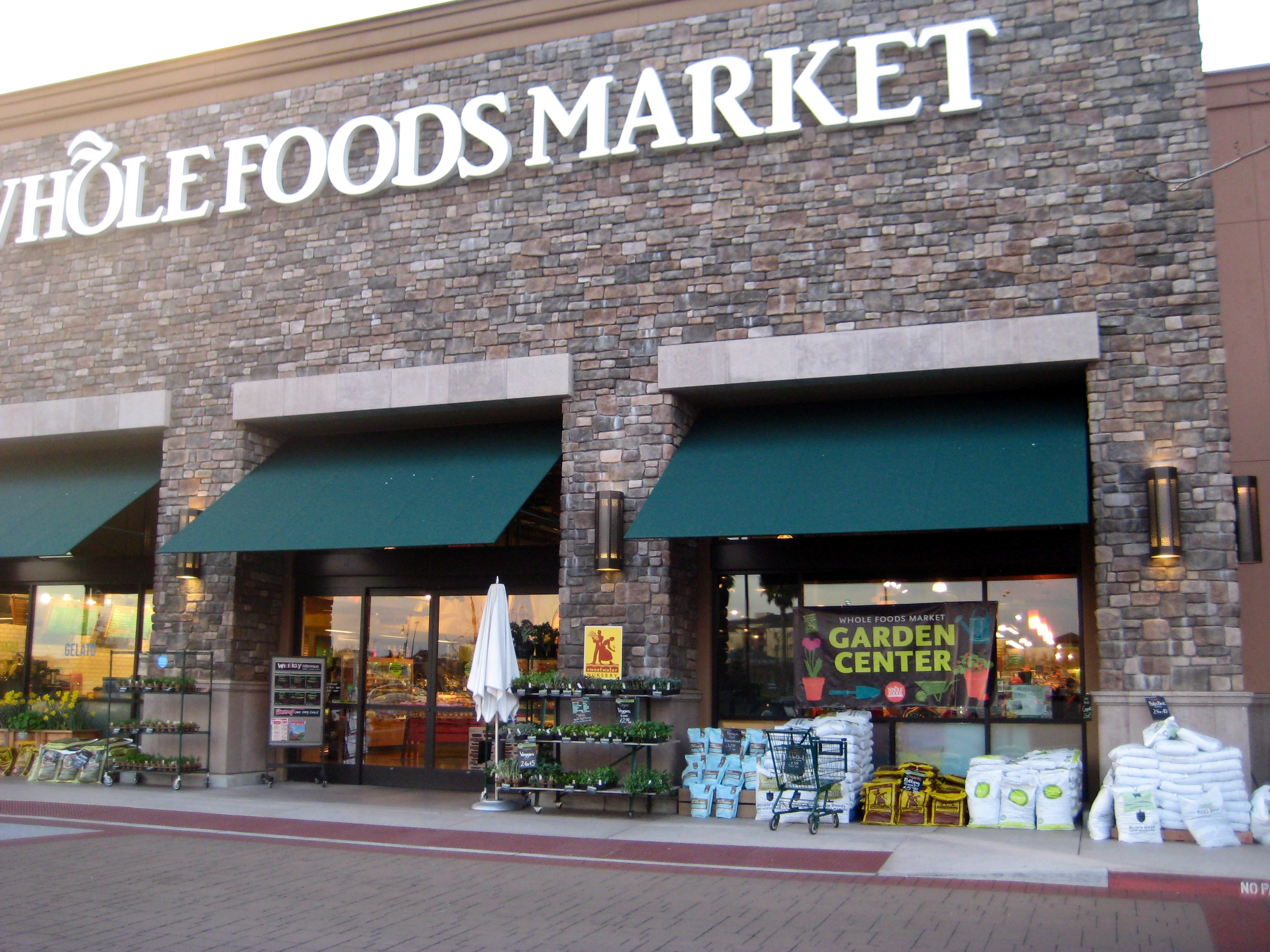
Whole Foods Garden CenterThe picture shows the "garden center" at our local Whole Foods. They have had the metal racks with the plants on them in years past. They have sold soil amendments, too. This year was the first time they decided to put their banner up proclaiming the front of the store a "garden center".

It's come to the point where anyone selling a few plants or soil amendments can call themselves a garden center. As the younger generations and new gardeners start to experience their first "garden center" the idea of  independent garden centers will diminish. Who needs a real garden center when they can buy the organic, locally produced vegetable starts at the grocery store (garden center).

This trend is here to stay. It means the number of independent garden centers will continue to decrease as businesses attach small garden outlets to their stores, and call them garden centers. The memory of what garden centers were will soon fade, as more and more of us buy our garden supplies at Whole Foods, Costco, The Farmers Market, Home Depot, Trader Joe's, The Hardware Store, The Hydroponic Store, online, etc.

Yes, there is still room for indie garden centers, but their numbers will be much decreased. The new era of garden retailing is here to stay. Where do you and your business fit in?

Build your business by building your community

What’s the most valuable asset a garden store possess? The land it sits on? It employees? The merchandise or plants? It’s resale value? I contend the most valuable asset is the garden centers ability to generate and nurture its own enthusiastic customer base. As the cost of producing plants drops, and the quality continues to rise you will find excellent plants even at the mass merchants. Quality will no longer be the exclusive domain of independent garden shops. More and more we find good quality plants available at Trader Joe's, Whole Foods, the box stores, Costco, Ikea, and any number of other outlets not traditionally associated with gardening.

A persons initial interest in gardening may be sparked by any number of reasons, but we can no longer expect the interested gardener to shop at a independent garden center or IGC. They are just as likely to pick up their plants at Costco, at a price that can’t be beat. We no longer depend on the natural and societal pressures that compelled many to garden in the past. What we need to do  is to help create a whole new generation of enthusiastic gardeners. This can be accomplished by the smallest garden shop utilizing the power of social media. The ability to communicate with a large number of people “levels the playing field” between the large concerns and the smallest ones.

Once we have helped the new, now enthusiastic gardeners, we will have to nurture them. They won't just show up at the door next year if we don't give them a compelling reason to "keep it up" and reap the benefits. To many other fun or necessary things to do in life to occupy their time. We need to build our own communities of enthusiastic gardeners, and then give them the tools (social media perhaps) to help spread the word.

The Petaluma Seed Bank (which only sells hybrid seeds, no plants) is a great example. What the Petaluma Seed Bank and their owners Baker Creek Heirloom Seeds have done is tap into the zeitgeist of the times. They create their own buzz via their catalog, online presence, and events to keep the gardeners interested. They have both brick & mortar as well as online sales. They are political (anti GMO), and donate time and money to their (and their customers) causes. They grow their own food on their own land (they walk the talk), and then discuss the results and possibilities with their customers. They have created a community of enthusiastic customers who share their love of the business.

We don't just sell plants and fertilizer anymore. We will have to create,organize, and nurture communities of like minded people who share a common goal, or interest. In our case that revolves around horticulture in general, but could also go off in a hundred different niches. Find your niche, and become the best in that world.


The Future of Horticulture

I was asked if their was much of a future in horticulture. They we're interested in whether to pursue it as a career. This is what I wrote back.

The future of horticulture is the future of man. They cannot be separated and as such horticulture will become even more important to our lives in the future. The future for the horticultural sciences has never been brighter. Like many subjects the field is changing rapidly and what worked in the past sometimes does not work in the present. Many of the traditional connections that people made with horticulture are changing. To be successful as an entrepreneur of the horticultural field requires the ability to change quickly as your market changes. No longer is their a set path for anyone to follow.

A whole new generation of gardeners needs education, the tools, and the inspiration to take us further into the 21st century. The possibilities for producing food closer to those who need it, as well as food safety  will open whole new areas for urban horticulture, hydroponics, pomology, herbology, etc. As more people discover the benefits of plants new ways to utilize them will need to be developed. Miniature gardening, vertical gardening, water gardening, locally supplied flower gardening, and more.

I have never been more optimistic in the power of horticulture to change the world for the better. Many of the traditional players in horticulture are disappearing, only to be filled by new players with different methods.

Horticultural jobs, where are they?

When it comes to social media platforms, Linkedin seems the odd one out. Compared to Facebook, Twitter, and even Google+, Linkedin seems little mentioned in the press. So it was a surprise when I read an article titled, "LinkedIn's 4Q gets rave reviews from investors" in SF Gate.  According to the article, "the latest quarter was highlighted by an influx of 15 million accounts to propel LinkedIn's total membership beyond 200 million. Visitors to LinkedIn's website also viewed 67 percent more pages than the previous year, an indication that the company's efforts to add more business news and career tips from top business executives are paying off." I started to notice an increase in new membership last year at our Linkedin Group, "Garden Centers, Nurseries, and New Media". We now stand at almost 5500 members from all over the world. What interested me is watching the membership grow when large horticultural concerns close down or downsize. You hear that so-and-so company is closing down, and suddenly new members join from that company, likely putting their feelers out for work. Linkedin has job boards where you can look for work, or post for workers.

The horticultural fields are changing rapidly and job disruption is becoming more common. If you want to get into, or stay in the horticultural trades where can you go and see what's available in the field?  Do you have a job opening you would like to promote to forward thinking people? Join our group and post it here. 

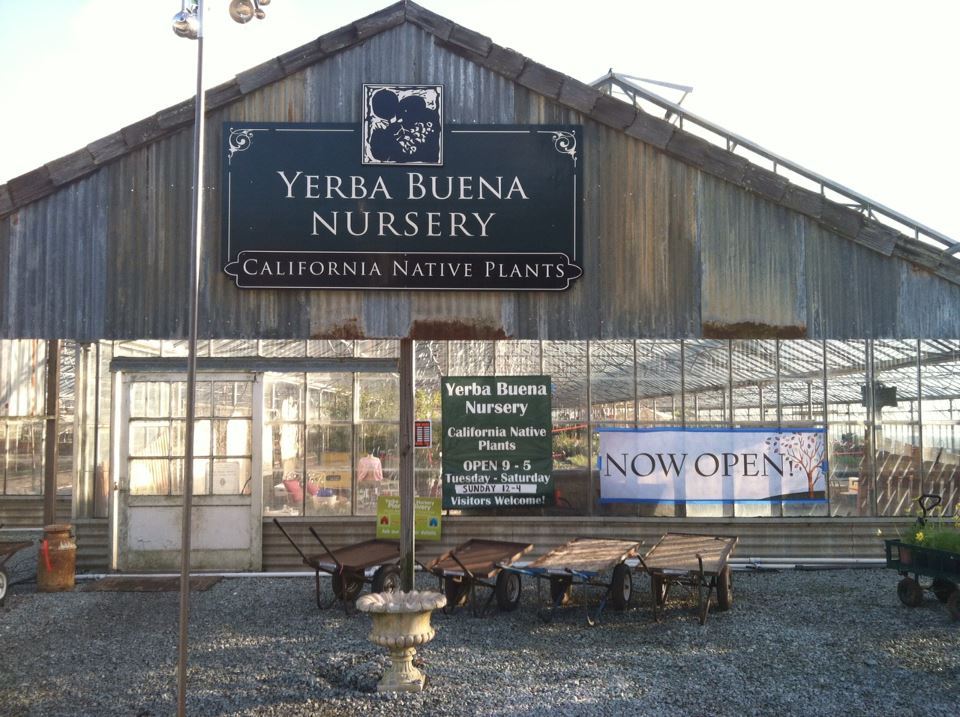
After 50 years, Yerba Buena Nursery has moved.

After over 50 years at their location on Skyline Blvd., Yerba Buena Nursery is moving! The California native plant nursery is headed to new digs in Half Moon Bay along Hwy. 92, near Pastorino Farms. Anyone who has visited their Skyline location can attest to it's beauty, yet it is a bit out of the way. Only people looking for the place would likely have ended up there. With this new location on a heavily traveled road they will have a chance to draw in more casual visitors.

I have only been to Yerba Buena Nursery a couple of times. It's been quite a awhile since I can remember being waited on by the founder, Gerda Isenberg. Gerda was a pioneer in the California native plant world.  I was working at Christensen's Nursery in Belmont, just over the hill from Yerba Buena. We took the drive up Skyline Blvd. searching for the nursery, as it was at the time the only native plant nursery around. This must have been the early 80's, and I can remember driving down a long dirt road to a nursery carved out of the surrounding redwoods. Gerda was there doing nursery stuff, and tea was being served. It seemed like a magical place.

Even though the Skyline location was where it all started and has the memories, it will be easier to visit the new location. It's also nice to see Half Moon Bay continue it's reputation as a nursery town.  We will make a point to visit the next time we're headed coast side.

St. Brighid's Day

St. Brighid is one of Ireland's patron saints, and today she is celebrated.This day also signify's in Gaelic, the beginning of spring. It's one of those ancient celebrations that can trace it's roots back into Pagan days. Interestingly, it may be a forerunner of our Groundhog Day. In the old tradition people would watch for serpents or badgers leaving their winter dens. A Scottish-Gaelic poem about the day,

Thig an nathair as an toll Là donn Brìde,Ged robh trì troighean dhen t-sneachd Air leac an làir. "The serpent will come from the hole On the brown Day of Bríde,                                                                               Though there should be three feet of snow                                                                             On the flat surface of the ground."

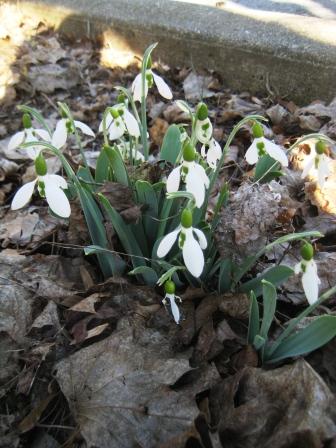
I had never heard of St. Brighid's day. A nurseryman in Ireland commented on my picture of Snowdrops blooming at the nursery. He said his too we're in bloom, and mentioned the celebration. I like it as it  connects me with a time long ago. It marks the changing seasons with celebrations based on the light in the sky, and not on whether it could be moved to a Monday so as to avail ourselves of a three day holiday. St Brighid's day always falls on the 1'st of February.

It does seem to be getting a little brighter at 5 pm.

LA creates first "public orchard"

Los Angeles has created a public park complete with public orchard. According to a LA Times article county officials, " hope the 'edible art' will encourage more locals to spend time there." Apparently it's the states first public orchard with residents planting "27 fruit trees and eight grapevines in Del Aire Park and 60 additional fruit trees in the surrounding neighborhood."

Three artists calling themselves, "Fallen Fruit" designed the orchard. David Burns, one of the artists said, " This is about creating something that is abundant that has no ownership." The Times say's, "for now, a wooden sign overlooking the trees describes their purpose: 'The fruit trees in this park belong to the public,' it says. 'They're for everyone, including you. Please take care of the fruit trees and when the fruit is ripe, taste it and share it with others.'" They planted "plums, pomegranates, limes, avocados and apricots." One of the residents across the street said, "he loves having fruit trees across from his home."

I am not sure how this is going to work. Will the county or residents maintain these trees? Who will be allowed to harvest the fruit? How much fruit can one community member take? The statement that, "this is about creating something that is abundant that has no ownership," concerns me. When no one "owns" the plot, who will feel the need to maintain it? If one neighbor ends up doing most of the maintenance how will they feel when others swoop in to take limes for their mojito's?" How much fruit is enough for one person to take?

Considering the number of fruit trees in the LA area that already bear fruit on property, and then is left to rot on the ground, I don't hold out much hope for this. Community gardens and farmers markets make it because people feel ownership, whether it's a small allotment or selling the fruit at market. This project has the county to fall back on, so their is no sense of ownership or pride in keeping it up. I hope it works, but I am afraid this has the makings of a "temporary art project".

Fallen Fruit has some interesting ideas however, one of which is "Public Fruit Maps".  According to their website, one of their "core projects is to map neighborhoods to which we are invited, mapping all the fruit trees that grow in or over public space.  The maps are hand-drawn and distributed free from copyright as jpgs and PDFs." This is a great idea, and one which may have more potential than the "public fruit park". They have also created a project titled, "Fruit Tree Adoptions". According to Fallen Fruit they "distribute free bare-root fruit trees in a variety of urban settings.  We encourage the planting of these trees in either public space or on the periphery of private property, in order to create new kinds of communal life based on generosity and sharing.  Each recipient signs an adoption form promising to care for the tree — initiating a relationship with it." I like the adoption form which provides that sense of "ownership", which may encourage the person signing up to adopt the trees to maintain them.

The chapparral comes to life

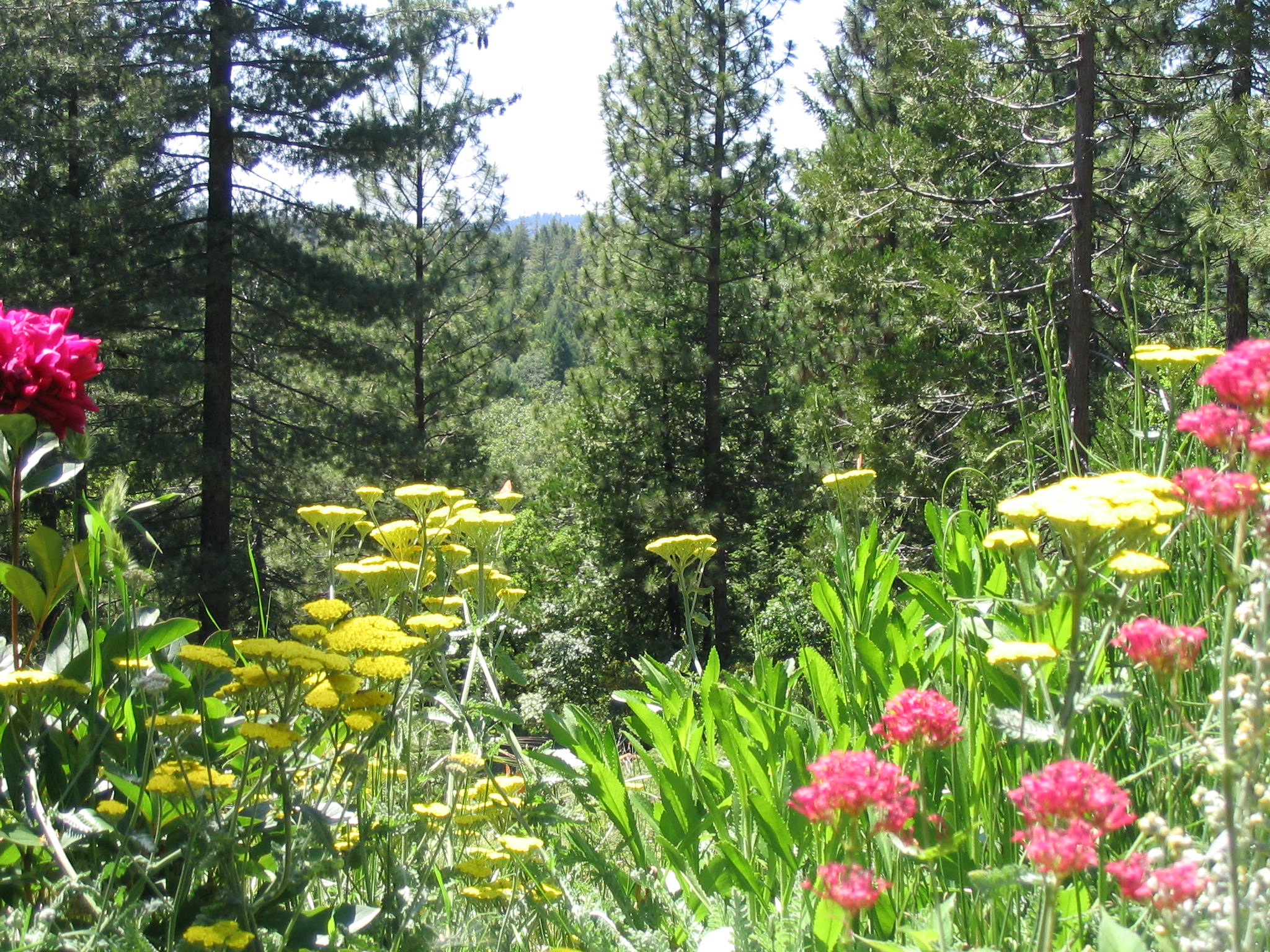
Where I live the passing of the  solstice and the arrival of winter rains brings the chaparral to life. Walking through the chapparral one can hear the sound of bees, busy at work on the manzanita flowers.

Chaparral occurs in a very small area of the world. Only about 5% of the state of California has chaparral. Chaparral is a Spanish word derived from chaparro, meaning a "small" or "dwarf" oak. The area is known for it's lack of rain during the summer and early fall. Often 6 to eight months will pass without a drop of rain. When winter arrives it can rain 45 inches in just a few months. With the rains, plants that have been dormant during the long dry summer come to life.

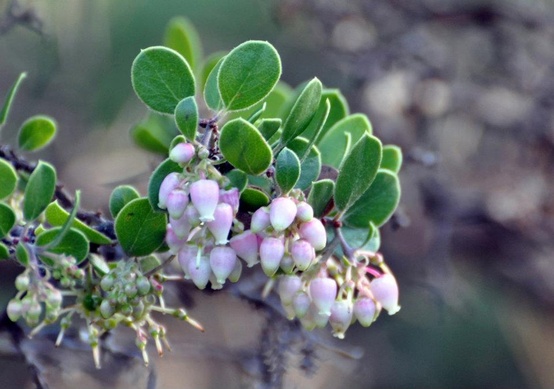
Manzanita can be roughly translated from Spanish as to mean "little apple" for the berries that develop in summer from the small bell shaped flowers. The flowers  appear early winter, like the one pictured above at the UC Botanical Gardens at Berkeley.

Today the sun is shinning and the ground freshly rained on. A perfect day for a walk.

Merry Christmas,  from deep within the chaparral.

Fungus threatens both ash trees and British nurseries.

According to The Guardian, "A fungus that has already affected 90% of ash trees in Denmark over the past seven years has now been detected in a handful of locations in the UK. If our government does not act urgently, warns the Woodland Trust, all Britain's estimated 80m ash trees could be lost to the fungal disease known as "ash dieback".  The Guardian say's, "Nurseries infected with the deadly fungus set to wipe out Britain's 80m ash trees have been removed from the official map of the outbreak the Guardian can reveal, after nursery owners complained that being identified might hurt their business."

While some nurseries are happy to be removed from the map others like "Judy Davey, who runs the Perrie Hale Forest Nursery near Honiton in Devon  said she had publicized the fact that an infected ash plant, bought from another UK nursery, had been discovered.  We decided to take the bull by the horns...we wanted people to know we were controlling this disease. Davey, whose nursery is in its third generation of family ownership, said the overall impact on the business "'has not been as bad as we feared'".

There is no cure for the disease.

"May the mysteries of Midwinter darkness be be illuminated by the fire of your dreams"

While checking out Facebook updates today one from Brian Bates arrived. Wikipedia say's, Brian "is best known as the author of best-selling books on the shamanic wisdom of Anglo-Saxon England, and for his award-winning course at Sussex on "'Shamanic Consciousness'".

My connection to Brian is horticultural, as we both worked at Christensen's nursery in The Bay Area. While we worked there at different times,  our shared experience brought us together online some 30+ years later.

Today's update is , "May the mysteries of Midwinter darkness be be illuminated by the fire of your dreams", accompanied by the above photo. The photo and quote are perfect for what is turning into a rainy, stormy day here in The Sierra Nevada.

Enjoy.

Educating the customer is good for business


Kevin Kelly, founding editor of Wired magazine say's, "Make customers as smart as you are. No one is eager for a core dump, but if you can remember my trouser size, or suggest a movie that all my friends loved, or sort out my insurance needs, then you are making me smarter. The rule is simple: Whoever has the smartest customers wins."

In the horticulture and the nursery business, educating the customer is vital. Sure, there may be plenty of people who will shop with you and never learn something new. The "customer evangelist" is different. They enjoy learning new things and will spread the message that your  the place to go to become a better gardener.  It's what will separate you from the warehouse garden shops where price is the overriding concern.

Teach your customers how to become better gardeners, and you'll have customers for life.


Is social media becoming big media?

In July I wrote a post titled, "Are blogs relevant in today's social media world?" From that post, "while Facebook and Twitter offer a way to communicate to the customer, its questionable how they will be able to continue as competition and economics come into play. Your blog can be a 'home' that folks can come back to again, and again. You can 'own' your website and blog, you cannot 'own' your Facebook Page." It was a pleasant surprise to read author Warren Ellis and his post today, "The Social Web: End Of The First Cycle." In that post Warren say's, "This may be the end of the cycle that began with Friendster and Livejournal. Not the end of social media, by any means, obviously. But it feels like this is the point at where the current systems seize up for a bit. Perhaps not even in ways that most people will notice. But social media seems now to be clearly calcifying into Big Media".

Warren say's, "Google+, of course, is not, strictly speaking, a social network. Most people can’t see what other people are doing there. Google, of course, sees it all. But everyone knows that going in" Perhaps that explains the new found interest in Google+? It's also why I started a new community there, "The Future of Horticulture".

Warren finishes his post asking, "I wonder if anyone’s been thinking twice about giving up their personal websites". For me the answer is no, my "blog can be a 'home' that folks can come back to again, and again."

Would growing heirloom wheat solve some of our health problems?

An article from io9.com titled, "Why you should probably stop eating wheat" is interesting. My wife and I, in an attempt to loose a little excess weight, started culling refined carbohydrates from our diets a couple of years ago. No bread, pastries, and other yummy things. Sure enough we felt better, and lost the weight. Why is it our grandparents, and their parents didn't seem to have the problem with obesity and diabetes that our current society has?

Turns out, according to the article, "...today's wheat is a far cry from what it was 50 years ago." According to the post, "Back in the 1950s, scientists began cross-breeding wheat to make it hardier, shorter, and better-growing. This work, which was the basis for the Green Revolution — and one that won U.S. plant scientist Norman Borlaug the Nobel Prize — introduced some compounds to wheat that aren't entirely human friendly."

If the problem with wheat these days is hybridization, would "heirloom" wheat be an answer? I realize we hybridized wheat to resist disease and pests as well as create a more vigorous crop. It has fed the rapidly growing world. However, it would be interesting to see if using  non-hybridized wheat made a difference in the taste, and most importantly our health. I wonder if non-hybrid or heirloom wheat is even available anymore?

Bamboo in the sky

Los Angeles based Urban Air reached it's Kickstarter Goal of $100,000 today. What's the goal? "Imagine floating, globally connected urban forests growing where billboards stand." Urban Air is transforming "existing urban billboards to living, suspended bamboo gardens. Embedded with intelligent technology, UrbanAir becomes a global node - an open space in the urban skyline… An art work, symbol, and instrument for a green future."

The Future of Horticulture

Are you interested in the future and horticulture? I am! Having been in the field of horticulture for over 30 years I have seen the rapid changes that going on.  Urban gardening, aquaponics, LED grow lights, hydroponics, plants in space, The Internet, guerrilla gardening, genetically modified organisms (GMO's), rooftop gardening, beneficial plant fungus (Mycorrhiza) , and so much more. Thinking about all this stuff is exciting to me, and perhaps for you.

We located this new community, "The Future of Horticulture" at Google+. If you have an account with Google simply ask to join. If you don't have a Google+ account this would be a great opportunity to join, and learn this newest of media platforms. I found it interesting the the first member to join was a hydroponic shop in San Francisco. I think horticulture has fragmented into many different fields of study. Sometimes these different fields don't realize the others exist. This is a place learn about these different aspects of horticulture, and how they are changing the world.

According to Wikipedia, "horticulture involves eight areas of study, which can be grouped into two broad sections - ornamentals and edibles:

How will these different fields of study evolve? Join us in "The Future of Horticulture", and we can find out together.