It’s Mandarin Season.

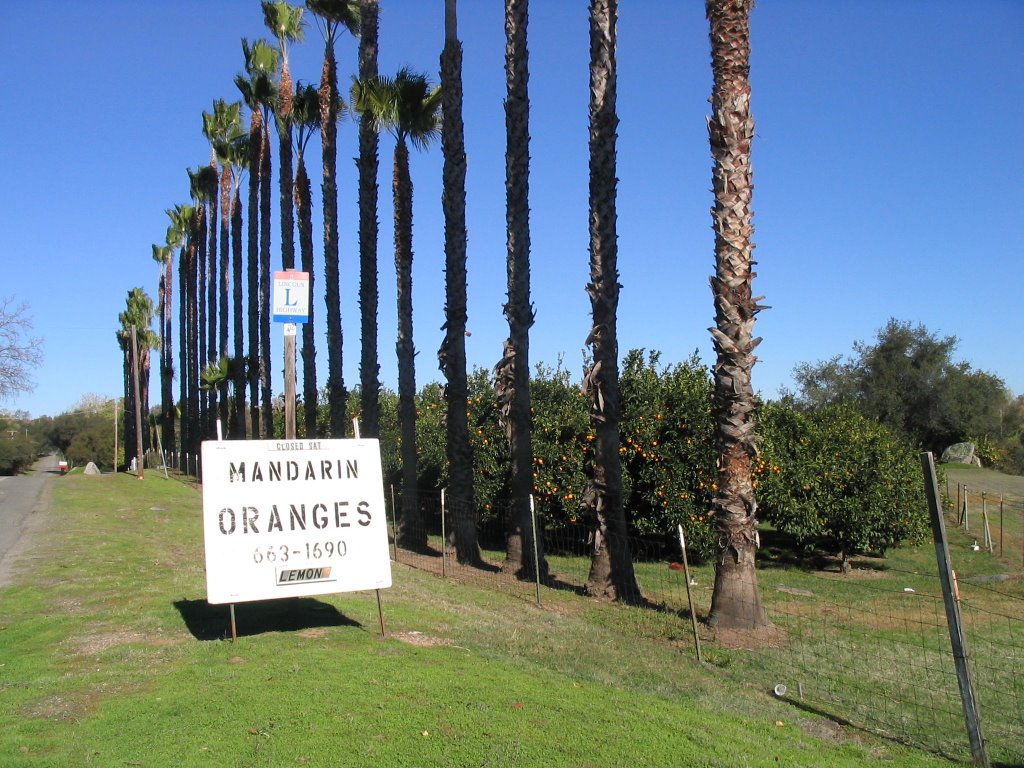
Driving through Auburn on down to Newcastle to pick up a maple tree for a customer I passed this old orange grove on Taylor Rd. Taylor Rd. follows the old Lincoln Highway which was the main highway over the Donner Pass down into Sacramento. Long since bypassed by nearby Interstate 80 I like to travel this way when I can. It cuts through a slice of old California, with old gas stations turned into antique shops or real estate offices.

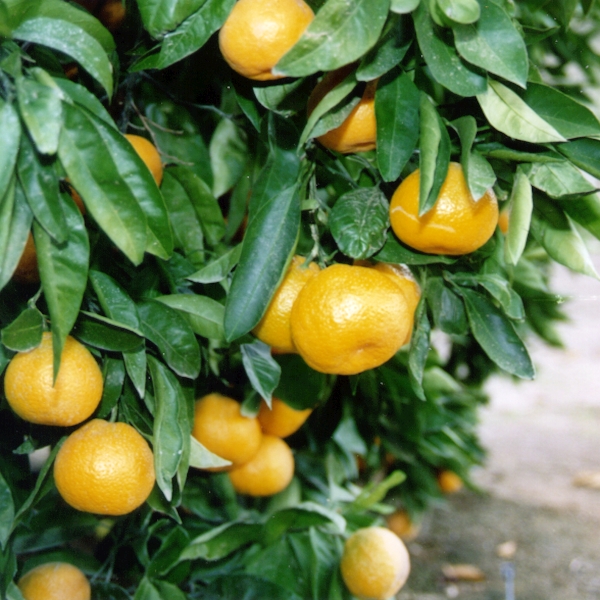
This is Mandarin country. The main variety sold is the “Owari-Satsuma.” These little jewels are also called “zipper-skin”. They have to harvest them with pruning shears as if they pull on them the fruit will come right out of the skin. This has been mandarin and orange country for over a hundred years. Lots of tall palm trees line the roads and the oranges and mandarins are just now ripening.

The sight of these bright little fruit hanging in the evergreen foliage is a cheerful sight now that winter has arrived. Sacramento is under a freeze warning again tonight and at out foothill location the temperature got down to about 27°F this morning.

Since we are further up in the foothills we tuck our small collection of Dwarf Citrus under the over hang of the gift shop and wrap them with thermal blanket at night when it gets this cold. If we do that they come out next spring just fine.

Winter comes knocking.

Winter has finally reached the foothills. There is frost with temps in the mid-thirties. It will start reaching about 50°F this afternoon. Suppose to be a big storm brewing off the coast that will spread rain over the area and snow over 3000 ft. We are at 2000’ elevation so we will miss the snow. Go up the hill about 5 miles and the snow will start. When you get up to about 6000’ elevation the snow really starts with a couple of feet of new snow expected. We will end up with a couple of inches of rain if it pans out.

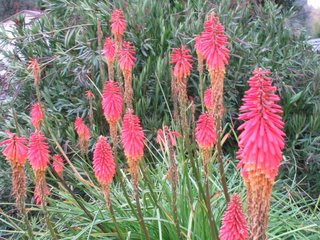
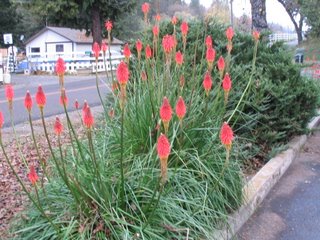
These are Red-Hot Poker plants growing in front of the nursery. Believe it or not they didn’t receive any water during the summer. Remember it does not rain here for 6 months of the year. They just started blooming about two weeks ago. I didn’t like this plant for the longest time. I don’t know why but I have developed a new appreciation for it. Hardy, deer resistant, is blooming in fall and early winter, and is extremely drought resistant. What a plant! It does have a unique look which needs to be placed properly to work.

January 6th I will be speaking at the Sacramento Home Show on Mediterranean gardening. It is located at the Convention Center downtown and this is the first time I have presented anything for them. I hope to get people who might not otherwise make the drive into the foothills interested enough to want to visit the nursery.

Over the years we have found that speaking to garden clubs, and other interested groups has paid off big time for us. Public speaking is ranked right up there as peoples biggest fear. I have been doing it for over 15 years and while I still get somewhat nervous it has gotten better and I find the rush when you’re done quite exhilarating. If garden center owners want a great way to reach people, public speaking is great because nobody wants to do it. Groups are always looking for speakers and if you or someone on your staff can do it you’ll find yourself being invited all over the place. I do about 10 talks a year outside the nursery and about 20 at our nursery workshops.

When the garden industry should not blog.

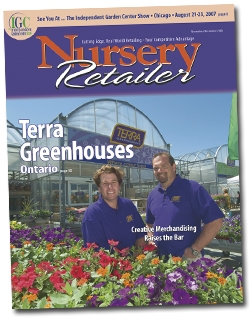
Just got the latest issue of Nursery Retailer Magazine in the mail. This is a magazine for the independent garden center. The Publisher, Jeff Morey writes “Yeah, I know what your thinking, ‘Another editorial where the writer has little to say and is just filling space!’ Fear not, I share your contempt for meaningless musings. That’s one reason I’ll never burden you guys with a blog. The few attempts at industry blogging mounted by other industry publishers have, in my humble opinion, fallen short of the mark with non-industry-related, flow-of-consciousness ramblings about irrelevant topics as the movie Snakes on a Plane”

I would have to agree with Jeff. Most of the blogs put out by nursery industry related magazine publishers are boring and not updated frequently enough. It seems to be the “got to keep up with the trends” attitude. If you don’t enjoy doing the blog it is bound to fail. I applaud Jeff for not putting out a blog as it is obvious he would not enjoy doing it and it would turn out like so many others, boring.

Generally the most interesting blogs are the ones where the people who write them have a passion for this type of communication. It's not for everybody and no one should blog because "it's the thing to do". I have started to compile a list of industry blogs at my site "The Art of Running a Small Garden Center."

Fall in the Sierra Foothills.

Now that we are living just outside Placerville we have a 12 mile commute to the nursery. It takes about 20 minutes if you don’t get stuck behind a big truck or horse trailer. The drive takes us right through Marshall Gold Discovery State Park and across the south fork of The American River at Coloma. Once you cross the river you travel up Marshall Road to Garden Valley, about 5.5 miles.

Traveling to Garden Valley you pass through a chaparral region growing on serpentine. Serpentine allows only so many plants to grow, including Toyon, Coyote Brush, and Ceanothus. We don’t have the blue flowering Ceanothus, but a white flowering version. Just as you enter Garden Valley the soil changes and the Cedar and Pine forest begins, about 2000 foot in elevation.

The generally color of fall here is the yellow of the Valley, Black, and Blue Oaks, as well as riverside willows. There are some pinks from the western redbuds and wild pears.

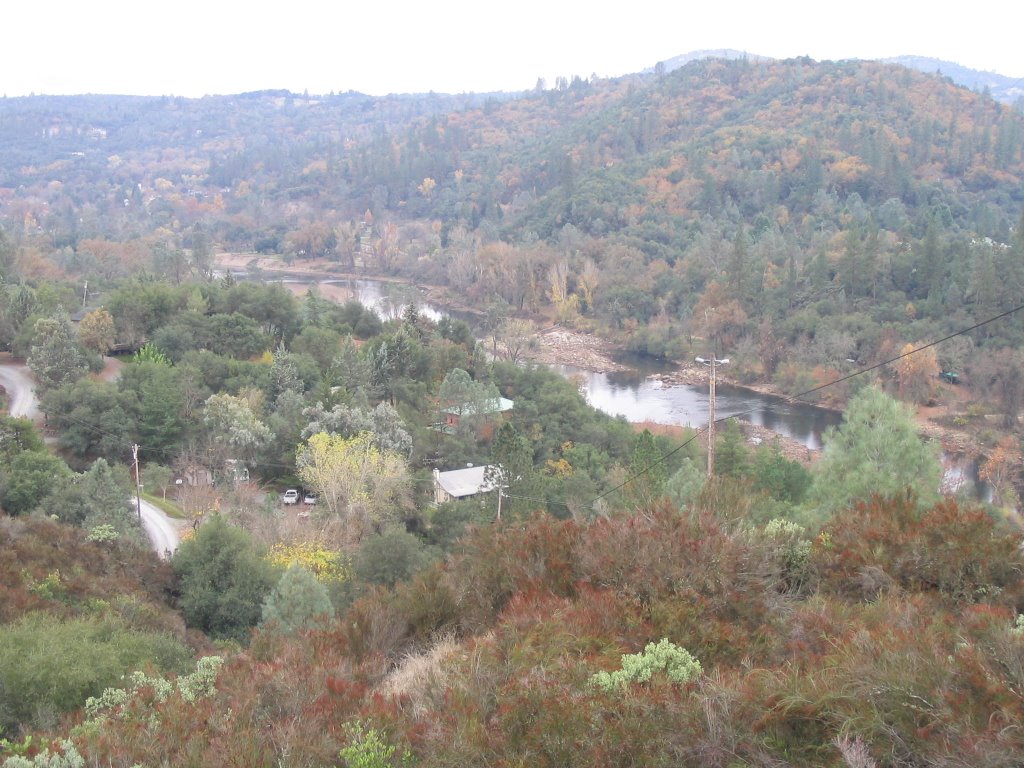
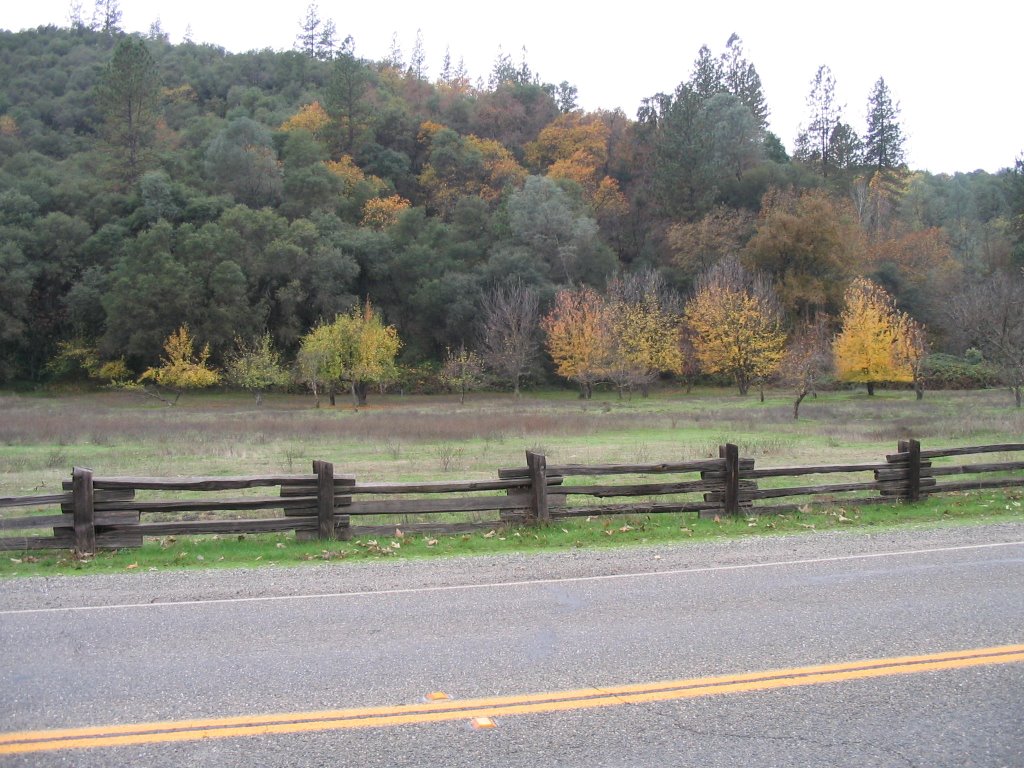
The pictures are of Coloma, crossing the river and the view into the valley on the road to the nursery. The old stone building is the only one left in
Garden Valley from the 1850’s.

Fall at the Garden Center.

We have started to get goodies for the gift shop. We will have a children section with tools, bug viewers, stepping stone kits, paint a birdhouse, etc. we will also have a chair and a shelf of reference books concerning horticulture that the customer can look through. We had kept these behind the store counter before for our use, but I think this will be better. Coffee will be available in the store so you can pick it up and cruise to the gift shop if you want, and do a little research!


Looking through all the trade publications we get you could be intimidated when you see some of the gift shops and coffee bars going in at some of the larger garden centers. We’ll just take the same ideas, miniaturize it to fit our space and see what comes.


I got a questionnaire from a student at Davis who is majoring in Horticulture. He wanted to know how the retail industry was doing and whether starting a nursery was a viable thing. I was pleased to see someone in the younger generation interested in this business.

I filled out the questionnaire and sent it back. Yes, you can make money in this business if you have patience and a positive attitude! This is agriculture and we share the same concerns as farmers. Not only do you have the retail environment to deal with but the weather becomes the overriding factor in how well your business will do that year. Just like the farmer, we plant our crop in the spring and hope Mother Nature allows the customer to get out in the garden, and our garden center.


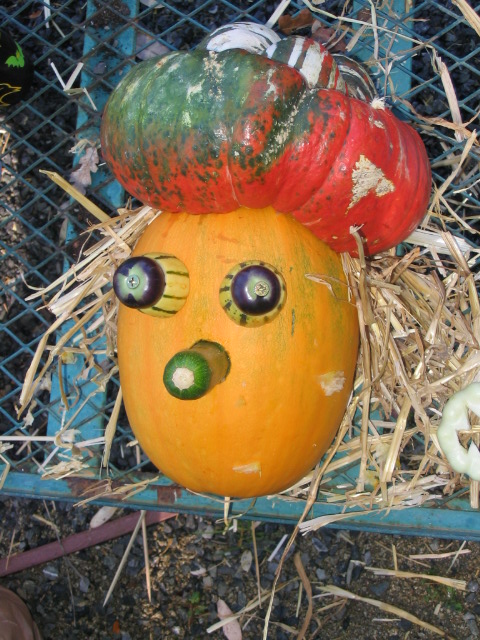
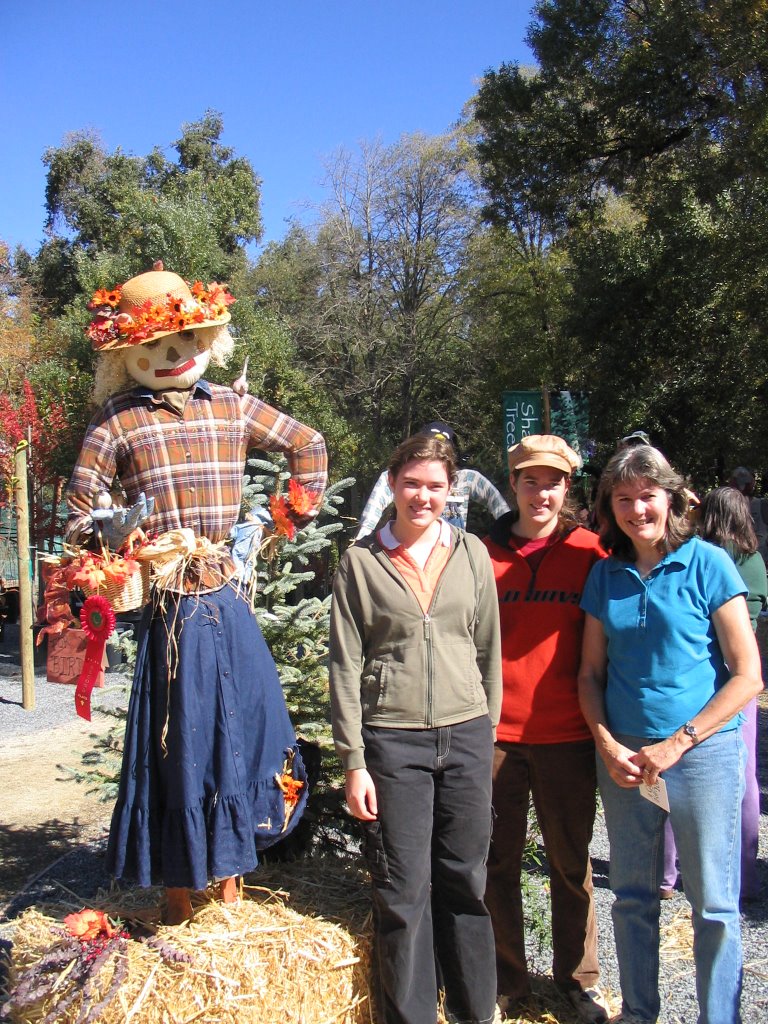
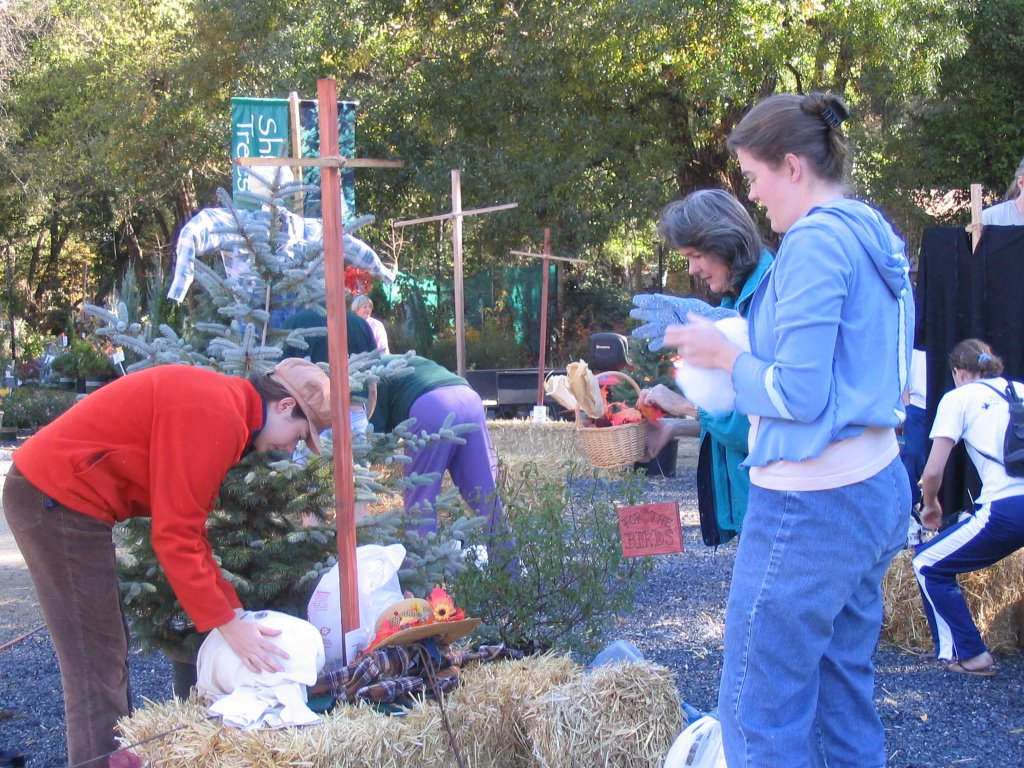
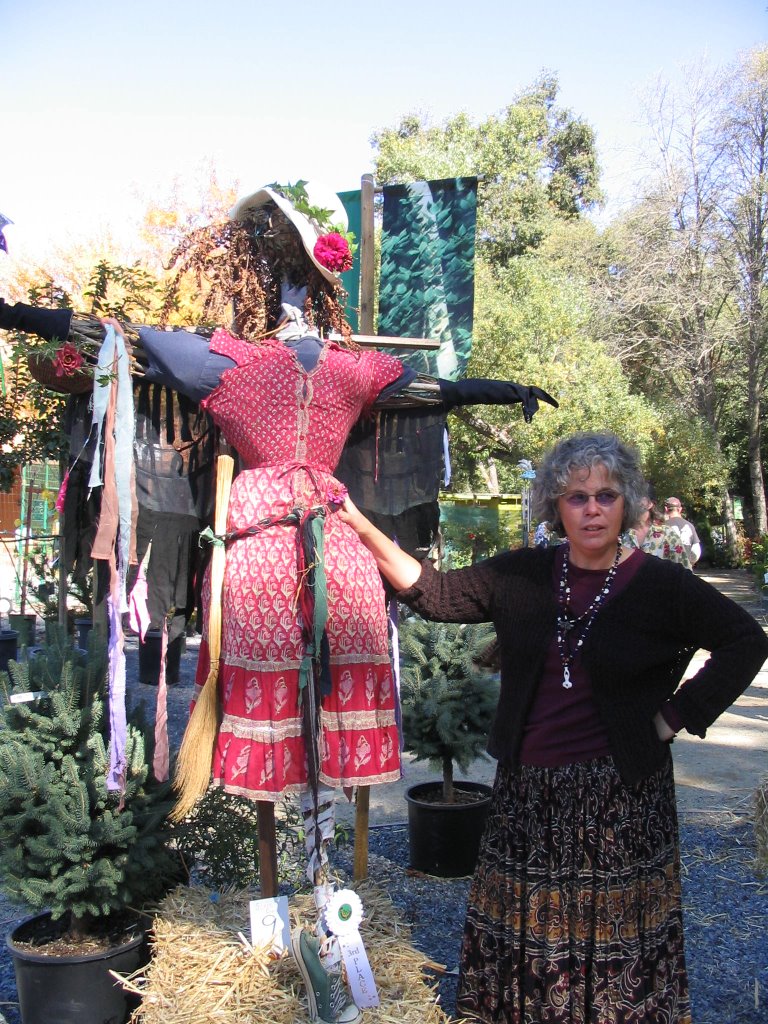
These pictures are from our second annual scarecrow contest. After people make them we leave them up for one week so those who drive by can check them out. At night we have a street light on them, which gives the whole scene a surreal feel. This is great fun and I hope it gets bigger and better each year.


The blogging nurseryman blogs again!

I can’t believe my last post was the third. Where does the time go? The rainy season has started here in northern California. We had about an inch of rain yesterday. The rest of the week looks dry through the weekend.

We have had a lot going on as far as cleaning up the nursery. We have several large valley oaks (Quercus lobata) on the property and they have been dropping leaves like mad. Normally I would just let the leaves sit, but you have to get through the walkways so it’s been clean up every day. It also has been raining acorns which if they hit gets your attention. These don’t rake up so well.

We are also re-opening our little gift shop where I have my office, so we are moving the office next door. The gift shop was fun and the only reason we had not kept it open was our attempt to live in the house where it’s located. We’ll after a year of living in a really small place we relocated to a larger home, a few miles from here where Monica and I will be much happier.

The other thing I have come to realize is that I do need to get away from the business a day or two a week. Living at the nursery means living the business 24/7. While there are certainly benefits to being here I also enjoy the fresh outlook a day or two off gives.

That fresh outlook has stimulated some ideas about where we want to take the nursery in the future. I feel that finding a niche(s) that you can own is the way to go in the small garden center business. Trying to please everyone just doesn’t work and if we are going to thrive in this competitive market we have to think “outside the box”. More on that later!

Sorry about not posting sooner. I appreciate the e-mails wondering where I was, and will do my best to keep you informed more frequently. It’s going to be a fantastic year ahead and I would love to share it with you!

Less plant disease with "Messenger"?

My friend Saul, who writes a garden column for the Auburn Journal asked if I had heard of a product that he is writing about called “Messenger” by Eden Bio-Science. He had visited a grower of Camellias who had been using it and liked it. Since I had not heard of it I did a little research. According to their website “The technology is based on a family of naturally occurring proteins called “harpins”.

Harpins “stimulate natural reactions in plants that enhance disease resistance, growth, and flowering” according to Eden Bio-Science. It’s a powder that is mixed with water and sprayed as a fine mist on the leaves about every 3 weeks. Bio-science says that the use of “Messenger” “means healthier plants, more flowers, more fruit, and your best garden ever! This revolution in plant care and production is now available to you for home and garden use. Now all your flowering plants, flowers, and trees can be healthier and more productive.”

This is exciting stuff as the product is quite safe to use and has been approved on aquatic plants, on or above the water line, as well as endorsed by The American Rose Society. I wonder if Barrie at Garden Mob has heard of this? The Bio-Science Web site say’s “Messenger can be used on all types of plants growing indoors and outdoors, including edible fruits and vegetables right up to the day of harvest.”

If it is what the say it’s another step in controlling plant diseases which often involve some of the most toxic of fungicides. Since we are considering carrying this product I was wondering if any one out there knows about it, has bought it, or is using it?

Palm controversy.

In case you think garden aesthetics would never be a political issue look no further than Placerville (known in the old days as “Old Hangtown”). This is the county seat of El Dorado County and our nearest large town. According to The Sacramento Bee the city council has decided to have In ‘n Out Burger remove the two palms that we talked about earlier. If you remember the two palms took the project over the requirement that 50% of the landscape be El Dorado County natives.

The palms have become one of the main campaign issue in the upcoming city council elections. The local paper The Mountain Democrat recently posted an editorial on the issue. They, like my self think it’s silly to have to remove the palms now that they have been planted.

What’s most important here is the city government is trying to come up with a foothill aesthetic. The editorial says, “Instead of suggesting the business add some native plants such as blue flowering ceonothus shrubs or redbud trees to bring the native plant ratio into compliance, the city Planning Commission ventured into that elusive regime of what's proper and what's not proper aesthetics. The majority pooh-poohed palms trees as some Southern California alien life force. Unfortunately, these commissioners are not familiar with their own town. There are quite a few palm trees around town and they are old enough that they probably predate paving and cement sidewalks on Main Street. There is no ‘mountain town’ aesthetic that we should be forced to live with, otherwise every new commercial building would be required to be built of sheet metal or brick or stone.”

In Placerville the city council wants to promote a foothill aesthetic in its commercial landscapes. So what’s the foothill aesthetic? Our region lives off vacationers who visit the area for its natural beauty as well as the gold rush history. We are just 5 miles from Sutter’s Mill and Marshall Gold Discovery Park. One of the first things the new settlers did was plant non-native species they remembered from home. The giant black locusts that line the streets of Coloma are non-native, as well as Tree of Heaven (Ailanthus altissima) which has spread all over. Soon as the settlers realized they would grow here they planted Palms. If you drive through Newcastle or Loomis you will see rows of palms well over 100 years old that line some of the streets.

It would seem that the City Council wants to come up with an aesthetic that was the foothills before the settlers arrived. How reasonable is that considering the history of the last 150 years here is about man changing the environment? You cannot go anywhere in the foothills and not see the results of gold mining on the land. Osage orange, old fashioned lilacs, rambling roses, and palms are growing in Marshall Gold Discovery Park. There are two 100 year old palms planted in front of one of the historic homes right in town.

This argument may show up at a town near you soon. What are the towns aesthetic and who decides. Should we turn our backs on 150 years of gardening history to try and create some type of aesthetic that existed before the settlers came?


So it’s about more than a couple of palms. It’s about elected officials deciding what is “proper” landscaping for the rest of us. Since this is one of the main issues for this election well see who get elected. Pro-palm or anti-palm, its your vote.

Garden Center Cafes

Today's Garden Center points us to recent study by Horticulture Week, a British on line web resource. Now this is a British study and I am not sure if it relates to Garden Centers in The United States, but I bet it will. According to a recent conference of the Horticultural Trade Association (HTA) in the U.K. Qualitative research by Illuma Research and the HTA showed cafe's are becoming meeting places in garden centers, according to the magazine. Sixty-five person (sic)of visitors told Illuma and HTA it was important to have a Cafe. An interesting note, too, is that "mums with toddlers" and "empty-nesters" were the most frequent visitors to the cafe.

We are always being invited to go on tours of Europe and especially Britain where we are told that the future of garden center retailing is being mapped out. While we have never found the time to take one of those European tours I read about what nursery people see there. It would seem that bigger stores, complete with cafes are what is hip. I actually find these reports depressing as a smaller garden center owner. 65% of visitors say it's important to have a cafe. We are are thinking about a coffee kiosk but the idea of building a cafe is just not in the cards, yet.

I think the most important thing to glean from a study like this is just how picky people are becoming. I can't even imagine that a cafe would have been necessary 10 years ago. Now if you want the business and don't have a cafe you might be out of luck. You cant't argue with peoples wants. They are what they are and we have to adjust or see our business slowly go away.

While the idea of building a cafe can be daunting for a small garden center, I do find hope in this report. It seems people want to hang out at garden centers that cater to their needs. Maybe we cant build a cafe, but we can offer a cup of excellent coffee and great places to sit and enjoy it. A small coffee kiosk that dispenses coffee, cappuccino, and other drinks might do the trick. Winter time is a problem as we don't have the room to set aside for a cafe. But during the dry season wondering through the nursery with a cup of good coffee is something our customers say would be nice. So next year we will do that.

Sometimes these reports seem to say, "Hey if you don't have the money to put in a cafe, bone bar for the pets, and giant indoor greenhouse shopping area, you're doomed. These studies seem to be aimed at the large garden centers who can implement these ideas. We smaller centers have to read these reports and come up with creative ways to provide the same experience, yet with a limited budget.

Organic Lawn Care to be Promoted on HGTV

Green Beam News points us to Safe Lawns Org. (warning, has irritating music when you open the web page. I hate this and generally leave a site before I figure out how to turn it off.) “an international coalition of for-profit and nonprofit organizations plans to promote organic lawn care and resource conservation throughout 2007.”The main participant in this program is Bradfield Organics, a division of Purina Mills. According to Bradfield’s web page “Made from alfalfa and other natural ingredients including humates, molasses, sulfate of potash and poultry proteins, Bradfield Organics fertilizers are clean, convenient and easy to use. The new line is designed for long-lasting results in pastures, yards and gardens.” What is poultry protein? Is it what I think it is?

According to Safe Lawns Org. “the effort is being led by HGTV host and People Places & Plants editor Paul Tukey. The campaign will be touted by more than 100 garden writers and industry professionals.”

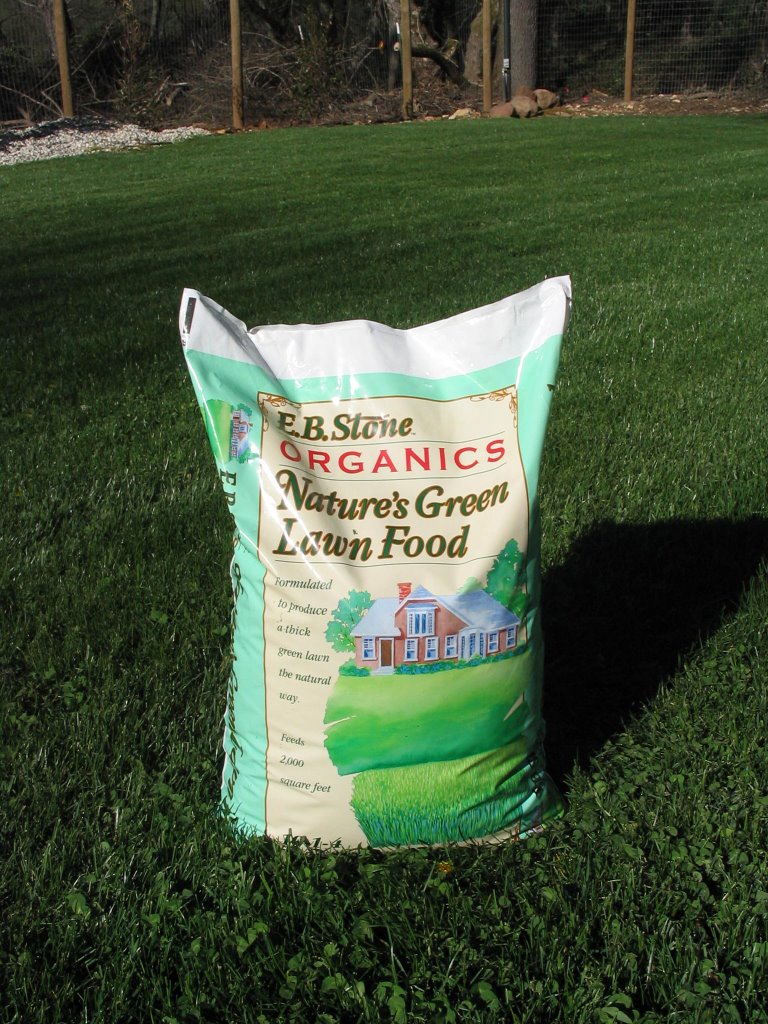
We like this program as it shows a way to have a lawn yet reduce the amount of synthetic products used. I use E.B. Stone "Natures Green Lawn Food" and have been impressed with how much better organics work to keep the lawn green while reducing the frequency of applications. "Natures Green" was one of the first natural lawn food's offered and it's good to see more brands coming out.

"Make Over The Outdoors"

Parade magazine has published “5 Easy (and Cheap) Ways To Remodel”. Besides “Create a Beautiful Backsplash”, “Go for Glass”, “Liven Up the Lighting”, and “Customize the Closets” we have “Make Over the Outdoors”.

To quote the article, “Outdoor ‘rooms’ are one of the most cost-effective ways of increasing your living space. If you already have a deck or patio, consider turning part of it into an open-air kitchen, a feature especially in demand among today’s buyers.”

Here is an idea I had never thought off, “In areas where a home’s square footage is used to assess property taxes, such backyard “additions” won’t increase your taxes.” I am sure that's why lots of people have not "made over" their "outdoor rooms", fear of higher taxes.

The best part of the remodel, “Ease Factor: With a little help, skilled homeowners can assemble their kitchen in a few weekends.” Finally, “Cost: From a few hundred bucks, for a counter area next to the grill.”

I thought the phrase "skilled homeowner" was intersesting. Skilled in what, owning a home? I believe what they mean is homeowners skilled in carpentry and plumbing, which I think most folks are not. So there you have it. Make over your outdoor room and keep your taxes down. Who would have thought!

The not so "Happy Frog"

Wanting to touch on why my former garden center was closing down I realized that there are numerous reasons. There are too many for one post so lets look at it over a series of posts. I think there are lessons here for anyone contemplating opening or buying a garden center, so I will post these at my “The Art of Running a Garden Center” site also.

While the main reason the store is closing is due to current events and ownership, the seeds of destruction we’re planted by the former owners, my ex-partners. It started when we began our partnership! This now goes back about 11 years.

When we were invited to buy into ownership of the business we thought it would be vital to have a partnership agreement. I was worried about what would happen if we had a falling out later. Our soon to be partners didn’t want to bother with one. We were excited about being owners of a happening place and jumped in with nothing more than a handshake. Thus the seed’s of the eventual downfall of the garden center were planted at a time of great optimism and profitability. Who would have known?

There may come a time when you have an opportunity to partner up with someone in a business venture. If you really feel this is the only way to proceed then you MUST have a partnership agreement. A partnership agreement spells out who is in charge of what, and if the partnership doesn’t work, the agreement spells out how to dissolve the partnership in a somewhat graceful way. My advice, the only partnership you ever want to enter into is with your life mate. Stay away from business partnerships.

My former partner’s had quite the egos and felt they were the controlling partners in the business. I don’t remember us discussing that but they started telling us what to do. Without an agreement the partnership is considered a general partnership with 50/50 ownership. There is no controlling partner. While business was growing at a rapid pace the problems we're few , but soon as the growth wasn’t fast enough for our partners the disagreements on how to run the business got worse and worse.

So what do you do? We just wanted to get out of what had turned a fun job into a nightmare. Because our partners weren’t about to sell to us, and they refused to buy our half, we we're in a quandry. <p this="" class="We’ll to make a long story short there is a way to end a partnership where one partner want’s to sell and the other doesn’t. You have to hire an attorney and start a dissolution of partnership. The court will move in, sell off the assets, pay the bills and anything left is split between the partners. My partners couldn’t believe we could do this as they never got it in their heads that we were equal partners. All this trouble because of their insistence that a partnership agreement was not needed, and my inability to demand one.

Instead of us owning the Auburn store and continuing the business while our partners could run the other store, they ended up buying us out. Now they had to run both stores! The people who really cared about the business are gone and the people who wanted out are stuck running it.
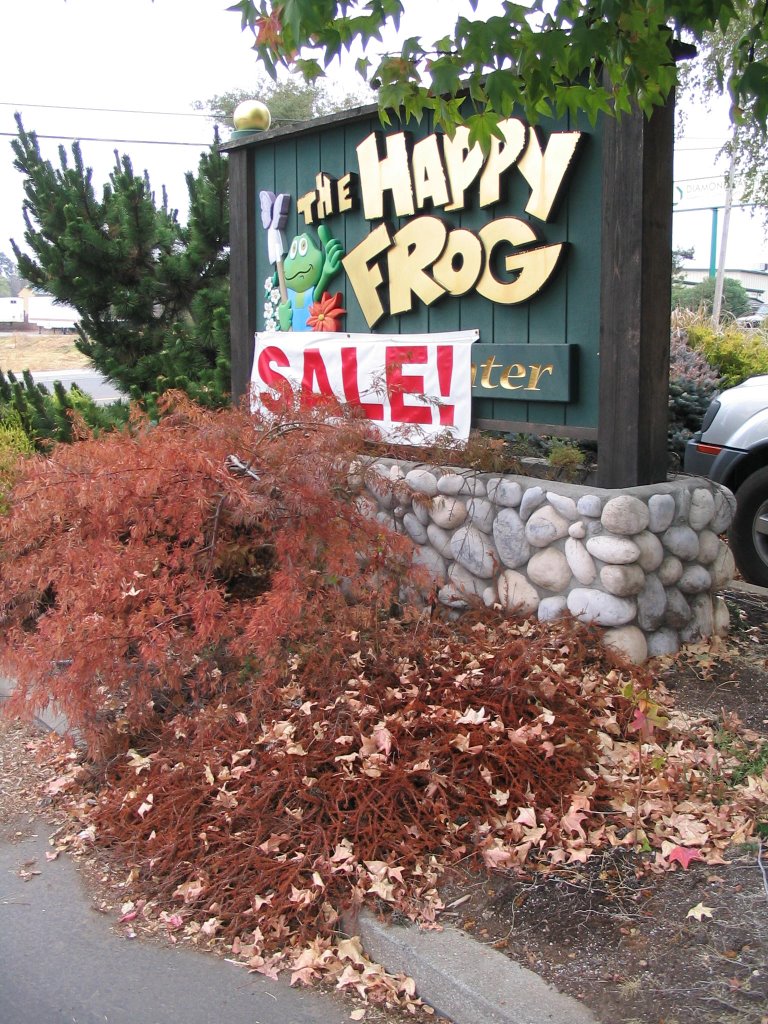
The real problem for our now ex-partners is that they had no one to help run the Auburn store. Through some very poor employee relations they had chased most of the workers away, but that's for our another discussion.

We went over to see the old store just last week. Plants we're untended and dying and we found out they were moving everything up to the Grass Valley store and basically abandoning the site. The picture of the sign shows a weeping Japanese maple that we planted year
s ago, brown and dead! The landlord now has to rent the land, and I doubt a nursery is in the plans.

While the loss of the nursery for the community is sad, the ultimate results are we now have a great garden center and are as happy as we have ever been! So we will chaulk it up to a hard lesson learned.
A million trees for Los Angeles.


This story from Los Angeles mirrors the post on Sacramento’s Tree Program we talked about. According to Green Beam News “L.A. Mayor Antonio Villaraigosa wants Los Angeles residents, businesses and city departments to plant 1 million trees during the next several years. The city distributed free seedlings and 5-gallon trees Sept. 30. The city partnered with nonprofit organizations such as TreePeople and L.A. Conservation Corps to continue giving away trees. The initiative is encouraging people to plant 5-gallon or larger trees. The city is asking residents and businesses to plant trees that provide shade, require little water and establish relatively easily, said George Gonzalez, Urban Forestry Division chief forester.” While I am all for trees being planted I have a couple of questions about this and other programs like this. According to the article “The Trees for Green LA program designers have developed a comprehensive List of Available Residential Trees with input from several urban forestry experts, including landscape architects and local arborists. The experts have ensured that a variety of low- and moderate-water-use species, appropriate for the different areas in Los Angeles, are offered, although available species may vary from season to season. Approximately 30 species are expected to be available at any given time.”

The article continues, “Because the purpose of this program is to provide residents with ornamental shade trees, palm trees (which offer only minimal shade) are not supplied. For the same reason, trees that produce edible fruit also are not available."

This is the list of trees, and what is most interesting that there are only three native trees on the list, Quercus agrifolia (Coast Live Oak), and Platanus racemosus (California sycamore), and Alnus rhombifolia (White Alder).

The Chinese Tallow tree (Sapium sebiferum) which is a recommended tree is also, according to Global invasive species initative an invasive pest. According to Invasivespecies.org Albizia julibrissin (Mimosa) is also a pest.

My county, El Dorado requires 50% of a commercial landscape be natives to this county. I know most municipalities discourage invasive species. It just seems odd that L.A. would encourage planting of non-natives and invasive species when other municipalities are requiring natives and discouraging invasive species. What good does it do for El Dorado County to have these requirements when our largest city does not?


Historic fruit trees

My kids would roll their eyes when dad would spot a historical marker on the side of the road since I am one of those people who stop and read them. When I was visiting my daughter and granddaughter in Riverside I read about the original navel orange tree, still growing in the middle of a busy road. This is the tree that all navel oranges descended from. My two favorite subjects, history and horticulture. That's Teddy Roosevelt transplanting the other original navel orange. It later died. The trees were brought up from Brazil and planted in what was then the very beginning of the orange boom that built southern California.

It’s apple harvest time on Apple Hill. Located about 15 miles from here it is made up of all sorts of small apple farms that sell all the goodies, pies, cider, arts & crafts, etc. It was originally made up of pears which all died do to disease in the 1950’s and 60’s. They came up with the idea of planting apples and selling direct to the consumer.

One of the original homesteads is the
Larsen Apple Farm, started in the 1860’s. We went up last week to eat pie and drink cider. I love checking out the old Rhode Island Greening apple located just across from the big apple barn. Planted in 1860 the tree still produces! How amazing that it was planted when Lincoln was president.

The Art of Running a Small Garden Center

.
I wanted to discuss the reasons why my old nursery “The Happy Frog” was up for sale. When we left it “The Happy Frog” was a happening place. Within four years it’s down and out and for sale.

While I still want to discuss this another thought entered my mind. What if the present owners had a place they could go to get information on running a small garden center? I doubt this would have been the saving grace, for reasons we will discuss. Never-the-less there is no one place a person can go to find out about “The Art of Running a Small Garden Center”.

Tony Avent wrote a book called “So You Want to Start a Nursery” a few years ago. While it is a good read, it discusses mail order nurseries, growing nurseries, and other types of nursery business. Tony is in mail order and only opens the nursery to the public on special days. I want to focus on small and medium sized garden centers that depend on the walk-in customer, with a focus on marketing and customer service. To that end I built a lens here. I have also included a link on my sidebar. This will be a place that anyone interested in small garden centers can go to find and add information.

That’s where you can help. I have already started to populate “The Art of Running a Small Garden Center” with links to posts where we have talked about garden centers in the past. Genie’s the “Plant Traffiker” is one such link. The discussion we had about Lyndale’s Garden Center is another

Can you send me links to any nurseries or garden centers that you frequent or find interesting? Send me links to garden centers that don’t do it right. In other words any thing that you think would interest a potential or current owner of a small garden center. As I receive this info I will transfer it to “The Art of Running a Small Garden Center” lens. Don’t worry about doing this all at once. Just keep your eye’s open and if you see something of interest send it my way.

I choose small garden centers as my focus because that where I have my expertise. In the trade we are always hearing about second and third generation owners and their ideas, yet they all seem to have large multi-million dollar operations. What about garden centers whose sales are less than 3 million dollars a year? In case that sounds like a lot we will in the future look at where the money goes, and boy does it go.

My motivation is to help others, who are interested in opening and/or running a small garden center. It is also to keep me sharp and current. By discussing these things and putting them in one place it keeps me excited about my profession, which at times can be quite trying. I will keep this blog going as it, and the interaction of my readers is what got this idea going in the first place.

My profession is notoriously slow to respond to new ideas and trends. “The Art of Running a Small Garden Center” and this blog are my way of pushing my-self, and anyone else in the trade who wants to go along into the 21st century.