Independent Nursery for Sale! (not mine)

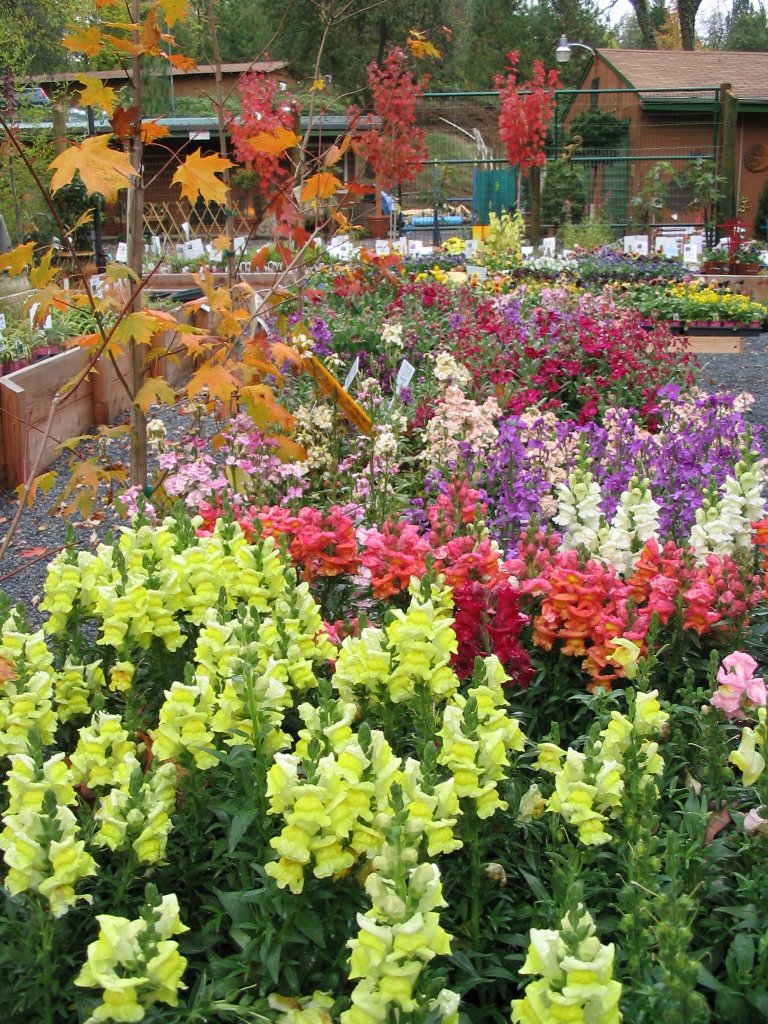
I found this on the internet. This is our old garden center “The Happy Frog” in Auburn. We sold out to our partners about five years ago to build our present center “The Golden Gecko”. About a year later they sold out to a fellow from The Bay Area.

We had been hearing from our customers who had frequented The Happy Frog that it was having a tough go and looked like it might be up for sale. This was interesting as when we left it, “The Happy Frog” was one of northern California’s most innovative garden centers and was a growing concern.

What happened and what could have been done to save it? This will be the subject of my upcoming post.

Oh, if you are interested you can pick this business and property up for between 2.5 and 5 million!

They’re talking about blogging!

Garden Center Magazine published by Branch Smith Publishing bills itself as a place for “Smart Ideas for Independent Retailers.” We receive the magazine as well as most professionals in the nursery business and related fields. Generally I have found it to be one of the better of the many trade magazines we receive.

The latest issue has arrived and they are talking about blogging! They have a regular section titled “Market Smart: In Depth” This months article is entitled “Retail blogs tap into younger demographic.” Author Sarah Martinez say’s “Blogs, also known as Web logs or journals, are the latest medium vying for attention in an already crowded market. Chances are a good portion of your customer base is at least familiar with bolgs and are probably blogging themselves.”

To the credit of Sarah and Garden Center Magazine I believe this is the first article dealing with blogs for the garden center industry. The article is positive in tone and interviews Anita Campbell, editor of the blog Small Business Trends, and your’s truly. This is the interview that we talked about way back in June. That’s where we found out that most nursery consultants feel that blogs have no relevance for garden centers. I posted about that here.

If you would like to read the interview it is in the June link above. This is great news for the idea of garden center blogs. This is a publication that gets lots of attention in the garden center trade. We’ll see what comes of it.

I hope that if you do decide to use a blog at your garden center you'll follow this advice from the article. ‘“…garden centers should only start a blog if someone on staff will enjoy doing it’, Pitsenberger said. ‘If it’s considered a chore, it won’t get updated and it won’t generate feedback from customers.'” You want feedback! I get feedback from all over the world form my “customers”. They may not actually shop at my physical location, but they shop at garden centers all over and are more than willing to dispense their thoughts and ideas about my business. The suggestions and ideas I have heard don’t always get implemented, but some do, and that’s important. It also broadens our outlook to see how people in other parts of the country and world are relating to gardening, garden centers, competition from box stores, etc.

So hats off to Garden Center Magazine for broaching the subject and realizing that the nursery consultants are wrong and blogging for garden centers is, as the column in the magazine is titled, “Market Smart”.

"What’s in" and "what’s out" for 2007

The Garden Media group has put out a list of trends they see on the horizon for 2007. According to Susan McCoy, outdoor living trend spotter and president of the Garden Media Group, “The outdoor living boom has clearly moved from being ‘just a trend’ to a lifestyle.”

This is a list of potential "ins and out's" in the gardening world. Some are encouraging such as “Eco-Chic Gardens Are In” and “Chemical Needy Gardens Are Out.” While some seem strange like “Escape Gardens Are In” and “Everyday Gardens Are Out”

I find most of what is reported encouraging, such as the movement toward “earth-friendly products" which could "‘quadruple in the next few years’, according to Bruce Butterfield, Research Director at the National Gardening Association”.

The “Outdoor Living is in” and “Indoor living is out” is encouraging. Getting people to be more aware of their environment outside is great. Certainly with the problem of obesity in the young any reason to get the family outside and active in the yard is good. It's weird though when you find out what people are putting into those “outdoor living rooms”. You might wonder if kids won’t get fatter! The study shows, “Thanks to new product offerings like weather-resistant appliances, furniture and electronics, there’s virtually nothing we aren’t doing outside we haven’t spent years doing inside the home, including watching TV.” That old parent’s admonishment of “turn off the TV (computer) and go play outside” might not have the intended effect anymore.

Some of what’s going on has been going on for awhile but is dressed in a fancy package for the study. “Outdoor living” was practiced by my parents with a brick BBQ and a swing set. Back then, according to this study my parent’s "outdoor living" was a noun, not a verb. It seemed like a verb to me! Organic gardening is now “Eco-Chic.” Secret gardens are now “Escape Gardens”.

Studies like these always get the attention of the powers to be in the “horticultural industry”. Lets watch and see how these ideas will be marketed next spring.

The newspapers just don’t get it.

The Sacramento Bee has a couple of articles in the Saturday Home & Garden Section about Latin names for plants. One is called “Key to the plant Kingdom” while the next is “Talking Plants, Latin: A dead language that grows on you.”

We thought it was great that the garden editor Pat Rubin felt it important enough to write about. If you remember we had quite a discussion about Latin names in June. Just goes to show you that garden bloggers are blazing trails.

I wanted to comment at the paper about this but to get on the comment section of their web page means first you have to register. Most of the time when you register all you need is a name, password, and e-mail address. I don't subscribe to the paper so I was shunted to the special registration section for non-subscribers. The fact that I often buy the paper out of the newstand doesn't count. So once there I ask myself why does The Bee want my physical address? Why a first and last name? My phone number, are you kidding? Birth year and gender?

What I can’t figure out is why so many of these newspapers require this kind of information to take part. Many of the gardening sections of many major newspapers require information you just are not going to supply. I notice that there are almost never any comments, so I must not be the only one who doesn’t register.

The newspapers are facing incredible pressure from the internet so they put up an online presence, yet make it hard for people to take part by requiring them to provide information no one is going to provide. You just know that soon as you give them your address they will start sending you subscription requests for the print issue. Why else would they want my address?

We like reading the Saturday Bee and enjoy the garden articles they print. If they want people to participate in the online presence they need to drop the requirement that we provide anything other than a name, e-mail, and password.

Maybe the papers don’t want us to participate?

Blue carnations and peat moss.

A couple of items to ponder. According to Branch-Smith Publishing Selecta Klemm, a breeder and propagator of vegetative plants based in Stuttgart, Germany, formed a joint venture with Mendel Biotechnology, a functional genomics company in Hayward, Calif., to develop and market transgenic ornamentals. The new entity, Ornamental Bio Resource, combines Mendel's expertise in drought, cold/freeze tolerance, disease resistance and flower stability traits with Selecta's experience in plant transformation technology and marketing. Ornamental BioResource is working on Selecta crops, including petunias, poinsettias, New Guinea impatiens and geraniums. Selecta cooperated in developing a blue carnation with Florigene of Australia."

Then there is this story.

"Watch for a peat shortage by spring 2007". Canadian Sphagnum Peat Moss Assoc., cites a "very poor" harvest in eastern Canada because of an "exceptionally wet summer" and an average harvest in western Canada. "As of Aug. 31, only 66% of this year's requirements have been harvested in Canada. Reducing the daily harvest also increases the cost per bale."

I don't know what to say about the blue carnation. I know blue camellias have been worked on, but none developed. What's next?

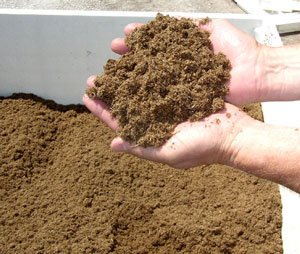
The peat moss shortage will impact soil conditioners and potting mixes that have peat as an ingredient. So even if you don't use peat by itself, it is a component in so many soil less mixes that the price of those products is bound to go up as the scarcity of the peat works it way through the system.

A tree can save us money?

Project EverGreen a national campaign promoting the benefits of landscapes, conducted a survey this spring. Some 90% of respondents said landscaping is important to improving a home's value at sale time and 70% agreed that green spaces and parks improve property values.

So the consumer is well aware of the importance of landscaping in increasing property values.

However, 70% disagreed, did not know or had no opinion that improving landscapes can reduce energy costs. 55% disagreed, didn't know or had no opinion that trees shading homes can reduce attic temps by as much as 40 degrees.

You would gather from the survey that most people are aware of landscaping increasing property values, but no idea that landscaping can reduce energy costs. I am not sure what to make of this other than what we have discussed in past posts.

The average consumer is so wrapped up in increasing the value of the home that it becomes the main motivation for landscaping. That’s why all the homes have the same boring yards in the new subdivisions. Don’t want to stand out as that might decrease the value of the home in relation to all the other homes on the block.

It also shows just how disconnected people are to the natural world. You would be surprised how many people ask for “evergreen trees” so they don’t have to clean up the leaves. When we mention a deciduous tree would be better, shade in summer and letting light in during winter, they are appreciative as they hadn’t thought about that. Besides some evergreen trees drop leaves all year.

Maybe with housing prices dropping many folks will realise that a home is primarily a place to live, and not just an investment. Perhaps then they will think more about landscaping for beauty and energy conservation, and not just to increase the houses value, which I think leads to the “homogenized gardening” we are seeing.

What Does "Family Run" Mean?

Over at Garden Rant they have a poll going on. It’s about your shopping preferences, big box, independents, or a little of both. I want to look at the results after a few days and everyone has had a chance to vote.

Scrolling down the comments we see our friend M Sinclair Stevens comment mentioning that the only place that had tomatoes available this time of year was Home Depot. Part of the comment was “The Home Depot tomato was from a southern grower in Alabama, a family-run place according to their website Bonnie Plants.com. I've never heard of them before but I'm interested in learning more about them since they are family-owned and grow vegetables for southern gardens.”

Bonnie plants are owned by Alabama Farmers Cooperative, Inc. According to FundingUniverse.com“AFC's next major acquisition came in 1975 when the co-op acquired Union Springs, Alabama-based Bonnie Plant Farm. The business was started in 1918 by Livingston and Bonnie Paulk in Bullock County, Alabama.” It continues, “After AFC bought Bonnie in 1975, Paulk family members, like the Andersons, stayed on to run the business. With AFC's support, Bonnie began to expand rapidly, adding trucks and building new greenhouses to serve an ever-growing market. By 1983 Bonnie marketed to 13 states and annual sales reached $9 million. Expansion was fueled even further by the rising popularity of garden centers by mass market retailers. Bonnie built up its sales staff, constructed more greenhouses, and as a result was well positioned to enjoy great success in the 1990s. In 2000 Bonnie would take in more than $42 million in revenues. As was the case with the Anderson family, one of the Paulks would eventually rise to the top at AFC. In 1996, Tommy Paulk, grandson of Bonnie's founders, became AFC's CEO, the fourth in the co-op's history.”

Some of the family members have stayed on to help run the business, but this is not the small family run business that Livingstone and Bonnie started in 1918. $42 million in revenues places it in the large size wholesale operation. The main fuel for their growth was in the Box Stores.

I don’t know much about Bonnie other than what M. Sinclair Stevens and FundingUniverse.com have to say. They must be a well run company with good plants to have gotten as far as they have. I guess it’s a matter of what a family run business means? Ford Motor Co. could be considered a family run business since the President of the company is a Ford, or Scotts-Miracle-gro being run by member of the family could be called "family run'. I think most of us have a view of what a family run business is in our own minds. Does Bonnie meet those criteria? What does “family run” mean to you? Does it even make a difference in your shopping habits? What do you picture when you hear "family run"?


How did you find out about us?

One of the things we love to find out is how new visitors find our garden center. I will usually ask, if I know they are new to our center. “How did you find out about us?” We hear “a friend told me”, “I saw your website”, or “I was just driving by”. It helps us see what works in our advertising and what isn’t.

You can also find out how people come to you web page or blog. I use 103bees.com. It will tell you the search terms people used to end up at your site. I thought it was interesting how people found their way to our blog. Here are some of the search terms used.

These are the ones where we come up first or second in Google:

world trey center

"gecko" "species" "california"

golden gecko's tail

garden nurseries in the sacramento area that carry the encore azaleas

needle nellies 2006

nursery jargon

basics of running a garden center

monica vierria

wal trey center

This is my favorite since it involves our Aussie friend Stuarts home town,

what does busselton have to attract people

Here are some others that we show up on the first page of Google,

california nurseryman

nurseryman job

pasquesi's home and garden

hines nurseries selling

golden gecko

long tailed gecko

pasquesi home and garden + lake bluff + hours

We have talked about The Long Tail in past posts. We also talked about how I feel the nursery consultants have it all wrong. They think blogs have no relevance for garden centers. Pasquesi’s Home and Garden, which is located in Illinois, might have a different take when our site pops up the seventh entry below their web page. I have never been to Pasquesi’s and I live in California. What about Hines nurseries selling, where our blog pops up on the same page that Hines is on? The one search for Encore azaleas in Scaramento is great. We don’t even carry Encore azaleas and we are listed first!

Some entries are mis-spellings like world trey center. Some are interested in Geckos. I guess the lesson is don’t be surprised how people find you, and it could be in a way that you would never have thought of. Oh, and I don’t know what the hours are for Pasquesi’s Home and Garden, and Busselton? I am trying to get someone to fly me there so I can give a responsible answer. Stuart?

Where is the growth coming from?

According to Green Profit Magazine, a nursery trade journal, Scotts Corporations growth was broken down this way. “At their largest retail accounts, straight lawn fertilizer had a 28% increase on a year-to-date basis, with garden soils seeing a 24% increase. Plus, they say that the launch of Miracle-Gro Liquid Feed has seen year-to-date sales of more than $35 million, making it the most successful new product launch in the company’s history.” Green Profit continues, “The other place Scotts saw a lot of growth was in the do-it-for-me sector, the Scotts Lawn Service. That had a 26% sales growth.” Here is what I find interesting, according to the article, “What isn’t growing? The company’s Smith & Hawken sales were flat compared to last year.”

We have talked about how Scott’s wants to enter the“gourmet” garden market with its high end fertilizers. I had been thinking that what Scotts needed to do was spin off a company that used separate packaging to separate it from typical Scotts or Miracle-Gro packaging. Now we see Scotts having a tough time with Smith & Hawken, not quite a spin off but close. You have to wonder if its corporate culture that is the problem.

More than ever it becomes clear that you can’t please everyone all the time. You have to pick the audience that you are best at serving and focus on them. Scotts has built its fortune on middle of the road products almost exclusively run through chain and box stores catering to the 70% of gardening customers that shop the chains. Trying to reach out to a different set of consumers may or may not work. You loose focus, and you company wasn’t built on that anyway. Smith & Hawken could just be experiencing a slow year. My goodness we all have, but it will be interesting to watch and see if Scott’s can pull it off.

I don’t think Scotts will be successful. They, like so many other large corporations that have saturated the market with their products are now looking into the little hidden away areas of gardening, as far as they were concerned. Now there is interest in the organic market, and the “gourmet” independent nursery market. The problem is this smaller market generally hasn’t responded to Scotts offerings before. Why would they now?

Living The Stylish Life in Minneapolis–St. Paul

This story from The Minneapolis–St. Paul Star Tribune was bound to happen. Apparently too many people have been taking Susie Coelho’s advice and living “the way Californians live.” The outdoor fire pit has grown so much in popularity that people are using it all night and the smoke is bothering the un-stylish neighbors. According to the paper “Complaints about smoke seeping into people's houses through open windows have wafted into city halls and fire departments. Some say neighbors are having fires too often or are burning materials they shouldn't, creating too much smoke."

Give these people a break. They are just doing what the self described “most prominent, lifestyle expert(s) in the country, in terms of outdoor living” told them to do. Remember what Susie said “Across the country, Americans have to get used to the way Californians live. It’s not just that we live outside all the time. A lot of times, we will bring things in.” (like the smoke, we call it smog). “If you want to live that stylish life, it takes a little effort.”

So quit complaining, close the widows, and start living the “stylish life”.

Don’t Blame the Big Guys

According to “Garden Center Retailer Magazine “retail Lyndale Garden Center, once a year-round business, will close its Richfield, MN, store Monday with plans to reopen next spring as a seasonal operation. While spring sales were strong again this year, competition from the boxes has hurt overall sales, making it no longer feasible to operate year round, Owner Dallas Schwandt says. Last year, the single-unit independent posted sales losses of 12 percent, taking it down seven spots in Nursery Retailer’s Top 100 report to No. 83 with $7 million in sales. In contrast, nearby competitor Bachman’s, with seven stores, posted a sales increase of 2 percent, moving it up three spots in the ranking to No. 23 with $30.5 million in sales.

We tried to find the web page for Lyndale, but there isn’t one. Bachmans however does. While Bachman’s is a multi-store outlet in business for over a hundred years the fact is, they have a web page. Bachman’s sales are up, while Lyndale’s are down. The comment from the owner of Lyndales, Dallas Schwandt is telling, “competition from the box stores has hurt overall sales.” Once again we hear the box stores are the source of our troubles. It would be interesting if any garden bloggers in the Minneapolis/St. Paul area shop these stores and what their take on this is.

We feel for Lyndale’s. It hurts to see sales going south. We would like to know what Lyndale has done to distinguish themselves from the box stores, as we talked about in my last post We couldn’t get the info though, no web site. That sent up a huge red flare. Maybe it’s not the chain stores that are the problem. It’s just so easy to blame the big guys.

Native plants, Tony Avent, blogging, and the fringe.

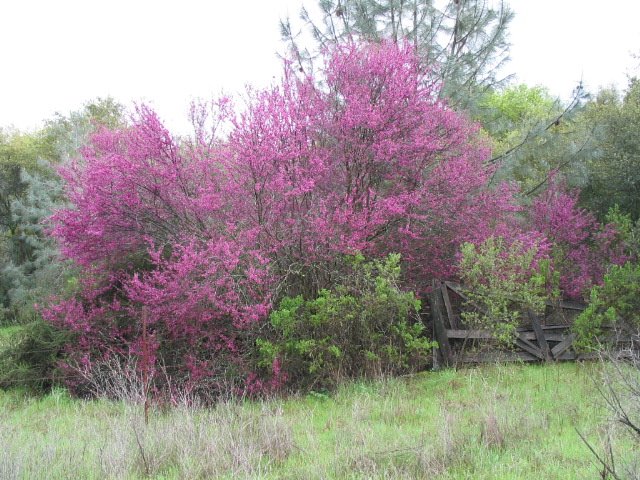
The native plant controversy is a new thing for me. My interest started with the palm trees The City of Placerville was having "In n' Out Burger" remove, as the addition of the palms put the burger joint over the allotment of non-native species. I have a friend who is a landscape designer who told me of her frustration at having to deal with the officials at the county, and their insistence that 50% of the commercial landscape be native species to this county. That's Cercis occidentalis (Western redbud) pictured. It covers the lower foothills. Tony Avent ? I had never heard of him, or if I had it didn't register. Maybe I am more like Susie Cohelo than I would like to think. "Across the country, Americans have to get used to the way Californians live" she say's. I have had my head in California sand for too long. You mean there are places where you don't have to water your garden during the summer? Whoa!

Tony is spot on about the native plant movement. I love native plants, but I also realize that hybrids exist that often perform better than species. There is a lot of confusion out in the gardening world these days. Here at the nursery we have started to see the beginning of interest in GMO (genetically modified organism) plants and seeds. Our concern is the mis-understanding of what GMO means. It seems to mean different things to different people. When we tell some customers that many plants like "Early Girl" tomato and a "Fuji" Apple are a result of cross-breeding the red flag goes up. "Those are genetically modified aren't they" Well yes, but not the way you are thinking.

Much of this thinking is due to a lack of information. There is a rush by mainstream media to jump on the current topic of discussion and ride that pony for as long as they can. It sells magazines and air time! Native plants, global warming, GMO's, you name it. Those people who think a hybrid tomato is a GMO need more information. "Early Girl" tomato IS genetically modified, just not in the gene splicing way. It does not occur in nature, but is produced through cross-breeding. Oh, oh, that"s a bad word, "cross breeding", sounds like GMO.  Words are powerful.

What excites me is to find out there is so much information being exchanged by bloggers. Bloggers will be the ones that spread the knowledge. Even though you might think you're just an average gardener taking pictures and talking about your garden, the fact that you are using this medium to communicate places you at the fringes of mainstream gardening. That"s great, because it's at the fringes that really cool stuff happens. That"s where the excitement is.

Being an independent nursery.

Carol made a comment at my last post on Scott's. She said "Well, I guess Scott's must still think the independents are worth partnering with, still viable in the marketplace, still worthy of attention, so maybe that is good news?" Yes, it is good news. We have never thought that independent nurseries were going to go away. We believe that the number of independent nurseries will fall, but the remaining ones should be better able to differentiate themselves from "The Boxes", and better follow their own "independent streak".

It"s that independent streak that needs to be nourished. It's so easy to fall into the trap of trying to please all the potential customers out there. A couple of people ask about Miracle-gro or Scott's Turf Builder and most garden centers will carry them to keep those people from shopping elsewhere. Don't want to loose a sale. Scott's wants to saturate the gardening public with its products like Nike does with sports. Chains, boxes, independents, or hardware stores, they all carry the stuff. It's a smart business move, and the reason Scott's is such a powerful brand.
What we would like to see is true independence. There are plenty of products out there that do as good or better job than Scott's. Find those and give people a choice. While 70% of the gardening public will always shop the big brands the other 30% would love to try something different, for a variety of reasons. We are an independent, not a chain store. Why carry chain store products?

We don't carry much that you will find in a box store. Most of my plants, fertilizer, soil amendments, and garden accessories won't be found in box stores. My suppliers have made a conscious effort to stick by the independents and we support them. They do not try to sell to both independents and chains. It's hard to please both kinds of customers. Maybe Scott's will pull it off, but I just don't know.

Large brands like Scott's, Hines, Bayer, and others belong in large brands like Home Depot, Lowe's, K-mart, and Wall Mart. They are for the 70% of the gardening public that will not be your best independent nursery customer. Focus on the 30% that are looking for something different. Having Scott's products on your shelf won't help in branding your small nursery.

Scott's products are not bad. They are better than many others being sold, and it shows in Scott's growth. We just feel that if you're going to travel the independent garden center route you ought to quickly differentiate yourself in the marketplace, and carrying what everyone else has won't do it.
Scott’s new "Jim Cares About Independents" ad

I enjoy receiving various trade publications. It’s a chance to see what other nurseries and nursery people are up to. One I receive is “Nursery Retailer”, which bills itself as “Cutting Edge, Real World Retailing – Your Competitive Advantage.” Generally it’s an interesting read and one of the better trade magazines we receive. They also publish “Garden Chic” which was the source for my “Is Susie Cohelo from outer space(s)?” post. What I am interested in is what appears to be a very cozy relationship with the Scott’s corporation. This is something I hadn’t picked up on before, as it seems a little more out in the open now. The first page features a two page ad titled “Jim Cares About Independents”. Jim Hagedorn is the president of Scotts. The ad points out that Jim and the publisher of Nursery Retailer, Jeff Morey are traveling around meeting independents who naturally love and use Miracle-gro, one of Scott’s product lines. Considering the Scott’s organization is thick in the box stores its nice to see Jim cares about independents enough to take this ad out and tell us.

The next page is an ad for “Smith & Hawken” another Scott’s company. Flip through a couple of more pages and there is a huge ad for the IGC, Independent Garden Center Show in Chicago. One of the keynote speakers will be Jim Hagerdorn who sure “cares about independents.”

We then come to a multi-paged article on “Branded Plants." While they do cover Monrovia nursery, Proven Winners, Encore Azaleas, as well as others, sure enough there is “Miracle-gro Nursery Select Brand." It says “The Scott’s Company is the world leading supplier and marketer of consumer products for do-it-yourself lawn and garden care. In 2003, the company unveiled its independents-only product line under the Miracle-Gro Nursery Select brand. Premium annuals were introduced using the Nursery select brand in limited geography. The Nursery select program was introduced specifically in response to the needs of independent retailers and is an exclusive program.”

I mentioned in my post “We garden for you so you don’t have to” how Scott’s sold plants through the Smith & Hawken Brand. Well it now seems they are selling plants through the Miracle-Gro Nursery select program. They claim it’s an independent only program and I guess it is for now. We’ll see what happens.

My whole problem with this “Jim Cares About Independents” campaign is if he did he wouldn’t have to print it in large letters across the top of the ad. When someone who is most likely one of the largest suppliers of garden products to the box stores say’s he “cares” about independents it just doesn’t resonate.

I know magazines depend on ad dollars to make it. It’s just a little weird when the publisher of a magazine for independent garden centers starts traveling around the country with the president of Scott’s telling independents they “care.”

Hey Garden Writers of America, This Guy Gets It!

Interesting article by Steve Outing of "Editor and Publisher" about how he “believe(s) that the news companies that succeed in the future -- the ones that reverse the current newspaper industry malaise -- will be the ones that adopt audience interaction as a mantra.” He continues “The editor and/or publisher should have a blog, and use it to engage with and communicate with readers and advertisers. I don't mean fluffy blogs, either. If the top editor's blog reads like a press release, there's little point in having the blog.” Interesting stuff considering Kathy Jentz experience at the recent GWA, Garden Writers of America meeting, and Stuarts questions about "The UK Times" garden blog.