Are garden books boring?

IMG_2566

I came across an article today in The Guardian titled, “Why are garden books so boring?”  This seems to be of great concern not only in The UK, but here in The US. Is it also of great concern in other countries? Not surprisingly the people most concerned about boring garden books seem to be authors who write about gardening.

One common thread is comparing garden books to cooking books. The author of The Guardian article, Lucy Masters says, “I look at cookery books and the photography is amazing, the layouts are appealing and interesting.” Are there no boring cooking books? Do cooking book authors have these same discussions, but reversed? Wondering when someone else will come out with yet another beautiful picture book of dinning in Tuscany?

Recently I reviewed a garden book which I didn't find boring. The book seemed to have just enough photography, and interesting ideas to suit my tastes. My taste in most things runs a bit counter to the masses so tell me, is this the kind of book we are talking about as being boring?

Take a look at The Amazon top seller list in gardening. Are these books boring? I haven’t read most of them, so I really don’t know. What kinds of books would we expect to see filling this list? Seems they run the gamut from, “Vegetable Literacy, Cooking and Gardening”, “Marijuana Horticulture”, “Beatrix Potter’s Gardening Life”, “The Flower Recipe Book”, and  a bunch that help people learn to feed themselves. In the case of “Aquaponic Gardening”, it might help feed people in impoverished countries one day. That doesn't seem boring. There are also a bunch of “how to” books on growing your own food.  It seems that if you’re concerned with GMO’s, pesticides, and corporate farms, you might want to know how to do this.

According to Lucy Masters article, nothing refreshing or novel has been published since, “Andy Sturgeon's book Planted came out in 1999. On the front cover it had a man's bald head with a terracotta plant pot and seedling balanced on top. It's was such a striking image. Everything about the photography in that book was refreshing, ground breaking! That was back in 1999.”

Why do we hear so much about the decline of gardening books? What do you think is going on here? Is this just a case of bored garden book authors? How do you find the current selection of gardening books available? What would you like to see more of? Less of?

Monrovia Nursery's latest scheme

Monrovia Nurseries has come up with yet a new scheme they hope independent garden centers (IGC's) will jump on. According to Garden Centers Magazine,“Monrovia Nursery is launching an e-commerce website by mid-January 2014, and consumers will be able to buy plants directly from the company. But Monrovia won’t ship the purchased plants to gardeners’ homes. Instead, the California-based nursery will deliver the plants to participating independent garden centers, which will then distribute them to customers.”

The customer chooses the plants at the Monrovia website. The plants are pre-priced according to what Monrovia feels is an “appropriate retail price”. The plants are then shipped to the local IGC for pick-up by the end customer. According to David Kirby, vice president of sales at Monrovia,“The plants will be delivered directly to the stores, and the garden centers will receive the normal retail markup from the sale. Once consumers purchase the plants, they’ll receive a message indicating that Monrovia will ship them to the local IGC once they have finished growing and are in prime condition. The plants will be delivered between March and May, have a label with the gardener’s name, a thank you tag and a fresh, clean container.”

Of course Monrovia hopes IGC’s will jump on board with this. It was IGC’s who tried to help Monrovia out of a jam just a couple of years ago, but to no avail. Monrovia threatened to go out of business or into the chain and box stores if IGC's didn't buy more plants. Many IGC’s did buy extra plant stock, but to no avail. Turns out Monrovia had been planning on going into the chain stores all along, and used the IGC’s long standing relationship of support to sell a few more plants. Monrovia eventually headed to Home Depot. These day's they sell their plants through Lowe's.  Why wouldn't Monrovia eventually just sell and ship the plants directly to the end customer, keeping all the profit?

I have followed and reported on Monrovia for years. Monrovia is doing exactly what is to be expected these days as the horticultural trade continues to fragment, and shrink. It's the future, and it would be unwise of them not to at least look into it. However, expecting the (IGC) to help them out again? Seems a bit of a reach. How does that saying go? “Fool me once shame on you, fool me twice shame on me”.

Twitter is an odd bird

Come fly with me Twitter is an odd bird. Is there “Twitter etiquette” when it comes to contributing to conversations?  Do you have to be “followed” by someone in the conversation to be included? I would imagine that simply following one or more of the people involved won’t get you through? Not talking about celebrities, but people who are discussing something for which you have knowledge of? Some of them might consider themselves celebrities in the field of horticulture, but not on par with celebrities outside the trades with ten of thousands of followers.

I enjoy some of what is going on there, but find myself wondering when it’s appropriate to weigh in? Having tried a few days ago, only to be left with absolute silence, is the cause for my asking. It’s a bit odd, but then Twitter is an odd bird.

People seem to either love Twitter, or hate it. Little middle ground. Is it great for starting conversations, but terrible for following up? When I post on Twitter the post automatically appears up on my Facebook profile, where it seems more interaction takes place? Is the very nature of the two platforms, one with “friends” (Facebook) the other with “followers" (Twitter) that makes the difference?

Just curious as to what your take on it has been. I also keep hearing about how Google+ is going to be the next "Place to be", but haven't seen that happen. Is that just wishful thinking among'st the Google faithful?

Just enough

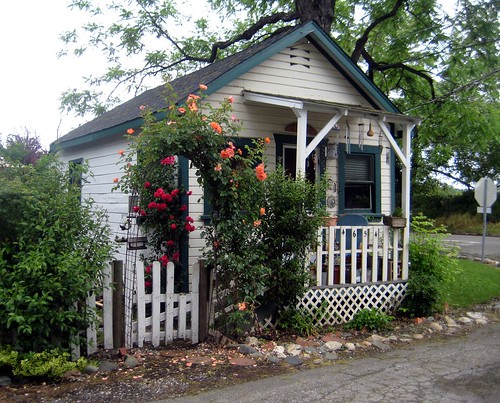
Small House in El Dorado

Often I receive well meaning advice on how to attract more readers, fans, or followers. I should measure incoming links, opt in’s, opt out’s, subscribers, etc. Those of us in the horticultural trades feel that if we write about something, it has to be for “someone” that will eventually send money our way (doesn't happen that often, if at all). If we don’t write for monetary gain, “why waste our time?” For some that’s why they write in the first place. The act of writing is not where they find pleasure; it’s the results (monetary gain) of that writing that brings the joy. There is no harm in that, as they are fulfilling their needs, and measuring their success through the pocket book. Got to keep the lights on at the store.

There is a much smaller group of writers who want to write for the joy of writing, and if the money comes that would be nice. They would like to write about things that bring them pleasure, but may be ignored by the masses, or those who respond from advertisements. Someone wishing to write about "native plants", or "16th century gardening", might find themselves disappointed when it seems no one responds.  In an attempt to gain more “likes” or “fans” they alter their writing, saying what they think the audience wants to hear. Sometimes that works, often it doesn't.

We forget that sometimes the stuff we write from the heart does affect people, but in a slower and not so measurable way. We need to cultivate patience. I had this experience just the other day. A reader said that what I wrote “inspired” them to get back into writing about what they love. Great!

You can still write for an audience with the idea of “selling” your products, or business. Maybe you’ll just have to find a place for both methods. Perhaps a different platform or blog will work. However you do it, we need more writing about the stuff you feel passionate about. When you write from the heart you open yourself to finding others who enjoy what you do. That very small niche of people who enjoy what you have written sometimes can change your life. It's the quality of you readership, not the quantity that truly matters.

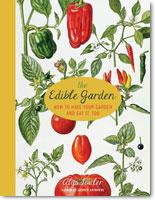
"The Edible Garden. How to have your garden and eat it, too"

510ghD8iENL._BO2,204,203,200_PIsitb-sticker-arrow-click,TopRight,35,-76_AA300_SH20_OU01_"The Edible Garden. How to have your garden and eat it, too", by Alys Fowler. This book from Viva Publications was recently published here in The U.S. after it's initial debut in The U.K. I can’t remember when I had first heard about Alys Fowler,  but I am sure it was while surfing the web following a link. I don’ typically buy books concerning gardening, as there are so few that I really enjoy. It seems I do things a bit differently than most in that I find myself fascinated with the people and their ideas first, then find out about their works. Having been involved in the garden trades for over 30 years, I have become a bit jaded with the gardening publications offered these days. If someone interests me I will check out their blog to see what’s going on today.  Alys blog  is interesting. Check out her latest post, “One Bee and Me”.

Her book “The Edible Garden” is divided into three parts, Things to Know, Things to Grow, and Reaping Your Harvest.

“Things to Know” sets the stage with discussions on soil types, mixing edibles with ornamental plants, foraging outside of one’s garden, composting, green manures, and some other basics, and not so basics. I am not sure when I have read a book that promotes foraging as a supplement to ones garden. She cautions, “Don’t forage in Scientific, Interest and National Nature Reserves without the express permission of Natural England”.

“Things to Grow” discusses designing the garden using plants we are familiar with, as well as some which are more exotic, at least to me. Oraches, tree spinach, Oriental greens, salsola, landcress, and what she describes as “other curiosities”. Tomatoes and other more well know vegetables are mentioned, too. It’s not so much a list of varieties as an inspiration to try growing something different than the "same old same old". Fruit trees and berries are also discussed, as well as an entire section on flowers, some edible, and some for show. There is also a short section devoted to flower bouquets.  Let’s hope this catches on as the growing of, and giving of flower bouquets is a dying practice.

“Reaping Your Harvest” is concerned with how to prepare and enjoy what we have grown. Jams and jellies, pickles, and chutney, as well as how to preserve, or cook with your harvest.  Included is some of her favorite recipes for lavender biscuits, raspberry jam ice-cream, and courgette cake. To round out the book the third section is devoted to homemade fruit liqueurs, and cocktails.

This is not a coffee table book thanks goodness, but it is filled with great photography and drawings of both Alys, her garden, and creations.  With a slightly urban focus it would make a great gift for up and coming gardeners. Even somewhat jaded gardeners like me will get to view the garden, and gardening as Alys sees it. It is a welcome change, and has inspired me to try a few of her ideas and recipes.

I received a copy of The Edible Garden Book for review purpose.  This in no way affected my review.  All thoughts and opinions are my own.

Changes

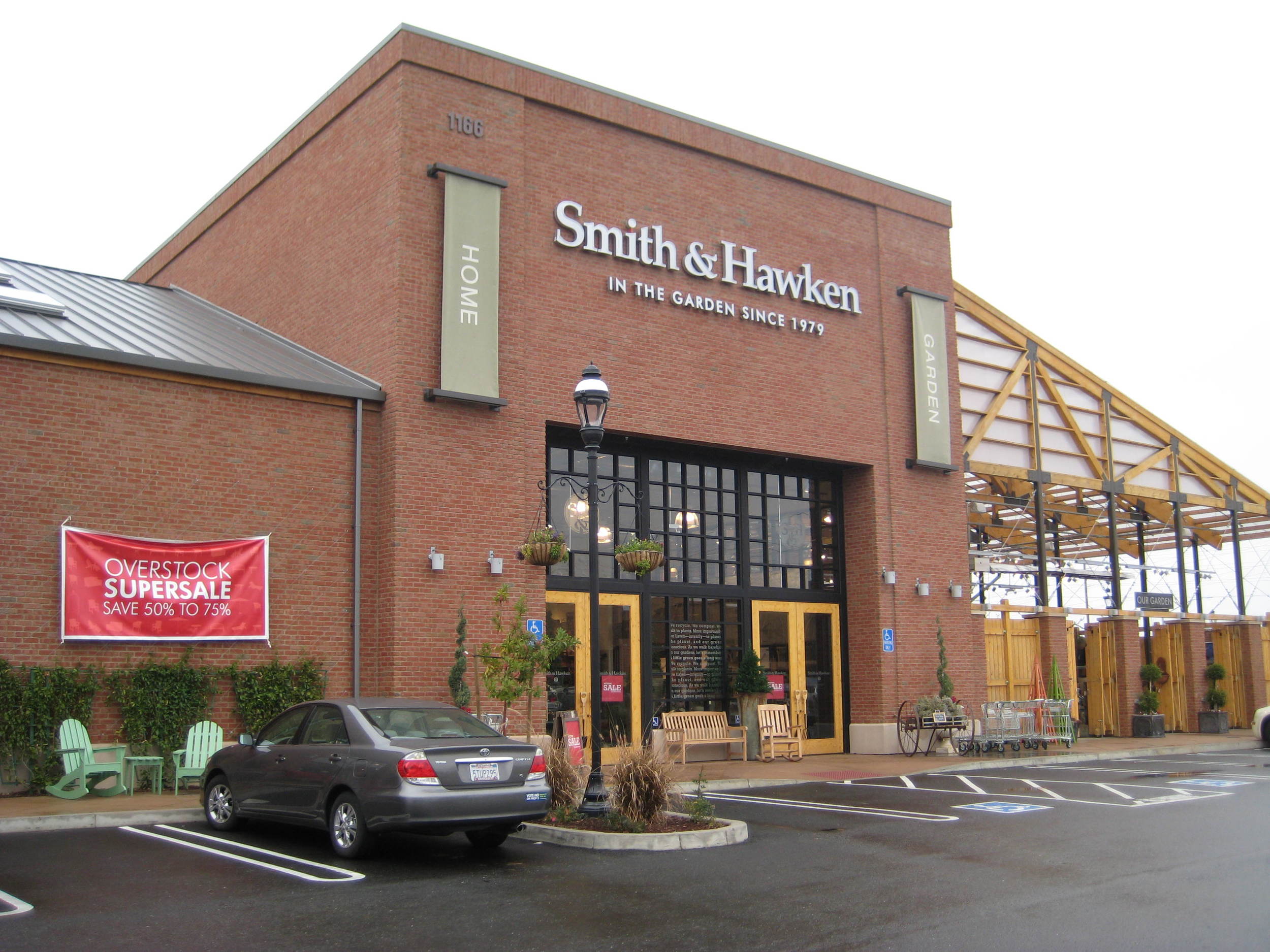
img_1184.JPG What does a person interested in horticulture see these days when they look to the nursery trades for work? How different is it from the late 70’s when I stepped into the field? I know that when I began my journey on The San Francisco Peninsula independent nurseries dominated the landscape. There we’re no “box stores”. The only chain store completion was “K-Mart” and their hideous garden department.  We didn't even think of them as competition. The competition was independent in nature and included “Peters & Wilson” in Millbrae, “Burlingame Garden Center”, “Golden Nursery” in San Mateo, “Taylor Nursery” in Belmont,” Redwood City Nursery”, “Half Moon Bay Nursery”, and “Rogers Reynolds” Carriage Shop” in Menlo Park. I worked at “Christensen’s Nursery” in Belmont. Have I missed any?

If these places we’re competition, we didn't notice. There was camaraderie of sorts that even included meetings together with The Peninsula Chapter of The California Association of Nurserymen. There were also the meetings held by another trade group, the 49’er association, which is the precursor of today’s Master Nursery Association. There was no drug testing back in those days. I can’t even imagine where they would have found workers if they did. The meetings we attended we’re “quite the scene”. However most of us survived, even if the nurseries we worked at didn't. I believe all of the above named nurseries with the exception of Golden Nursery, Half Moon Bay Nursery, and Tyler’s are gone. I left for inland California in the late 80’s and have lived here since. What’s the scene like there now? Is it just as active, only different? Do most shop for garden supplies at Home Depot and Lowe’s now?

The bedding plant department was dominated with very young seedlings and cuttings sold in small “6 packs”. Rarely we’re they blooming. I remember when the first “jumbo packs” with blooming flowers arrived. Those we’re for the impulse buyers, while the more serious gardeners bought the younger plants.  Maybe it’s just my imagination, but it seemed these younger plants grew better, and bloomed longer?  Does anyone other than “Annie’s Annuals” still produce these younger, non- chemically treated bedding plants’ anymore? Seems so many now are treated chemically, and breed to bloom younger, so as to sell and ride in the trucking racks better.

There was no organic gardening department. I will say this is one area I am glad to see now. We sold stuff that has long ago been banned, and for good reason. There was really just no other option at the time. Rodale’s was the only publication I can remember promoting organic gardening. We lived and breathed Sunset Magazine. Our Saturday meetings included an advance notice from them on what they would be publishing that month. That way we could handle all the questions we would get concerning some article in the magazine.  Time magazine finally bought out the Lane family who had owned the publication for decades. Never was the same after that.

Monrovia Nursery was only located in Azuza, California. Their logo, which hung on every plant, was a man wearing a fedora, smoking a pipe. I would love to see if anyone still has one, or a picture of one. Customers would come in smoking pipes, cigars, or cigarettes. Shrubs and trees we’re gown in metal cans which we had to cut down the sides so they could be removed. “Would you like us to cut those cans open for you? Talk about a liability! I remember one customer cutting their hand and bleeding on the seat of their Bentley. We gave them a towel and band aid, and off they went. People didn't sue as often back then, or these things we’re handled out of court.

I don’t think things were better, or worse back then. It was just a different time and place. I do know we had lots of pride as nurserymen and women. Becoming a Certified Nurseryman was an honor, and at Christensen’s the uniforms we’re green and we had matching green pants. We looked like forest rangers, except for the long hair and ponytails on the guys. I thought we looked cool. I remember when we finally convinced our boss Jack Christensen to get with it, and allow us to wear shorts.

Never regretted my career choice.  It is an honorable profession, and one that is even more important these days.  I pretty much work by myself now, so interactions with fellow trades people is often only through The Internet. Since much of the above predates Silicon Valley, there is little recorded on The Internet concerning that general era in the nursery trade. I have connected with others after posting these history trips, so hence the purpose of my trip down memory lane today. It doesn't matter whether it was The Bay Area, or “across the pond” so to speak.  How has the trade changed since you first became involved?


We need more dreamers

The Golden Gate from Angel Island

I love to write. Not "garden writing" mind you. I just want to write. If it happens to be about gardening, the garden, or the garden trades, fine. It’s not an ideal way to make a living however.  We can all name writers who have made fortunes based on their written word, but it’s a very rarefied group. I believe most writers barely make a living off their craft, if it’s a living wage at all. Still, I just want to write.

Recently a book was sent to me for review. The author would be labeled a well known “garden writer”. I’ll just refer to them as a writer, who has written a book about gardening. The review will come later this week. I was pleased the publisher thought of me when they asked for a review. I have never reviewed a book before. Why me? Is it because I had asked one night just a short time ago to reveal in my dreams some direction? I do that now and then. It's playful, and fun. You never know what your dreams will reveal. Suddenly everywhere I look writing opportunities are turning up. There is something at work here. Our "reality" springs forth from our dreams.

It would be nice to see more dreamers in the horticultural trades. I know it’s not very “practical”, but it would be nice. I think the dreamers are out there, and want to contribute.  Often we are overly concerned with the practical stuff, and turn off the dreamers among'st us.  The other day I was reading at a trade discussion group where someone asked what where the qualities of a good "horticulturalist"?  The very first answer from someone in the trade,  "We're horticulturists, not horticulturalists." “Horticulturalist” or “Horticulturist”, does it really matter? Instead of correcting people on their semantics, perhaps we should answer their questions? I see this all the time in our trade businesses. We wonder why people don't want to be "helped" when the arrive at our stores? Or do they bother arriving at all?

Our trade is in need of independent thinkers and dreamers. Labels can be confining or liberating. Be sure when it comes to what you do you don't let others trap you within "their" labels. Keep dreaming.

Take that first step

Dog on beach

I am going to share an idea that has worked wonders for me over the last year. It started out very, very difficult, but has grown easier as time has passed. It’s not for everyone, but it could work for you.

We had accumulated a “boat load” of debt that was making it impossible to breathe deeply, or think clearly. We had accumulated this in an attempt to maintain a lifestyle that we had become accustomed to over the years.  The interesting thing was the lifestyle really wasn’t as fulfilling anymore. When the economy tanked about 5 years ago we could see that the world had changed. It seems to me that many people I see are doing the same thing. They are trying to maintain a “world” that really no longer exists. For me, the time had come to create a “new, brighter world”.

Shed the debt! Doesn’t matter how you do it, but consumer debt is drowning people under its toxic weight. I am not talking about your mortgage (although we could). We’re talking about one of the most toxic kinds of debt, credit cards. In business it’s very easy to accumulate it since you can convince yourself that it’s necessary to keep the business running, maintaining an image, and thus putting food on your table. The problem is you end up working for the banks, instead of yourself. I know there is nothing worse in small business than working hard day in and day out only to see the profits, when there are any, head to the banks.

Tuck your pride away, seek help from professionals if necessary, and work a way out of it. It’s not easy, but its life changing. Some will tell me that it’s OK to carry some consumer debt as long as you pay off the bills once a month, or use the debt to grow your business. I won’t argue finance, since we are all different. However, in my now “new world” credit card offers that come in the mail are ripped up, and thrown away. Don’t even open them anymore, despite their offers of 0%interest. I find it amazing that after the economy tanked over five years ago the banks are still pulling this kind of stuff. It’s unethical, but when has that ever stopped them?

I write this in an attempt to help people I know who are crying out for help. Everything can seem so overwhelming these days. Where do you start? How can you possibly dig yourself out from under what seems to be a mountain of concerns? Don’t focus on everything right now. Start with just one thing, and watch as those other things start to come into focus more easily. Your new brighter world will translate into your business life, as well as your personal life.

After all, in small business your personal life IS your business life. 


A positive change

2013-03-24 15.59.34

After raising chickens for the last 25 years we have come to the realization that we just don’t want to take the time to do it anymore. We love the delicious, fluffy eggs they produce, and use their manure to feed the garden. When we first started with chickens, finding fresh organic eggs was much more difficult. As a matter of fact, finding fresh organic grown food of any type was more difficult, hence part of the reason for starting our now very large vegetable garden.

These days driving from work to our home we pass an organic vegetable farm with attached “farm stand”. Just next door there is a lady who raises chickens and feeds them organically. Again, there is a little farm stand attached where you leave the money and retrieve the eggs from a small refrigerator.  We also have at least 3 farmers markets within 12 miles of here. These places didn't exist 25 years ago.

We have decided that once our chickens have stopped producing, we will not replace them.  The garden is going to shrink in physical size also, but not disappear. We still find joy raising vegetables and fruit for fresh picking. What will happen is we won’t feel the need to fill up every square inch of garden space as we have in the past. It will cut down on the amount of time necessary to maintain what is a very large garden spread.  We also want to support the people who have made it their business to grow fresh, organic food.

I think as we see more locally produced organic sources of food become available you’ll see this trend grow. Some people will always want to raise their own food, and that’s great. However, I think you will see more people doing what we are doing, and as such the trend of “growing you own” food will plateau, if it hasn't already. That’s OK, since we have come so far over the last 25 years in making available organic, locally grown food. Some will still need to grow their own for a variety of reasons. We live in a very special place, and not everyone has this opportunity like we do. Still, I see this as a very positive trend.


An idea for this holiday season

What is the attraction of “Black Friday”? Is it the excitement of shopping with lots of other people? Is it the supposed deals and sales that are offered? Is it the new way to celebrate The Holiday season? Not being one who celebrates this Holiday (Black Friday), I find it interesting to watch the build up to it.

We bemoan the loss of small business one day, and then rush to the local Target on “Black Friday” to buy stuff on sale.  The profit margin on these sale items is small, unless of course the items are brought in from countries far away where the labor is cheaper. Do they celebrate Black Friday in those countries?

Why do we need a “Small Business Saturday”? American Express in their expansive mood have designed a day when your supposed to support a local small business of your choice. On that day you’re encouraged to pay for your items with your purple, platinum, black, or rainbow Am Ex card. I will not bemoan any small business for celebrating the holiday's that way if they choose. It’s the one day when perhaps paying the exorberant fees American Express charges small business everyday worth it.

I have chosen do something a bit different this year. Maybe you’ll join me in trying it out? When I need a new pair of socks, or a gift for someone special I’ll choose the best quality I can afford, and buy it when I need it. Want to really blow a small business owners mind? Do what I do. Pay cash! Talk about a look of surprise. They will love it, as they now don’t have to give American Express 2-3% + fee off the top. Want to further make their day? Try doing you’re buying on a day other than Small Business Saturday. Now, to feel even better take that 2-3% + fees and give it to a local charity working to help your neighbors. They could really use some help.

This plan won’t work for everybody, but it works for me. It may just work for you.

Free yourself to think more clearly

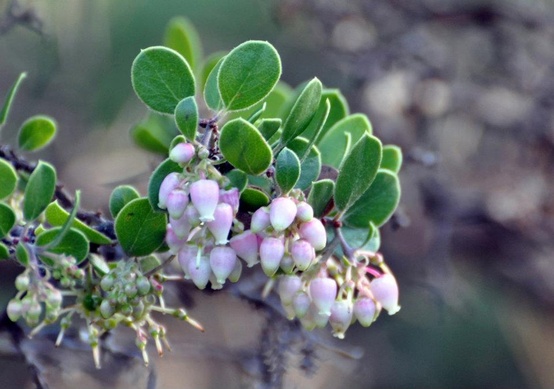
Manzanita flowers The future of the garden and gardening is malleable and not a given. As such the future of the garden center, garden shop, or whatever we wish to call it is open to a myriad of possibilities. The old order seems to be dying, and a new one has yet to emerge. I suggest there is no one “new order” to arise, but many, many choices available.

It’s this change that frightens us. Will everyone shop only at box stores and their kind? Is the future of gardening businesses just to get bigger and bigger? We hear that one way to be successful in this field is to serve food, or coffee along with our plant offerings. Some stores have found success doing this, while others have not. We are also told that to be successful in this new world we must have attendant business attached to our business. How can we possibly appeal to the new generation of gardeners is we don’t offer more and more choices when they arrive at our store? How can we not offer free Wi-Fi or QR codes to scan? Will everyone simply buy online, leaving the physical store behind?

It’s so difficult to predict the future of gardening, and the gardening related businesses. Everything is possible, and without a guidepost we feel lost and unsure how to proceed. When I started in the business the path “seemed” clearer. Now it would seem we have so many different paths that can be followed. Which is the correct one that will lead to our ability to stay in business and thrive? There is no lack of well meaning people, publications, and organizations ready to help. Who do we listen to?

It seems that with The Internet the amount of information increases daily. You get what you focus on, and with so much “information” coming your way, how can you focus? My suggestion is to limit how much information you digest on any given day. You might think you’ll miss something important if you don’t receive all that information. What if the “future of gardening” is published and you’re the last to find out? Someone else will reap the benefits, and leave you in the dust.

I suggest that you turn off much if not most of that noise. I have cancelled most of my subscriptions to well meaning newsletters, and publications. Not that someone else won’t enjoy them and reap benefits. I find for myself, focusing on a much smaller diet of “positive news” makes a huge difference. There is so much negativity all around that it might seem impossible, but it’s not. This includes The Internet, which can be one of the biggest time sucks there is. Interestingly, when I turned off 90% of “The News” I found that my “online time” shrunk to about 10% of what I had been spending with it before. My outlook has improved and I don’t feel lost or left out. Pick your “trusted resources”, and turn off the others. You’ll free up your mind to focus on what’s really important. You won’t miss a thing and you just might discover the proper path for you follow.

The post garden center world

8335851681_836f128cab There is no lack of motivational ideas for turning your garden center business around. The most recent was in Garden Center Magazine. Titled, "Take a good look in the mirror", it's " how to work through the major industry challenges, such as marketing to young homeowners, and keeping websites current."  These are good tips that should be followed as a matter of course.

Sometimes the best course of action is to quit. Today I head from another nursery that is closing after three years in business. The owners say they are tired of working so hard, only to find themselves in a hole. Likely their choice of closing now is the best decision they could have made. The old garden center model is dying, and these people are going to head in another direction. They will look into opening a smaller garden shop closer in town where they will have a larger pool of people to work with. They will also start growing vegetables for the local market. This can be done through farmers markets, the small garden shop, or subscriptions. These people knew the direction they were headed wouldn't work anymore, so they quit.

I am afraid many of us in the trade beat ourselves up mentally and physically trying to run our businesses according to what worked in the past. You can only beat you head against the wall so much before it really starts to hurt. More and more I am convinced the future for the small garden center is outside the traditional supply chain and trade think. Much of that supply chain and thinking is a result of the past ideas on how garden centers operated. However, we are entering the "post garden center world". In a world of infinite choices why would we continue to think that trying to carry and sell "everything for the garden" would work?

What's the answer? I'm not sure, but the present course is not working so well for many in the trade. There is no shame in quitting, and moving on. In many cases it's just what's needed to bring new ideas to the forefront. Somehow we need to get beyond the idea that quitting is failing. The future will be full of quitting, and starting anew. Just becasue we are entering the "post garden center world" doesn't mean that people will stop gardening! They will still need gardening supplies and places that sell those supplies. In most cases though, it won't be from a "garden center". Ready?

Roger Reynolds Nursery in Menlo Park is closing

Roger Reynolds Nursery Roger Reynolds Nursery, located in Menlo Park, has announced they will be closing shop after September 28th. Roger Reynolds has been serving the mid-San Francisco Peninsula for 97 years. I remember working at Christensen's Nursery, just north of Roger Reynolds 30 years ago.  They we're California Nursery Association members, and the various Peninsula based nurseries would get together regularly for chapter meetings and dinner.

Did you notice where Roger Reynolds is located? Menlo Park is the epicenter for Silicon Valley wealth. Actually Menlo Park has been the epicenter of wealth on The San Francisco Peninsula for over 100 years. How is it a fine garden center such as this can't even make it there?

Here is what Sally Halstead, owner had to say, "It is with a heavy heart that I announce that after 97 years in the same location serving the residents of Menlo Park and the surrounding communities, Roger Reynolds Nursery & Carriage Stop has closed its doors for the last time.

This has not been an easy decision. Despite all our efforts since the severe economic downturn of 2008 our business has been unable to adequately recover.

I thank the generations of loyal, faithful customers who have supported the Roger Reynolds tradition these many years. On behalf of my family and staff, I thank each and every one of you for being with us. Your patronage and support has been most valued and appreciated. Thank you!"

It's a shame to see these old garden centers going out of business. If you can't make a garden center work in Menlo Park, then you know the trade has changed even more fundamentally than just the economic downturn. The modern gardener just does not support the garden center business in numbers great enough to prevent this from happening. Like so many  businesses, you don't realize how special they we're until they are gone.


Planting garlic

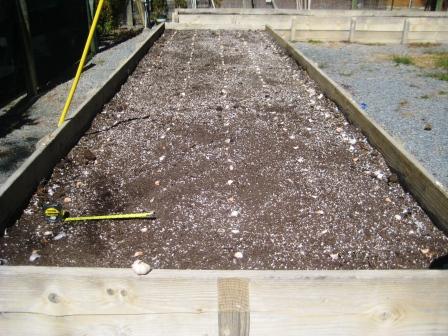
The garlic bed "Spanish roja" or "Greek" garlic is one of my favorite varieties. I planted about  200 in this bed alone. Likely plant about 400 more at home. Fall is the time to plant garlic in northern California.

I don't plant the big "Elephant Garlic". Too mild a flavor for my taste. The "Spanish roja" has a nice spicy flavor.  Unsurpassed thrown in a hot pan with just about anything. I cook them in their skin, removing it later.

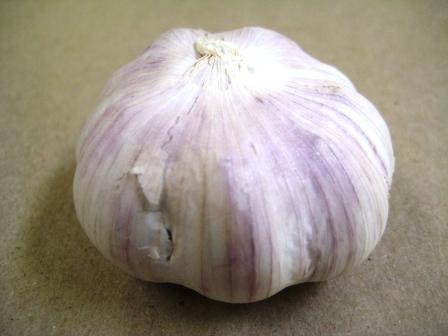
Break the individual cloves off the garlic bulb. Space these cloves about 6-8 inches apart, in rows 15 inches wide. They get planted point up, about 1 inch into the soil. I set them where they will be planted first, like in the picture. Then it's easier to just dig a small hole where they sit.

2013-09-25 14.37.33

It's a long time before we harvest, usually in July. During winter there is not much to do . In spring we water once the rains have stopped. Harvest is usually in July. Once the garlic is dug up you can store it for months in a cool, dry place.  It's great having fresh garlic available to throw on the BBQ, or stove.


Grow Food, Not Lawns

I receive an industry magazine and found this advertisement for General Organics on the back. It's one of the first ad's I have seen where a fertilizer company is promoting the idea of food over lawns.

We sell General Organics, and I like this proactive approach. While the industry struggles to explain why it continues to sell systemic pesticides possibly linked to Bee Colony Collapse, these people have seen the future, and left all the other fertilizer companies behind.

Is that a tattoo of the Twitter bird on the lady? Check out the neighbors lawns. The ad suggests that it's "hip" to grow veggies, even if your neighbors don't. How much you want to bet these people have a "alternative" garden out back?

The caption below the couple say's, "General Organics provides your plants with complete and wholesome nutrition from start to finish. With GO you can grow your own fresh & healthy produce and your friends and family will enjoy the fruits of your labors."

Look out mainstream fertilizer companies. The magazine is from a hydroponic industry trade journal. Yup, the hydro trade is gunning for more "mainstream" garden dollars as we talked about in the past.