What's on the gardening public's mind?

A few post ago we talked about "The Future of Horticultural Businesses is in The Best Sellers List".  It concerned what books are best sellers in the horticulture and garden section at Amazon.com. I said, " as a person who makes their living working with gardeners it’s a signpost for the future as we decide which direction the garden center is to take.

I noticed looking at the list that "Aquaponic Gardening: A Step by Step Guide to Raising Fish and Vegetables Together has been climbing in the list to number 5.  According to the product description "aquaponics is a revolutionary system for growing plants by fertilizing them with the waste water from fish in a sustainable closed system. A combination of aquaculture and hydroponics, aquaponic gardening is an amazingly productive way to grow organic vegetables, greens, herbs, and fruits, while providing the added benefits of fresh fish as a safe, healthy source of protein. On a larger scale, it is a key solution to mitigating food insecurity, climate change, groundwater pollution, and the impacts of overfishing on our oceans."

Last year I wrote a post where I said, "we are at the cusp of a gardening revolution".  One of the subjects of that post was a company called, "Portable Farms" where they make turn-key aquaponic systems. Read why their customers are buying these systems here. Also read what people are doing to make themselves more self-reliant.  It's not traditional stuff we are used to selling, but then as we move into the future traditional stuff just isn't cutting it. So this is one area where the public seems interested, and from what I can see no one in traditional garden centers is addressing. It's a huge opportunity for the locally owned garden center or nursery(LOGON).

Many of my fellow nursery people are struggling to make ends meet. The traditional methods and items they have used or sold in the past are just not bringing in the profits like they use to. Many are going under. What can they do to re-invigorate themselves and their business? We need to sell ideas as well as items. We need to be the resource for the community when it comes to self-reliance. That means being up to date on what's on the customer's mind. Check out the local magazine rack. "Mother Earth News" is now one of the fastest growing magazine in the country.  What do you do when someone comes in and asks about, "deep organic gardening techniques"? Will you have an answer?

Don't let this happen in your neighborhood

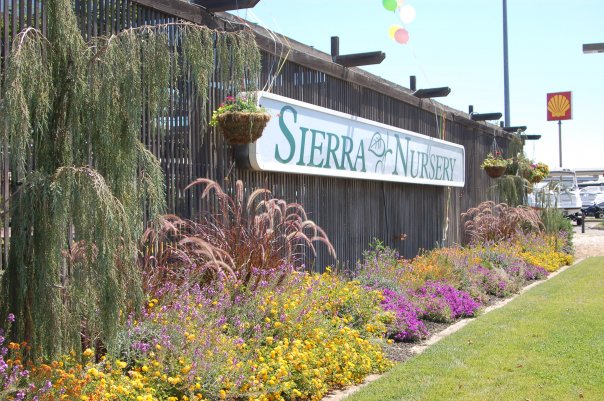
"I have a sad announcement to make. Lyn and I have closed Sierra Nursery. After four and a half years of struggling in this economy, we had put every penny of our life savings into the nursery and finally had nothing left to give. This was my dream, to own a small neighborhood nursery, but this was not the way it was supposed to turn out. We are grateful to all of you who supported us. We are sorry that we could not make it work. We had the best crew possible and tried to give an extra level of service, but in the end it was not enough. There are no words that can say what we feel. We are sad and we are sorry. God bless you all. -John Adams"

The above was posted on Sierra Nurseries Facebook page. Sierra nursery is located approximately 20 miles from here, in a suburb of Sacramento. This is the third Sacramento area garden center to close in just the last couple months! Nice place, located in what was a high end part of the region, right on a main thoroughfare. The nursery under other ownership had been in the same spot for 35 years.

I received a comment at my last post from Chad Bartlett.  Chad say's, "Trey, although I have always been one to align myself with the 'little guy', reading your blog over the last couple years has really opened my eyes to just how important it is for me to put my money where my mouth is.  I don't expect everyone to do the same thing I do but, for my part, I made the decision not to buy any gardening related items from Home Depot even if I happen to already be shopping there for some lumber or spare parts.  I don't have anything against Home Depot, but like Pam was getting at, I would hate to see my favorite independent nursery close and know that I could have spent more of my gardening budget there and maybe helped out just a little bit more.  In that sense, I like to think that every month is support my local nursery month. " Click this link to read all of Chads comment.

October is support your independent nursery month, in Austin.

Here is a great idea from a garden blogger in Austin Texas, Pam Penick of  "Digging".  This grass-roots stuff interests me  more than that American Express Small Business Saturday effort of last year.  Pam say's, "Dear Austin gardeners and bloggers everywhere, I hereby declare October to be Support Your Independent Nursery Month. Fall is our best planting time in the South, and even though the U.S. recession and Texas drought drag on, we gardeners must get our fix after the long, hot summer. As I was thinking about my fall shopping list, I began to wonder whether the drought and tough economic times were impacting the many wonderful local nurseries with which the Austin area is blessed." Yes Pam, they are having a tough go of it like most small garden centers. Ideas like this will resonate more with people because Pam is a fellow gardener, and respected by her readership. When large corporations like American Express try the same, "local is good" thing it just doesn't resonate. Maybe because American Express was one of the companies that cancelled ours, and many small businesses credit lines when we could have used them the most. Thanks Am Ex.

Do you have a local garden blogger in your neck of the woods? Do they do stuff like this?  When in  your area is the "support your  local independent garden center month"?

Great idea Pam.

"When does gardening become farming?"

"When does gardening become farming? When are you no longer having dinner parties and running a restaurant instead?"

This question come to us via the Editorial Reviews for Elliot Coleman's book, "The Winter Harvest Handbook: Year Round Vegetable Production Using Deep Organic Techniques and Unheated Greenhouses". What are 'deep organic technique's"? I have no idea, but will have to read the book to find out. It won't be long before some customers ask us at the garden center, and I want to have an answer.

Elliot's book is a best seller,#9 at Amazon.com under gardening and horticulture. It's really an eye opener for myself to check out what's selling at the "bookstore". Just above Elliot's books at #8 is "Root Cellaring: Natural Cold Storage of Fruits & Vegetables", and right after at #10 is "Marijuana Grower's Handbook: Your Complete Guide for Medical and Personal Marijuana Cultivation".

If you're in the business of selling to gardeners it's important to know what they are up to. We talked earlier about Dig, Drop, and Done (the bulb industries attempt to appeal to "real" people). Yes, I can see the ladies at Dig, Drop, and Done talking about how they use "deep organic technique's" when gardening. The campaign for the bulbs is of course aimed at non-gardeners. It's an attempt to get people interested in a subject they might never have had an interest in before, planting bulbs. Are we advertising to the wrong people?

Let my next customer be someone who is interested in "deep organic techniques" and not someone looking for bulbs to "dig, drop, and done." "The deep organic technique" person is someone who is already interested in the subject, has a willingness to try new things, and likely will be in the store time and time again to continue their learning. The whole Dig, Drop and Done campaign predicates a person who, once done planting those bulbs is DONE. No more trips to the garden center.

In an attempt to "rescue" gardening from the continuing decline in interest amongst the general population we miss the people who are already fired up about the garden. It will take a change in our thinking about our customers. Who are we attempting to attract and why? Give me one customer who is interested in "deep organic techniques" over 5 who just want to "be done".

Now I'm off to learn about those "deep organic techniques." Got to try and stay one step ahead of my customers.

The future of horticultural business is in the best sellers list

Check out the top sellers in the Gardening and Horticulture section at Amazon.com. As a person who makes their living working with gardeners it's a signpost for the future as we decide which direction the garden center is to take. So far what we have done at the nursery mirrors what people are reading. The number one seller is "The Orchard". "The Orchard is the story of a street-smart city girl who must adapt to a new life on an apple farm...she slowly learns for herself about the isolated world of farming, pesticides, environmental destruction, and death, even as she falls more deeply in love with her husband, a man she at first hardly knew and the land that has been in his family for generations. She becomes a reluctant player in their attempt to keep the codling moth from destroying the orchard, but she and Adrian eventually come to know that their efforts will not only fail but will ultimately take an irreparable toll." The books theme is mirrored in people's concerns about food safety, and the reason many are starting to, "grow their own".

The number two best seller this week is, "The All-New Square Foot Gardening Guide".

The number three best seller is, "Marijuana Horticulture, The Indoor/Outdoor Medical Growers Guide". Make sure you throw "Medical" in the title. Don't want anyone misunderstanding.

Number four is, "The Sixty-Four Dollar Tomato: How One Man Nearly Lost His Sanity, Spent a Fortune, and Endured an Existential Crisis in the Quest for the Perfect Garden". 

Number five is, "The Winter Harvest Handbook: Year Round Vegetable Production Using Deep Organic Techniques and Unheated Greenhouses." Your nursery staff is up to date on the latest "Deep Organic Techniques", aren't they?

Here is the complete list of best sellers in the gardening and horticulture section at Amazon. Further into the list we see books on homesteading, beekeeping, making your own wine, seed saving, projects to get you off the grid,  root cellaring, more marijuana, and mushrooms demystified.

Looks like the main theme here is self-sufficiency, or self-reliance. We have geared our garden center towards these themes over the last couple of years. People want to grow organically any thing they consume. They want to save the harvest to enjoy during the winter, and are concerned about the direction that large agribusiness is headed. With "Founding Fathers: The Revolutionary Generation, Nature, and the Shaping of the American Nation" sitting at number 18 we see people looking to our past, and finding horticultural inspiration for our future.

This is where the interest is in horticulture at this particular time in our history. It would seem that someone in the business of horticulture could look at this list, and build a business around the ideas contained in these books.

Weird is cool

A week ago I wrote a post titled, "Think local to grow". In that post we discussed a survey that was commissioned by Proven Winners and Ball Horticultural, that said, "11 million fewer households participated in gardening from 2005 to 2010. The average amount spent by household also decreased from $532 to $355." I wrote, "this of course worries the large concerns like PW or Ball Horticultural. They depend on a broad market to sell their goods and are not good at niche selling, which is where the action is in the trade. So you have to look at these surveys with a certain amount of skepticism and an abundance of local knowledge." In other words there are two horticultural industries developing. The mass market large players like Home Depot, Lowe's, Proven Winners, Ball, Scotts, Bayer, Monsanto, etc. and "the rest of us". "The rest of us", like the big players are having a tough go of it these day's. The members of the "rest of us" that are making a go of it and making a difference seem so "weird". Weird is cool.  From my earlier post I wrote, "We have been saying for years that the way forward for the smaller garden center was to “make the trends”, rather than follow them. Again, and again its businesses that create trends that set the course." And generally those places are also a bit weird. These day's weird is good. Why? We weirdos know it, and also because Seth Godin just put out a new book titled, " We are all weird". Seth celebrates weirdness and shows us a way forward that embraces our weirdness.

Here is a quotes from the book. "The epic battle of our generation is between the status quo of mass and the never-ceasing tide of weird. It’s difficult to not pick sides. Either you’ll want to spend your time and effort betting on mass and the status quo—and trying to earn your spot in this crowded mob—or you’ll abandon that quest and realize that there are better opportunities and more growth if you market to and lead the weird.

Two decisions you’ll need to make within the hour:

1. Do you want to create for and market to and embrace the fast-increasing population that isn’t normal? In other words, which side are you on—fighting for the status quo or rooting for weird? and

2. Are you confident enough to encourage people to do what’s right and useful and joyful, as opposed to what the system has always told them they have to do? Should we make our own choices and let others make theirs?"

We have talked about this for years, but Seth has a way of cutting right to the chase. If you're a garden center or nursery you have a choice. Follow the mass merchants, carry what they carry, and fret about how much more business they will extract from your customer base, or embrace your inner weirdness, remember "small is cool", "fight commoditization", and  "Stay Hungry, Stay Foolish."

Social media is fragmenting

What are we going to do? How can anyone keep up with another social media site? Yes, I am talking about Google+, the new competitor for Facebook. Some people have switched over to Google + and not going back to Facebook. Others are trying to do both. Some like me are just trying to figure out why we need another social media site. My last post, Are you a Flowerdew? reminded me of the time when you could keep track of all your readers in one place.

An Alameda Garden was the blog I linked to for the post. Looking at the comments (all my old comments were lost when we migrated from Blogger to Wordpress) you recognize some of the people.  Back then if you wanted to comment you commented at the blog. Now when we post some comments come to the blog, but also to Facebook, Twitter, and now Google+. To keep track you have to visit each one of these social media sites. Not as easy as it use to be, but a sign of the times.

We have talked in the past about the fragmentation of the garden center businesses. What was once a unified trade has fragmented into box stores and their suppliers, mail order, independent garden centers and their suppliers, etc. Each with its own agenda, and not necessarily aligned with the others. We now see the same thing in social media. Some people will migrate to Google+ and to keep track of them you have to open a Google + account and start monitoring them there. It really is all too much, and likely will speed the fragmentation of the social media world, and the gardening world.

I read a great post at Lifehacker asking, "What Lucky People Do Differently than Unlucky People". According to the post, "Unlucky people miss chance opportunities because they are too focused on looking for something else. They go to parties intent on finding their perfect partner, and so miss opportunities to make good friends. They look through the newspaper determined to find certain job advertisements and, as a result, miss other types of jobs. Lucky people are more relaxed and open, and therefore see what is there, rather than just what they are looking for." How relaxed can  you be trying to chase down everyone posting at different places? Soon you find that instead of gardening and writing about that, you spend time focused on what everyone else is doing. "Gee, I put so much time in my social media, yet just don't seem to get anywhere".

This will continue as people will head off to different social media platforms that are comfortable for them. Tired of Facebook adding friends to your lists? Head over to Google + where circles will "straighten" everything out for you! My Klout score has been dropping. What does Klout tell me to do? "Share more content and engage with your network and your Klout score will rise!" So I need to start Tweeting, Facebooking, You Tubing, and Linkedining more. Sorry Klout, but it's not going to happen.

I feel that less is more when it comes to social media. It use to be that you we're told to blog daily so as to keep an audience interested. Stop for just a day or two and the next thing you know you have lost some of your audience. Yet I have RSS feed and know when my favorite sites have posted something new. I actually like sites that post when they feel like it, and post something really worth reading. It may be daily, weekly, or in some cases just a couple of times a month. I look forward to these posts since they are done when the author has something useful to say, and not just trying to raise their Klout score.

There is no way people can keep up with all the chatter going on in these different social media channels. People will pick and choose either the media channel they want to hang at, or who they want to follow. That's OK. As long as your fans have a way of keeping track of you they will follow you no matter which outlet you choose. In the future the ability to choose just one platform, be it blog, Facebook, Twitter, etc. and do almost all your work there, will be the sign of success since people will have to choose your platform to read your work. It will be a case of less is more.

Are you a Flowerdew?

In my last post we talked about how one survey found the number of people who garden is in decline. It reminded me of a post I wrote in July of 2006. It still resonates for me.  We still don't have our version of Bob Flowerdew, and I suspect we won't. Instead we have hundreds of people on The Internet that are the "Mr. Flowerdew" within their area of influence. It's fun to go back and read this stuff. It's also nice to see the links to the various bloggers still work, and the blogs still active. Finding Mr. Flowerdew?   July 18th, 2006

Just finished reading a post by alamedagarden about a man named Bob Flowerdew. Mr. Flowerdew is a popular garden celebrity on the BBC in Great Britain. He is "the garden guy", as the Washington post say's. "'Gardeners' Question Time' has an audience of 2 million in a country of 60 million. To translate that kind of audience to the U.S. (with a population of 299 million), a gardening guru would have to have an audience of 10 million. According to USA Today, that would be equal to the audience of last week's #2 top-rated broadcast TV show, 'So You Think You Can Dance'".

The article is a fun read as Mr. Flowerdew is a very interesting man. Claire's post laments the fact that we here in the U.S.A. don't have a Mr. Flowerdew and that if there was an American Flowerdew--someone knowledgeable, funny, charismatic, and (it goes without saying) organic--that he could be the pied piper to seduce more of us into taking up the shovel and rake? That he (or she, of course) could actually grow the audience"?

However, further in the article by The Post comes the reason why I don't think one person in The United States will be able to have the influence Mr. Flowerdew does in Britain. The Post says "The notion that Britain is gardening mad is absolutely true, of course." It continues, "In the uncertainty of postmodern, multicultural and rather godless Britain, gardening is not just a shared hobby. 'Gardening is one of the few things holding British society together,' said Sir Roy Strong, historian and former longtime director of the Victoria and Albert Museum".

We just do not have the gardening heritage that a place like Great Britain has. The United States, being a place made up of so many different types of people and cultures just wouldn't get behind one person that way. Not to say that we too are also facing our own challenging times, and could use the common connection that gardening has on the psyche of The British.

I believe the reason we are hearing about a decline in gardening is that mass gardening media, and the larger horticultural concerns, have a vested interest in keeping  "gardeners" in their market share. When people refuse to call themselves gardeners, this is of great concern to them. They have spent millions to get the audience they have, and to hear it may be declining is cause for worry. I believe it's more a case of semantics. People may not call themselves gardeners, but will work feverishly to complete that "outdoor room", as the magazines now call gardens. Most people like many recreational activities, and while gardening may be one of them, they may not think of themselves as "gardeners". Lot's of folks just don't want to be labeled, or seem one-dimensional.

Here is my premise. We already have our own Mr. Flowerdew. It's us! People like Claire and other garden bloggers, and readers, are our version of Mr. Flowerdew. Instead of learning from one man on the television screen, we are learning from hundreds and soon to be thousands of people blogging. Why watch another boring garden show on HGTV with a paid celebrity when we can share with so many others, ideas that are so far ahead of anything we are seeing in mass garden media.

I believe we are witnessing what will be a renaissance in gardening, or what ever it's called. With the power of The Internet you have the potential to reach hundreds, if not thousands of like minded gardeners with your passion. As more and more people find out about garden bloggers writing and sharing their gardens, and garden ideas, they will want to take part. When you live off the beaten path where no one can see your garden you often wish you could share it with people. Now you can. Sometimes you get a following of people who are really interested in how that tomato is doing, or your experiences at the garden center. When you do you will become even more enthused about your garden and gardening because you don't want to let your "fans" down. Talk about your beautiful plant, but don't show pictures and they will let you know.

We are only at the beginning of this renaissance and it may not be noticeable to many. Just like bloggers who are a big part of why the big news networks are loosing market share, I feel the same thing will happen in gardening. I could be wrong, but for me it has become more important to check out whats going on in the blogosphere than read a garden magazine, or watch the television. I still read the magazines and sometimes watch the television shows, but the internet is where I get the real "dirt".
Think local to grow

Greenhouse Management magazine has published a report on "What do consumers want?" Plant brand companies Proven Winners and Ball horticultural conducted a consumer survey this spring and the results are here. The first thing we see is we call our customers "consumers". We can't pick on Proven Winners or Ball for this as it is wide-spread throughout retail. We are not individuals each with different want's and desires but rather consuming machines whose sole purpose on earth is to "consume" goods. I truly wish we could come up with a better term for the individuals that either shop at, or would like to shop at our stores.

The bad news is 11 million fewer households participated in gardening from 2005 to 2010. The average amount spent by household also decreased from $532 to $355. Ouch, that has to hurt and of course shows up in  the rash of garden center closing going on around us. According to nursery consultant Ian Baldwin, "Younger generations are much less interested in gardening". Another interesting figure according to Proven Winners, "women make up 93% of the customer base". So according to the article we are supposed to, "continue to serve the baby boomers as they downsize and retire," and secondly, "we must quickly develop products, services, and programs that appear relevant to the lives of consumers under 44 years old." Great, our target market (matures) is shrinking and downsizing, and we are not relevant to people under 44.  Quickly now, start becoming relevant!

It is a shrinking market and we are going to continue to see a shrinking trade. More small INGC will close, more wholesale suppliers will close, and more distributors will close.  These closed businesses will not be replaced by new business, so we are going to see a continuation of the shrinking horticultural trades. This of course worries the large concerns like PW or Ball Horticultural. They depend on a broad market to sell their goods and are not good at niche selling, which is where the action is in the trade. So you have to look at these surveys with a certain amount of skepticism and an abundance of local knowledge.

Questioning someone like Annie's Annuals in  the SF Bay Area  about the percentage of annuals sold vs. perennials you might find they have results way different from the survey suggests.  Go into any hydroponic shop in the area and watch to see the male vs. female ratio and you will find it is predominately a male customer base, and well below the 44-year-old criteria. The survey also asks, "What are you interested in?" with 10.78% saying perennials, 10.64% saying containers, 9.84% shade plants, etc. Where is the percentage of the one area the survey say's is growing, vegetable gardening?

I get a feeling we are trying to hold on to a way of looking at gardening that was more appropriate 10 years ago. There is no "average" gardener anymore. There are a myriad of different types and styles of gardening that get missed by these surveys. The surveys are really more appropriate for large concerns that try to appeal to a large swath of customers over a large geographic area. The survey tells a smaller garden center what? That purple is the favorite color for 2010?  Remember how we we're told back in 2007 that DIFM (do it for me) was the next big trend? Many of the same people giving advice now we're telling us to jump on the DIFM bandwagon. How did following that trend work out?

We have been saying for years that the way forward for the smaller garden center was to "make the trends" rather than follow them. Again and again its businesses that create trends that set the course. There are lot's of them out there, but you won't find them listed in the trade magazines, or in these surveys. We mentioned Annie's Annuals, but there is also Peaceful Valley Farm Supply, which jumped on the organic bandwagon before there was a bandwagon. Baker Creek Heirloom Seeds, which this week is putting on the Pure Food Expo at The Sonoma County Fairgrounds. The Cactus Jungle in Berkley where they only deal with cactus and succulents (which didn't even show up on the survey), and make their own potting soil.  Two Green Thumbs, the only miniature garden center around.  The list goes on.

Don't follow trends. By then it's too late. Look out into your region of influence and find out what needs are being poorly met by the current players. Or better, create a whole new category that you can call your own. The smaller and more niche oriented your business the better chance you have of attracting, and creating "passionate gardeners".

Growing your own is in, and will be for awhile.

I was asked by a Master Gardener in the Sacramento area for some insight as they are re-modeling their demonstration

garden. They ask, "will vegetable gardening continue to be popular with the general public? I’ve read pros and cons, but most of the cons have been from ornamental-type folks."

My answer is based on where we do business and the economics of our area, the foothills of the Sierra Nevada in northern California. Right now we have an unemployment rate of 12%.  With that kind of rate you can well imagine that ornamental plantings are the last thing on people's minds. Some "well to do" types in The Bay Area and Sacramento may be doing some landscaping, but for all intents and purposes landscaping is dead. Nurseries and garden centers that catered to the landscape trade are suffering, or out of business. I talked to a sales representative who was lamenting who it seems every month brings another nursery closing, and one less customer. This will continue. There are just to many nurseries and garden centers still hanging on. There is not enough business to keep them all afloat.

Right now and for the foreseeable future we are focused on consumables, and smaller container sized perennials and annuals. People still want to dress us their gardens with color, but are looking for less expensive choices that give maximum impact. Container gardening is still poplar and flowers cheer people up. What they are not planting is landscape trees and shrubs. Why go through the expense when you don't even know if you'll be in your overly mortgaged home for long. I know a number of avid gardeners who have had to walk away from their homes and gardens, and are in no mood to replant now.

Once people settle down and get their finances in order they will have a better handle on how to move forward. I just cannot imagine a quick return to fully landscaped outdoor entertainment centers, complete with outdoor rooms, throw pillows, and big screen TV. People will create their own versions of the outdoor living space which more likely will include vegetable plants, medicinal plants, and cool spaces to enjoy them. "Since we cannot afford to eat out let's eat in and invite our neighbors over for a meal constructed from our garden." It' s the combination of growing and eating that will inspire people going forward. There is a wealth of heirloom vegetables that we have not even become familiar with yet. Fruit trees that are just now becoming popular, and fruit varieties many people have forgotten about. Growing, and eating the fruits of our labors excites me, and I believe many others.

For the Master Gardeners wondering how to redesign their demo gardens I would say an emphasis on low water use plants, both natives and Mediterranean plants would be in order. Not just because they make more sense here in our climate, but also they will take less effort to care for as people will be spending more time in the food-producing aspect of the garden. Look back at the old missions of California and you see a landscape based on a lack of summer water, and an emphasis on using that water for growing food. The grow your own consumables is fulled in part by food cost, but more than ever on food safety. You cannot underestimate how concerned people are about what is in, and being put on their food. Want to make sure it's safe? You have to grow your own.

There was a nice post at from Susan Harris at Garden Rant today concerning Thomas Jefferson's garden at Monticello. Jefferson grew all sorts of vegetables and fruits in his garden. Always experimenting and trying something new he kept copious notes of his work. It an interesting read and the way forward for many of us who find ourselves looking for inspiration in the garden. Always experimenting, trying new things, and growing most everything he needed in his garden. From the post, "as an eater, Jefferson chose mainly vegetables, using meats as condiments.  For salads he planted lettuces and radishes every two weeks throughout the growing season.  And get this - to produce a suitable salad oil for all those salads, he grew his own sesame.  His favorite cooked vegetable was the pea, of which he grew 23 varieties." Meat's as condiments, and greens the main course sounds like a diet for modern times as well.

We have strayed too far from the garden.

This from Fred Hoffman in Sacramento. He has a listener who writes,

"Fred:

Thought I would let you know the Home Depot at Folsom Blvd. & Power Inn Road just got in a shipment of one quart, Bonnie brand, Early Girl and Cherokee Purple tomato plants at $5.98/ea.  Great looking plants, no tomatoes on any of them but a sign on the front that said 50 days to harvest.  I asked the nursery clerk why they had tomatoes now (when they haven't had any for at least six weeks) and she said the vendor assured her this was the time to plant them.  Do you think Bonnie knows something about 'climate change' they aren't telling anyone else?"

50 day harvest means will start picking fresh tomatoes around the end of October.  In places like Texas they plant tomatoes in the late summer, but here in northern California they die when the frost comes, in October. So was the Home Depot in Folsom, CA sent tomatoes meant for Texas? No. According to the "nursery person" at The Depot the vendor  say's it's time.  Well that settles it!

What more disturbing? That Bonnie Plants insists it's time to plant tomatoes here, or a "nursery person" working at The Depot goes along with it? We have strayed too far from the garden. Something that our grandparents would have known, the first frost date has been forgotten by the later generations. They don't even know that in a month tomatoes will be done. What most disturbing is perhaps these nursery people questioned tomatoes arriving now, but because the vendor say's it's time, it's time. No one willing to stand up to the boss as ask, "why are we doing this?". Keep quiet, keep you head down, and be thankful you have a job. Now sell those tomatoes!

Where Home Depot gets it's plant names from

Just in case you we're wondering where Home Depot get's its plant names from they made a video for you to answer that burning question. According to Home Depot's Garden Club videos "Watch Kerry Meyer, Project Manager at The Home Depot, describe how the names of the plants at The Home Depot are created. She specifically details the most challenging plant, a purple and green petunia." Oh, wait. Is Kerry from Home Depot as the video description say's, or Proven Winners as her sweater and video intro say? Does it matter? Just a Freudian slip on the part of Home Depot? Or is this closer to reality than they might like to admit?

Stuff happens

This is a post meant to let you know that I am still here, and the blog lives! A fellow nursery person and friend wrote today asking if I was OK, as I had not posted for a while. Everything is fine. Like so many in our trade we just find ourselves tired and burned out  after a long spring and summer. It takes a little while to get enthused again, and in many cases the cooler weather of fall often helps. We have been fairly busy at the nursery with changes we are making. It's all good stuff and we feel fortunate that we are still in business with so many other local garden centers folding. I hear that in California we have a 12% unemployment rate. Wow! It's most certainly is not business as usual in The Golden State. We are thrilled with the support we have received from the community, and glad to be here to help people with their gardens.

Stuff happens! Like the drunk driver crashing through our front gate Labor Day night. 76 feet of fence, and  landscaping destroyed. It also took out a large part of the children's playground at my wife's daycare, the day before school started. Fortunately they have insurance, and we are now in the process of trying to get the insurance company to pay out.  Some people only seem to be able to visit the nursery by driving through the fence in the middle of the night.

A summer of less blogging is turning into a tradition for me. Rather than just put out a post everyday that is less than interesting I would rather wait till my muse arrives. My muse sometimes enjoys taking a vacation during the summer. Lucky muse! It just takes friends to remind me that I have been a bit remiss in posting. Thanks!

Stay Hungry. Stay Foolish.

Turns out my last post "Make your message easy to spread", was my 2500 (or 2049th according to some web page that count's them up) post at this blog. Doesn't matter, it's a lot. It got me thinking about how this blog was begun in a time before

Facebook, LinkedIn, or Twitter. The idea was to give the customer an opportunity to hear about the stuff we we're up to at the nursery. I also liked the idea that the customer could contact the owner or someone in charge via the blog. No more going through "gate keepers" trying to get an answer. Post a question at the blog and withing 24 hours you had and answer. Cool stuff at the time. Remarkable really.

There is no doubt that we have been over inundated with different social media outlets to wile away the time. Can anyone really keep up with their Google+, Facebook, LinkedIn, Twitter, Four Square, Blog, or Flickr accounts? Of course removing yourself from any one of these outlets might mean your missing out on some important news, so we keep plugging along. I am starting to think that the real mavericks out there will start culling some of their accounts so as to be able to focus better at one or two of them. I give guy's like Hugh  MacLeod credit for making such a move. It's not easy un-plugging from potential information streams, but as Hugh say's, " ...Facebook and Twitter are too easy. Keeping up a decent blog that people actually want to take the time to read, that’s much harder. And it’s the hard stuff that pays off in the end."

When I started the blog in 2005 the nursery trade was still rocking and rolling. It would be another year before the housing market crashed here in California, and another year or two before the recession hit. Looking back at 2005 I realize we we're at the end of an era. The era of easy money and large landscape purchases was over. No equity in the house? No new outside entertainment area complete with outdoor TV and throw pillows. Times have changed, and only a few garden centers have changed with them. So many nurseries that we're the "bees knees" when times we're good, are now out of business. It seemed they we're doing everything right according to the old playbook. The problem is the play book got changed and no one received the memo. Where to go from here?

I believe that social media can be a powerful tactic, in a overall marketing strategy. Seems many businesses are using it as a strategy however, trying to cover up a lack of original ideas or products.  "Hey,  we can just keep doing things like we always have, and with social media people will soon discover how cool we are". Social media doesn't make you cool, it amplifies the cool stuff you are already doing, or planning. There was a time when just doing social media was a cool thing. That era is long over. If what you are doing is "remarkable" then people will remark about it, and you can help amplify that message through social media.

The garden businesses that stand out to me as models to follow, really are impossible to follow. They do things their own way, and not according to the old playbook. That's remarkable, and tends to get more social media amplification.  That's the model to follow, the non

-model. Be a maverick and do things in a way they haven't been done before. It could be what you carry, or a way of doing business. Don't get caught up in over-analyzing your next move. Better to launch something now,  than wait because it wasn't perfect to start with.

Certainly Steve Jobs knows about being a maverick. He knows about launching something less than perfect, and fixing it later. He spoke at Stanford University's commencement in 2005 and the speech is worth watching or reading, especially in light of his recent retirement. It will inspire you.

Stay hungry. Stay foolish.

Make your message easy to spread

One of the coolest logo's of any garden center is Sloat's Garden Centers in The San Francisco Bay Area. This chain has been in business since 1958 and takes it's name from the site of the original store on Sloat Avenue, near the zoo.

The logo is perfect for the time and place. Forward looking woman who looks like she really gardens. This person is ready for business. This is the  opposite message of The Dig, Drop, and Done Ladies. While both are "fictional" the Sloat logo sends a different message. Self-reliance as opposed to "needful", intelligence as opposed to "gossipy", independence as opposed to "group think". You could take the Sloat logo, and put it on a gift bag, or bumper sticker and it sends a message. Put the "Ladies" on a shopping bag? Not. You could even take the Sloat logo and paste different sayings across it. "Rebel", "Independent", "Flower Power", "Change", "Hope", etc. I am going to take a guess and say most women would rather where a tee-shirt with the Sloat logo on it than a tee-shirt with the "Dig, Drop, and Done Ladies" printed on it.

Is there a description of the "average" garden center customer? Is there one logo or idea that will work for all garden

centers, or appeal to all garden center customers? No. Perhaps in some regions The Dig, Drop, and Done Ladies will resonate.  You cannot please everyone and each store has to decide what direction their marketing efforts go. What you have to figure out is how to allow your customers to spread the word for you. One way is through "social objects" like logo's. You want an easy way for people to share your stores message. They have to want to spread the message, and the message has to resonate with others.  "I want a tee shirt like that" or "I want to be the type of person who shops at a cool place like Sloats." Make your message easy to spread. Make it a message people will want to spread.