Authenticity vs. fiction in the garden

The Dig, Drop, and Done Bulb Ladies post sure hit a nerve. As a juxtaposition I want tell you about another company that

is creating buzz in a different way. Baker Seed is a company I have written about before in a post called "Closed on Saturdays". Baker seeds is a Missouri company that specializes in hard to find heirloom seed. Jere Gettle and his wife Emilee started the business in 1998 and it has grown since. They recently opened a "Seed Bank" in an old bank building in Petaluma, California. They are closed on Saturdays, which in retail is almost unheard of. Most amazing they have organized the first National Heirloom Exposition in Santa Rosa California in September.  The list of people attending and speaking is impressive with Alice Waters, Dr. Vandana Shiva, and others. The expo has events, a trade show featuring 250 natural vendors, and demonstrations. I want to go! Let me get this straight, it took a young couple from Missouri to come to uber hip Santa Rosa in The Bay Area to put this on? Why hadn't it been done before?

While at The IGC show in Chicago last week I had a chance to meet Jere Gettle. While standing in front of their simple booth someone commented on the "old time" clothes the people in the booth we're wearing. I was told, "they dress like that all the time". In other words they are authentic, unlike the Dig, Drop, and Done Ladies. That's why I was attracted to their booth and company. These people are real, and are offering you a way to grow a lifestyle based on authenticity and self-reliance. They are even closed on Saturday's (religious reasons), yet it doesn't seem to hurt their business. They actually inspired me to close my nursery on Sunday's (not religious reasons).

So how is it that a young couple from Missouri can create this kind of buzz just being themselves, and the bulb industry feels the need to come up with a group of fictional characters to sell bulbs? What's going on here? People will respond to authenticity. We have become jaded to the constant barrage of phoniness and migrate to companies that are truthful and authentic. Perhaps if the Dig, Drop, and Done Ladies we're real people it might be more effective.  In addition The Bakers are offering a lifestyle based on the growing of pure food. The Dig, Drop, and Done Ladies are offering a quick fix so they can continue their "lifestyles" outside of gardening. The garden is a second thought with The Ladies, the garden is the main event with the Bakers.

These days people are desperate for a authentic, hopeful message. If you give people the tools and knowledge needed they will respond. We underestimate the amount of work people are willing to put into their garden IF they are inspired. Let's quit trying to make gardening "easier". Let's be truthful about the work and rewards of gardening and we might create a new "passionate gardener".

Bulbs and The Dig, Drop, and Done Ladies

Back  in February we reported on a new bulb campaign designed to revitalize the depressed bulb market. It was there

where we talked about how, "the Royal Trade Association for Nursery Stock and Flower Bulbs headquartered in Amsterdam, Netherlands has decided to throw some money at the problem. They have committed to a three year, $1.9 million campaign. According to Peter Mitchell, Woodbine President & CEO, 'we believe our campaign has the potential to do for the flower bulb industry what ‘Got Milk‘ has done for the milk industry'”.

The ad campaign has arrived. It's called "Bulbs, Dig, Drop, Done" It features three ladies called what else, "the Dig, Drop, Done Ladies". There's Marci, The Super Mom who is the mother of 3 with twin sons and a daughter, lives in the 'burbs' and is a substitute teacher. There is also Juliana The Fashionista, and Evelyn The Empty Nester. Between the three they are going to revitalize the bulb market by showing us just how easy it is to enjoy the beauty of bulbs.

Over at Garden Rant Elizabeth is duly un-impressed saying, "welcome to Dig. Drop. Done. Where women come in 3 sizes: cocktail-swilling sex kitten, cupcake-baking mom, and attention-starved, curler-wearing golf widow. Each of the characters has her own wardrobe, props, and videos. I hope the actresses who played them were paid well. They’re quite bad, but even so, hard to see how anyone could say this crap convincingly." Ouch!

So is this a huge waste of money by the bulb industry,  a brilliant marketing campaign, or something in-between? Is this campaign you as a garden center owner can get behind. As a gardener does this inspire you to try bulbs?

Back from The IGC Show in Chicago

The IGC show in Chicago was great fun. I had a chance to meet many of the people whom I  interact with online. Jeff and Cheryl Morey who organize the show treated myself and our Facebook Group well. A highlight for our group was the special seating at the Lou Graham concert where special signs pointed the way for us. Very cool! The mood at the show from the vendors and attendants is cautious optimism.  Well, actually that's being a bit generous. I would have to say that the mood is neutral, as if waiting for the next shoe to drop. While I was there the stock market was dropping 500 plus points and the European debt crises grew more ominous. There is no doubt that we are in a transformational time in our garden center trade. While attending this show I received word that another IGC in Sacramento will be closing it's doors. I am afraid there will be many more retail and wholesale operations closing their doors this, and next year.

Amongst this I saw signs of the future direction of the garden center world. It's hopeful, game changing, and very exciting. The future for the trade is bright, it's just many won't last or make the changes necessary to see this future. I heard a number of times from both vendors and retail people about, "when the economy recovers..." My concern is there is no time to wait. You had better start making the changes you need to make now, as I am not sure how long we will have to wait for the economy to "recover". When it does "recover" I am not sure if we will recognize it. It will not be "business as usual".

I am convinced the future for my store, and perhaps yours is in creating passionate gardeners. This is done through education, collaboration, and enthusiasm. One part of this future for us in the trade is collaboration. There are no secrets anymore, and the more we share the more we gain. This is being proven again and again in our Facebook group Independent Garden Centers and Nurseries where the most forward thinking nursery people reside.The ideas being shared in the group are actionable ideas that can be taken back to your store and used to make a difference to the bottom line. While at the show I had breakfast with a leader in the garden center world who want's to promote our group on an international level. Imagine sharing ideas with people in our trade from around the world! Who knows what, or where the ideas you can use will come from?

Exciting things are happening, and there is money to be made in our trade. It's just the old way's won't work as well and we have to work together to forge a new path. Collaboration with like minded businesses is one key for the future of the Independent Garden Center world. Come along and join us on this trip to the "new world". Who know's what we'll discover.

"Hi, we're from Plant Watch and would like to look around..."

We operate a retail garden center where we don’t do a lot of our own propagating. Many of our plants are from wholesale growers who in turn often get their cuttings from a branding company. Apparently there is concern that some growers are propagating plant’s they do not have the right to propagate. According to American Nurseryman,  “Starting this fall, nurseries across the country can expect a polite inspection by Plant Watch® representatives to see how they are meeting the requirements of these branded programs. It's well known how expensive it is to establish a plant brand in the landscape and nursery business. Growers who comply with patent and branding requirements are at a disadvantage when infringers undercut prices.” Not being in the wholesale side of things I was wondering how big this problem is. According to American Nurseryman, “In order to  support their network of compliant growers, Spring Meadow Nursery, Bailey Nurseries, Conard-Pyle and Plant Development Services have hired Plant Watch® to inspect nurseries, report on their findings, and collect fines where warranted.”

“Plant Watch® started in 2005 and is modeled after COPF in Canada, a well-known monitoring program established in 1964.  COPF has been inspecting for Spring Meadow Nursery since 2008, resulting in more than $30,000 in fines collected during 2010 alone.”

I am curious what the $30,000 in fines represents as far as the number of nurseries involved. Is this problem getting better or worse since last year? Are particular plants more likely or not to be illegally propagated?


Compost tea serves up controversy

We have started brewing and selling compost tea at our garden center. Never having brewed or used it I though it would be fun to see what happened. So we have been applying it in my vegetable garden as a drench. No other fertilizers or plant growth products we're used. We do routinely mix in organic matter before planting. In the past we would have to fertilize even after the organic matter was mixed in since the plants would show signs of nutrient deficiencies. This year the tea is all we have used. The garden has never been so lush or vibrant. I understand there is some controversy on the use of compost tea. Linda Chalker-Scott is one of authors of The Garden Professors, a blog for the extension service of Washington State University. Linda has written about compost tea and why she feels it's an un-proven science. Here is a post from 2010.

We are wondering if anyone else out there uses brewed compost tea, and what the results we're? I am trying to reconcile my  success in the garden using this stuff, with the science that Linda writes about. It does seem the controversy centers on the use of compost tea as a foliar spray (applied to the leaves) for fungus and insect control. We use it as a drench for "feeding" the soil, and plants.

Do you use it, or have you used it? What we're the results for you? Any explanation on why it "seems" to work in my garden, yet scientifically it shouldn't? Fascinating subject. Thanks in advance for your input.

Dreaming up the future of garden retail

Our Facebook Group, Independent Garden Centers and Nurseries grew a little bigger. Today Dan Mulhall of Mulhalls Nursery in Omaha got on the bus and became our 300th member. Our group has now become the leading forum for independent garden center owners, and employees. One reason the group continues to grow is the amazing cost to benefit ratio. For the price of membership (free) the benefits are huge. Where else could you ask what fellow garden centers think about QR codes, or whether they have started to use the codes? Wondering “How can a wholesale nursery survive selling so cheap to Home Depot?” They can’t, and we discuss why. One member asked “Have any of you had HD (Home Depot) post a sign in their nursery area with your name and plant prices with no size so they look cheaper.” One of our members has, and tells what he thinks of that, and what they plan to do about it.

We hear a lot of talk about how the Independent garden center businesses need to band together. We have! It’s happening right now, and we want your input. Do you want to change the trade for the better? Do you just want to survive to do it again next year? Either way our group is the place to be. To request membership head here, and read our document listing the criteria for joining.  The future of garden retail is being dreamed up, and implemented by our 300 plus members.

Sid's two retail garden center's in Chicago area to close

This is sad news for gardeners in Chicago Land.

Sid's Greenhouses in Palos Hills and Bolingbrook, Illinois will be closing their two retail locations. According to Sid's website, "In announcing the closings to employees and the public, Company president Philip Schaafsma, Sr. said, “'It is with a great deal of emotion that I must tell you that Bill and I have been forced to close the stores. Lagging sales over the last several years along with declining property values on which our loans and credit lines are based are among the factors leading to this difficult decision. We thank all of our employees and customers for the wonderful memories associated with our stores, and wish all of our employees the best as they seek new opportunities in the coming weeks.'” Approximately 110 full and part-time employees will be displaced by the closures; many of them have worked for the Schaafsma family for twenty years or more. The closures also mean a loss of millions of dollars in retail sales and accompanying tax revenues to the local economy."

Sid is a member of our Independent Garden Centers and Nursery page on Facebook and made the announcement to us just hours ago. I hope it all works out for the family and crew. The same issues that have plagued all of us in this trade over the last few years we're just too much for this 50 year plus business. It could happen to anyone. One can only imagine what the owners and staff are going through. I wish them the best of luck in whatever the future holds.

Why do we do this?

In my last post we talked about a homeowner  in Oak Park, Michigan who is facing jail time for planting a vegetable garden in their front yard. The city feels a suburban front yard should have a certain look. Perhaps a lawn and some trees, but certainly not a vegetable garden. I am sure the city would also like that lawn to be weed free since weeds are likely to make the lawn look disheveled, and we mustn't have that. To prevent those weeds the lawn crew might want to spray a weed control on the lawn. That is certainly better than a vegetable garden where weeds need to be removed by hand. Let's spray "Imprelis", an herbicide introduced last year for commercial use by DuPont. The only problem, according to The Detroit Free Press is, "In neighborhoods nationwide, millions of dollars worth of Norway spruce and white pine trees are mysteriously turning brown and dying this summer, and the chief suspect is Imprelis."

It appears that Norway spruce is susceptible to damage and death after lawns they share space with we're sprayed with the lawn herbicide. It seems, "many landscapers in Michigan and elsewhere switched to Imprelis this year to control weeds such as dandelions because it was touted as safer for the environment than predecessors such as 2, 4-D."

Maybe it's easier for those of us in rural areas to say no to lawns. Perhaps the pressure to be like the neighbors makes having a weed free lawn so important. But for the life of me I cannot imagine why we would say NO to someone growing vegetables in their front yard and YES to having a lawn treated with herbicides.

Self-sufficiency is not a crime

At a time when we need more people growing their own food and becoming more self-sufficient we have government pushing back. Check out this picture of a families home in Oak Park, Michigan. Seems they have run afoul of local ordinances. According to theagitator.com "'City code says that all unpaved portions of the site shall be planted with grass or ground cover or shrubbery or other suitable live plant material.'  Tomatoes, peppers and cucumbers are what Basses see as suitable."

According to Oak Park’s Planning and Technology Director Kevin Rulkowski  the city disagrees. He says, “If you look at the dictionary, suitable means common. You can look all throughout the city and you’ll never find another vegetable garden that consumes the entire front yard.” Of course you won't find another vegetable garden that consumes the front yard, it's illegal. Since when do we allow the government to tell us we cannot grow food to eat?

I know we have heard stories like this before, but these are times when growing your own should be a right, if it isn't already. These homeowners should be held up as examples of what we should be doing in our front and back yards. I hope these people are not forced to remove their garden. The city should be ashamed for telling these people to stop being self-sufficient and toe the line of mediocrity and conformity.

And as far as putting shrubbery in the front yard I asked famous plantsman Roger the Shubber and he had this to say, "Oh, what sad times are these when government ruffians can say Ni at will to vegetable growers. There is a pestilence upon this land, nothing is sacred. Even  I, a Shrubber by trade say let them grow food, and skip the shrubbery".

Here is a petition you can sign in support. 

Our garden in early July

Here are some pictures of my vegetable garden this morning. Things are finally coming Another view of the July gardenalong now that the summer heat has settled in. We are located in the Sierra foothills so we are a bit behind our friends in the Sacramento Valley. We have also seen great results with our compost tea. That's all we have fed with this year. Tonight we will sprinkle about a half a cup of earthworm castings around the base of each plant.Basil

The basil is very lush this year.

The garden in early July

The white container pictured is what we use to bring home the compost tea. There is a small battery operated pump attached that keeps oxygen bubbling through the blend, which is so important. Without the oxygen the beneficial bacteria and fungi would start to die after about 45 minutes. With the special container it gives us a few hours to work with it.

Expecting the unexpected

Walking into a store one can quickly size it up. Same old, same old, or something "unexpected"? Unexpected because we have grown complacent concerning our experiences. We seem happy enough just to get out of some stores without spending too much, and having a "decent" experience. Unfortunately, we have become so jaded that often a "not so bad" experience is the best we can hope for.

What separates one garden center from another? Often it's the "unexpected" that makes the difference. It might be, "unexpected plants" a term coined by plantsman Barry Yinger. That special plant that you either didn't know existed and catches your eye, or perhaps a plant from the past you might have thought had faded from production. It doesn't have to be an unexpected plant however that makes the difference.

If rudeness, complacency,and boredom are the norm in most shops, the "unexpected" would be politeness, exploration, and excitement. When was the last time you we're bowled over by a polite, aware, and excited salesperson? When was the last time you walked into a garden center and said, "wow, I had no idea you could do that?"

Lot's of bad stuff can be unexpected. Lot's of great stuff can be unexpected. The middle way is seldom unexpected. We have all learned to expect that our change will not be counted back to us by the bored cash teller. We expect that the selection at The Boxes won't be anything to write home about. We expect that the stuff we buy won't last long under regular use. There is a lot of expected mediocrity in our world today.

Do something that let's people know you "get it" when it comes to the shopping experience. How about an "unexpected" knowledge of how to grow plants in your particular area? Unexpected new way's of doing things like selling compost tea. How about delivering what the customer just purchased that same day? How about being unexpectedly upbeat about the future, and showing people a better way?

The places that stand out are the ones that provide you with that feeling something wonderful and unexpected will happen while your there. A friendly smile, helpful hand, enthusiasm, knowledge, or a weird and wonderful collection of plants, or garden supplies. The secret to building your business is providing the customer with the knowledge that visiting your store will provide something unexpectedly wonderful during their visit. Of course, once you do that they will "expect the unexpected". It's not easy, but it's the only way to stand out in a world filled with the "expected".

Even more relevant now

With this blog I have tried to look to the future of the locally owned independent garden center. In January 2008 I wrote a post that is even more relevant today. "Organic vegetable and fruit gardening will lead the way"

"What with the concern over the younger generations seeming lack of interest in gardening this prediction would seem out of the blue, but I think vegetable and fruit gardening is going to become quite fashionable over the upcoming years. Vegetable gardening would seem the obvious area of interest in gardening for most people, including the younger generations. It’s will just take the right series of circumstances for it to go viral.

The interest in organic food would seem to indicate that organic is likely to go mainstream, if it hasn’t already. The next step from buying organic would be growing organic. In the not so distant future it will be a source of pride to have a dinner party with organically grown food from the garden. What with the interest in eating local food, you can’t get any more local than that. 'Those delicious squash we’re organically grown, BY ME!'”

So you have two big trends that will work toward the resurgence of vegetable gardening, the organic movement and the 'buy and eat local' movement. There is another movement, the 'slow food movement', which advocates eating our meals slower and savoring the flavors of the food and enjoying the company of friends. Its more about the process than the end result, food in our stomachs. In addition to the slow food movement there is the whole eating healthier movement which means eating more fruit and vegetables. As people realize that home grown tastes better they will have more reason to grow their own since you can extract he greatest flavor from home grown.

There is also the self-sufficiency idea of vegetable gardening which is quite empowering once experienced. 'I can grow my own food' is a big draw for many people who feel they have lost the ability to fend for themselves. It empowers. I am not talking survivalist thinking but more like someone that installs solar panels so they don’t feel be-holden to the utilities. Its liberating.

From the interest in growing vegetables will flow an interest in gardening in general. Once people realize that they can change the world by growing their own food they will gain an interest in landscaping the yard. They will find that by planting this or growing that they can impact peoples emotions. It will become fashionable to have areas in the garden that are designed to affect how we feel and react. Meditation areas, inspiration areas, energy areas, calming areas, play areas, romantic areas, etc.

I feel we are on the verge of a whole new renaissance in growing our own food. Not just for survival, but for the aesthetic, social and physiological benefits that growing our own food organically brings. When it’s all said and done, it will be the outstanding flavor and pride that comes with growing your own that will really get people on the bandwagon. Until you have tasted the difference between a home grown tomato and store bought one you wont understand."

January 2008

In the post I mentioned how, "It’s will just take the right series of circumstances for it to go viral." We have seen the right set of circumstance arise since then. The economy and food safety have driven even more people into the grow your own movement. One year earlier in 2007 we we're being told the latest greatest trend was, DIFM (Do it for me). That trend's not so relevent now.

What are bio-solids, and are they safe for school vegetable gardens?

With the increased interest in growing your own, some school districts are implementing programs to teach children

about how to grow their food. The Los Angeles school district is one such place, which because of it's location utilizes “star power” to promote their program. The EMA or Environmental Media Association is the organization who’s mission is to, “mobilize the entertainment industry in a global effort to educate people about environmental issues and inspire them into action”.  They have also utilized the generosity of a local soil amendment company, Kellogg Garden Products.

Recently a controversy surrounding the program, and the type of amendments they are using in those gardens arose. According to a SFGate article titled Sewage Sludge, Celebrities, and School Gardens, “It appears that Kellogg is using sewage sludge, purchased from the city of Los Angeles, in 70% of its fertilizers, while all the while branding them as ‘natural & organic.’ The promotional language on their website says: ‘The cornerstone to our success, stability, and integrity is our commitment to providing organic gardeners with products you can trust.’ Sewage sludge is not just treated human waste (which is gross enough, but apparently safe); it also contains hazardous contaminants drawn from sewer water by sewage treatments plants, including industrial solvents and chemicals, heavy metals, medical wastes, flame retardants and PCBs.”

I wrote to Kellogg’s, and received an e-mail from Kathy Kellogg Johnson, Chief Sustainability Officer. Here is her response to the above mentioned SF Gate Article.  “Thank you very much for contacting us and giving us the opportunity to respond to the blog post on SFGate.com. Essentially it is a reprint of an article that has been circulating the internet for the past few months.  The author is a self proclaimed activist who cites his own misquoted sources.  He has never contacted us to initiate a dialog.  His tactics include slamming Michele Obama's White House garden, Alice Waters foundation for teaching children to garden, and many more.  There several factual errors in the article that I would like to point out:

1.      “It appears that Kellogg is using sewage sludge, purchased from the city of Los Angeles, in 70% of its fertilizers.”

This is FALSE. All of our fertilizers are OMRI listed, and OMRI does not allow products to be OMRI listed if they contain sewage sludge. Moreover, four products we produce (Amend, Topper, GroMulch, and Nitrohumus) contain what the EPA calls “Class ‘A’ Exceptional Quality Biosolid Compost.” To acheive Class A Exceptional Quality status, biosolids go through heavily regulated processes to remove contaminants and to kill pathogens. The resulting biosolids form a rich soil amendment that looks and smells like any other composted material. While we think that biosolids are a great soil amendment, we realize that some people find the concept unappealing. We offer our customers a choice by listing which products contain biosolids on our website, and offering several OMRI listed soil amendments as an alternative for those customers who would prefer not to use biosolids in their gardens.

I also want to note that biosolids have a benefit beyond any one individual garden. Composting them is a huge benefit to the environment, as the alternative is to dump sewage into the ocean, fill up our landfills with it, or to burn it. None of those options are as environmentally friendly as composting sewage and turning it into a soil amendment.

And just to point out how sloppy or deliberately misleading this article is with the facts, we get all of our biosolids from Inland Empire Utility Agency, not Los Angeles, which is clearly stated on our website. The 70% is a gross, inexcusable, exaggeration, and gives further evidence of the activist's ill intent and zero effort to fact check.  In fact, just 4 of 276 products that Kellogg markets contain biosolids. No matter how I tweak the math, I can’t get to 70%.

2.      “Sewage sludge is not just treated human waste (which is gross enough, but apparently safe); it also contains hazardous contaminants.”

This is FALSE. As I mentioned above, the EPA heavily regulates the use of biosolids and all of Kellogg’s products that contain biosolids are 90% BELOW the allowable maximum for any contaminant. The original perpetrator of this article is taking advantage of the public’s lack of knowledge about soil science to scare them with data that sounds worrisome but actually is actually completely benign. Yes, testing equipment is now so good that we can detect minute amounts of all sorts of things. But just as a certain amount of arsenic is naturally occurring in some soils and is nothing to worry about, the amount of heavy metals in our products is extremely small and we make every effort to see that it matches the naturally occurring levels found in native soils.   The peer reviewed scientific data shows that there is nothing to be concerned about. To make this point even plainer, there are more heavy metals in your toothpaste than there are in our products.

3.      “sewage sludge is toxic and should not be branded as organic fertilizer, nor should it be used to grow food with, and very obviously, school children should not be digging around in it to grow zucchini and cilantro.”

This is FALSE. The statement that sewage sludge is toxic is factually incorrect.   The activist is entitled to his own opinion, but not entitled to his own facts.  Toxic is a defined term and the micro constituents sometimes found in biosolids are NEVER approaching toxic (harmful) levels.  All of the fertilizers donated to the EMA gardens were certified as organic and do not contain biosolids. The accusation that Kellogg lies about its fertilizer content and covers it up is an outright lie.

The "evidence" that Kellogg has donated products containing biosolids to EMA schools appears to be rooted in two publicity photos that show Amend in the background of the photo.    This was an inadvertent mistake on our part. We were asked to bring bags of soil to the photo shoot to be used as a prop.  I grabbed Amend and Gromulch, what was easily accessible, and these 2 photos are now what the activist points to in order to embarrass, discredit and dismember a very excellent garden program in Los Angeles.

As we increase our line of OMRI listed products, we have decided to only donate OMRI certified products to the schools we support through Environmental Media Association. But to reiterate the original points, there is nothing toxic in our products.  Kellogg complies with all state and federal regulations, and to take it a step further, we offer a large selection of OMRI listed products for the gardening public.  We are proud of our legacy of recycling organic materials from local sources and enriching soils and gardens that are virtually starving for organic matter.  We believe that there is excellence in our processes and in the return of biosolids to soils to enrich and nourish plant growth.

I hope my response to the blog post answers your questions, but if I can clarify anything or provide more information, I would be happy to do so. And again, I really appreciate that you gave us the opportunity to respond and share our side of the story.  i would love to talk further, and share the source documents, and get the word out there, that we need to all be cognizant of returning organic matter to our soils!"

I was contacted by a concerned parent who had bought some soil amendments from Trader Joe's. On the bag it mentioned "no bio-solids" in the ingredients list. Wondering what bio-solids we're, and why they made a point of saying none we're contained in the bag, she did some research. She sent me the link to an article, that I followed to the SFGate.com article. As Kathy Kellogg says, no one asked for their side to the story so  I am happy to give Kellogg's a chance to respond to the rumors.  This issue is new to me and I would like to learn more. We would love to hear from others who might be more knowledgeable on the subject.
What are they thinking?

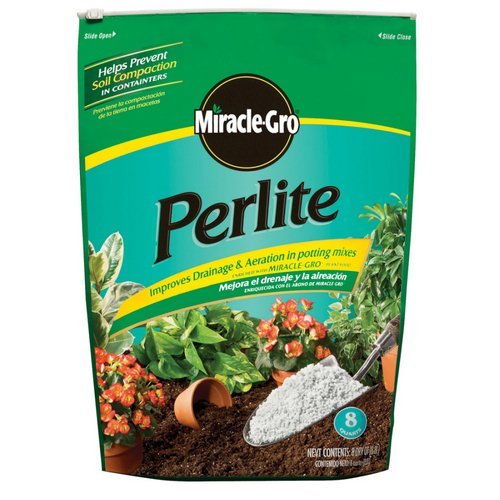
File this under why people new to gardening give up so soon. A new gardener might have heard that mixing perlite with their soil improves drainage. Perlite is commonly used in organic potting soils, and is the little spongy white rocks you see. Better look twice at that label.

Miracle-Gro perlite is not organic, or natural. For some reason beyond my imagination they have added Miracle-Gro fertilizer to the perlite! I have never heard of perlite with fertilizer added, and I sell pallets of perlite. That’s the last thing you want with a product designed to increase drainage. Fertilizers may be added to the potting soil, but never to the perlite itself.

The folks at Scotts Miracle-Gro have really outdone themselves this time. I would love to hear from someone at Scott’s on why they are doing this. If you wanted to grow organically and bought this perlite to mix with your soil, you’re screwed. Add this product to your mix and then fertilizer as you normally would, your screwed again. Check out the reviews at Amazon.com.

Why are you mixing fertilizer with a product designed for drainage? In my mind this borders on insanity. Can anyone in horticulture tell me why this might be a good idea? Could these kinds of things be one reason people fail at their gardening efforts, and blame themselves for their failure? Could it be that the decline in people gardening is a result of these companies who manufacture products and plants that are doomed from the start? Could it be the biggest enemies to attracting new gardeners, may very well be the biggest horticultural companies around? Perhaps.

A new Facebook group for Indie nurseries, vendors, and media.

We have started a new Facebook group, Retail Independent Garden Centers, Vendors, and Media. This group includes not only independent garden center owners and employees but also vendors that sell to Indies, and garden media. Garden media includes the garden blogging world, which is often the driving force these days when it comes to dispensing garden information.

Why start this group now? We had many people who wanted to join our Facebook group, Independent Garden Centers and Nurseries (IGC&N) but didn’t qualify. That group is for IGC&N owners or employees only. That left out many of the wonderful vendors, and growers who work with independents. Most, if not all indie garden centers wouldn’t exist without the help of these folks. We want to include them in the conversation.

Garden media includes trade publications, print publications, as well as garden bloggers. These people are in many cases the biggest fans of independent garden centers, and not having them included in the conversation denies us the opportunity to grow and learn.

Our IGC&N Facebook group will continue, but is only for Indie garden center owners or employees. We will be going through the membership list and asking anyone who does not meet the requirements for that group to migrate to our new group. This is in response to some concerns that vendors or media we’re in the group, and did not meet the criteria to be there. We want the input of these people, but not in that closed group. The new group is closed also. That means you ask to join. You request will be approved, usually within a day or two.

What do we want to accomplish with this new group? Open discussion on the important issues facing independent garden centers, their suppliers, and media. If you’re interested in joining our group head here, and ask to join. The garden center world is changing fast, sometimes it seems too fast. That’s the nature of the world we live in. This group will be a great opportunity to get some real give and take concerning the direction we are headed. If you’re ready to make a difference,  go here. We need you.