Logon to grow

Our Facebook Group, Independent Garden Centers or Nurseries has launched a fan page here. The page, Locally

Owned Garden Centers or Nurseries (LOGON) is open to all. Our Indie Facebook page is closed, only open to people who work at or own a independent retail garden center.  Our new fan page is for anyone who is a fan of locally owned business, especially garden centers and nurseries.

Are you a gardener who has found out why it's important to not end up with only box stores to buy plants at? Are you a wholesale nursery who services the independent garden center world? What about garden bloggers and other media that want to keep locally owned business, in business? Are you tired of "industry events" where everyone pat's everyone else on the back, but nothing really gets done? If you are then head over and "like" us today.

Our Indie Garden Center group now has 260 members representing garden centers and nurseries around the world. Having been in the retail garden center biz for 30 years I have seen many nursery organizations come and go.  Our local nursery organizations are practically non-existent. I miss the monthly meetings where we had the opportunity to meet with others who share the same trade. I don't miss them anymore. This nursery group has solved more issues, developed more ideas, and inspired more people in it's short existence than most organizations I have belonged to. We are changing the face of garden retail each and everyday.

Now it's time to bring everyone together who supports LOGON's (Locally owned garden centers or nurseries). That's the purpose of the new page. To gather like minded people together for further adventures. Our nursery group will use the new page to communicate our ideas. You can use the page to express your support, or tell the group about your service for locally owned nurseries. It's an open group and everyone is invited to participate.

If your tired of "gardening personalities" telling you just how great that new hybridized flower from that multi-national corporation is, we are the place for you. Tired of all the hype and money that is spent in useless efforts to get more people to garden? Help us keep local, and independent "top of mind" when it comes gardening by "liking" our page today!

"The bus came by and I got on, that's when it all began..." The bus is leaving, all aboard!
Bill's comment say's it all

The Garden Gloves Come Off is an article appearing in The Wall Street Journal today. It concerns Home Depot and Lowe's ongoing battle to have the newest plant introductions. As the article states, "the weapons are scientifically altered versions of common flowering plants, engineered to bloom a little brighter or withstand benign neglect a little longer. Lowe's and Home Depot are locked in an annual arms race to discover and develop new plants—ideally as exclusives sold in only their stores."

There is an interesting thing I have started to notice with The Wall Street Journal, and other online publications.  This article is not one of them, but many of their articles are hidden behind "pay walls." They will start the article and then finish what you can see about a paragraph or two into it. If you want to see more you have to subscribe. So for those of us who refuse to subscribe we only get a taste of the article, unless you jump to the comments!

This is a phenomenon that is starting to show up at various publications that institute a pay wall.  By reading the comments of some who are regular contributors to the comment section you can get an overview of the article. If you have read the commenter's comments before, and trust what they say, you can get some real insight. Some of the comments are better than the article they are commenting on. You have to be selective and ignore the comments that are useless, and if you read the same publication regularly you get to know who to listen to.

So it was with great pleasure that I read through this article and saw the first comment by Bill Jung. I am not sure who Bill is, but independent locally owned garden centers owe him a big "thank you".

Bill say's, "Starting about 3 years ago, after I determined my success rate with plants purchased from either Lowe's or HomeDepot was 50-50, I bought more and more from the local independent nurseries and greenhouses where my success rate with the plant living and blooming increased to 90%. Sure those plants sold at the big boxes initailly looked great but within two weeks they faded and showed less vigor. Those purchased at the independents took off beautifully after two weeks and lasted all season long. I planted my first garden in 1959 and try to keep up with as much of the literature in horticulture and forestry as possible. I am not a novice gardener in my opinion. Many of my plants I start from seeds or cutting on my own.

I have since reduced all my purchases at either lowe's or HomeDepot and have since bought lumber and building materials at REAL LUMBERYARDS, major appliances at a real KITCHENAID DEALER, paint at a PITTSBURGH PAINT STORE, and my chainsaws and garden equipment at a STIHL DEALER. Soon I will be in the market for a JOHN DEERE lawn and garden tractor, I will buy it at a JOHN DEERE dealer. AS of last year, I won't even go into a bigbox to 'look around'. I don't have the time to waste.

Funny too, were the prices competitive if not better at the 'little guys'. I was getting perennials for a buck each at a grower's greenhouse whereas the comparable plants were priced at 3.98. 4.98 and 5.98 at the big boxes. Plus the people were trained horticulturists with degrees and were plant breeders too.

Maybe STIHL was onto something when they said you can only buy a new STIHL at a Stihl dealer and not a BIGBOX. Besides, I got tried of having the clerks tell me, 'You have to go to a LUMBERYARD for that'".

Thank you Bill!

Super Atomic Energized Seed

Sometimes pictures are worth a thousand words. I came across this photo at The Popular Science website POPSCI, The Future Now. The article deals with the time in the 1950's and 1960's when, "scientists bombarded plants with gamma radiation hoping to see beneficial changes in the plants’ structure and yield. " Long before GMO's we're in the headlines, "entrepreneur C.J. Speas and Englishwoman Muriel Howorth, who started the Atomic Gardening Society to promote mutated varieties" sold irradiated seed.  "Johnson describes a dinner party in which Howorth served 'NC 4x,' North Carolina 4th generation X-rayed peanuts that were produced from seeds exposed to 18,500 roentgen units of X-rays. After the party, Howorth planted the irradiated seeds and they grew like magic beanstalks." The photo of the Super Atomic Energized Seeds you see is what fascinated me. A signpost from a time not that long ago.

The article lead me to the garden history girl blog, written by Paige Johnson. A little about Paige from the blog "Pruned". Paige "works as a nanotechnology researcher at the University of Tulsa, Oklahoma. When not inventing new ways to fabricate nanobatteries and other advanced materials, she moonlights as an independent scholar of garden history." I would say she is moonlighting, as she has a Masters degree is garden history!

Paige writes another great blog dear to my heart, Playscapes. Growing up the son of a Director of Parks and Recreation for the City of San Carlos I spent a lot of time in playgrounds. My fathers job was to facilitate new parks for the city as well as maintaining the current ones. Paige started her blog, "because it's difficult to find non-commercial playground information. And I find that frustrating. Because a playground doesn't have to cost a million bucks and come in a box. In fact, it's better if it doesn't. Because playgrounds are under-recognized as an artistic medium. Because everybody loves a playground."

I found Paige's answer as to why she got into Playscapes fascinating. From the blog Pruned she say's, "At a very fundamental level, many nanotechnology problems are about the creation of appropriate spaces. There are load of

papers published on new whiz-bang nanostructures, which one might think of as objects or sculptures. They're pretty and all, but what we need is negative-space structures, spaces that are architectures not sculptures, spaces that can be 'inhabited', and comparatively few people are working on that. These are things my study of design helped me understand, which has led to a patent for a hollow nanostructure, and another application for one that inhabits the hollow space." Wow!

Looking for something a bit different in the garden world? Paige Johnson's two blog's, Garden History Girl, and Playscapes should fit the bill.

Feeling crunchy?

Got my latest issue of one of the trade magazines we receive every month, Today's Garden Center.Jennifer Ploanz,

editor writes about "Going after 'Crunchy". As she explains, the term "crunchy" is a newer more positive version of hippy. It's about people who shop organic, understand what the term "carbon footprint" means, and live in a way they feel is sustainable. The whole magazine is devoted to "Green", with articles like "3 keys to make eco-friendly profitable" and "32 products to help your customers get greener". It's clear from this publication, and others like it that the nursery industry is starting to see the potential for organics, and natural products.

What are you going to do in another year when everything is "green"? How are you going to differentiate your business with organics when the box store down the street, and your other independent competition is on the bandwagon? Soon "green" is going to be "mainstream", and advertising that you carry organic products won't differentiate  you from anyone else. There may still be time to position yourselves as the "organic go to place" if your the only ones in the area that have organics. But eventually others will jump in, and your position as the only place with it will change to the "first" place that had it.

If you want to be known in your area of influence as the "go to" place for organics you will need someone on staff that lives and breathes this stuff. They need to understand about microbes, soil, pest control, and everything else concerning organics. When everyone is selling the same products all labeled organic, what will you do? Make your own fertilizer!

Have you ever made or sold "compost tea"? This stuff, if it's made correctly is a living product that needs to be used within a couple of hours of brewing. I am not going to get into the benefits of tea here. There are loads of web pages devoted to it. The main thing is it needs to be made, and used quickly. The places where it is sold brew this stuff on regular days, maybe Mon., Wed., and Friday. People bring, or buy empty gallon or five gallon containers to be filled on these days. At home they put the tea on the soil, and every couple of weeks it's spayed on the leaves for disease prevention. It's really works!

Here is why we are going to be brewing and selling tea this year. People are asking about it so the demand is there. It has to be made on site, so it becomes "Golden Gecko Garden Center Tea". That makes it one of a kind, and unique. The third reason is it involves people returning on specific days to buy more! Demand, exclusivity, and regularity are something we all would all like in our businesses. In addition it makes people feel good as they are re-using the containers to fill with the tea.

We will be setting up our tea system soon and will post pictures. We're excited as we have done research on compost tea and feel it's the way forward for many. Especially for the locally owned independent garden center it's a niche that will be hard for the box stores to compete with(for now). The tea is brewed very carefully with customer and employee knowledge on how to use it being vital. You cannot just bottle this stuff and sit it on the shelf for days on end.

The way forward for the locally owned garden center will involve more "unique" products, and methods. Here is the most important point about organics. It requires knowledge to do it right. For the last fifteen years in the nursery trade we have been told that the customer want's everything simplified for them. Don't confuse the customer, keep it simple, and sell them a bag of something. That is changing, thank goodness. Customers who are interested in this stuff want to know how to do it right, and that requires knowledge. They want to learn! Let's teach them the right way from the get go.

Are we boring our customers to death?

We're boring our customers to death according to Lloyd Traven of Peace Tree Farm, an organic greenhouse business

located in Kintnersville, PA. In an article at The Doylestown-Buckingham-New Briton Patch Lloyd say's, "we've stopped asking 'what's new?' We've stopped presenting 'new' to the garden centers. But here's the problem. The consumer didn't. The consumer is saying to themselves, 'What's new?' the answer is, not much. It's all the same stuff."

This is the elephant in the room. With the recession, and customers changing habits, many garden centers have turned to tried an true plants and goods. No one seem's to want to take a chance on new plants or ideas for fear that they will not be accepted by a more frugal customer. Lloyd say's, "'so if it's all the same stuff, at every garden center they go to, they might buy something, but they might not. That means that there is no loyalty, no relationship, nothing that makes that customer want or need to come back.'"

Excitement doesn't have to just come from the type of plant's you carry, but can include other gardening goods you have as well as the way you run your business. Garden centers that show customers new way's of doing things also create excitement. This year at our garden center we are setting up a hydroponic display growing tomatoes outside. Most people associate hydroponics with growing stuff indoors, yet it's the perfect setup for a person wanting to grow tomatoes or other vegies outside under the sun. It's a hobby that shout's repeat business, and is exciting and new enough to keep retired engineers and young gen Y people interested.

Excitement also comes straight from the people who work at the garden center. If the nursery people at your store are not excited about gardening and sharing that excitement, then you have a problem. Exciting people are a must. Just having a degree in horticulture won't cut it in retail. More important is to have an attitude of  joy and enthusiasm for the most basic gardening tasks. Remember, for most people it's their first attempt at a garden and they need an enthusiastic coach. Someone who causes them to want to come back time and again to get a dose of enthusiasm and hope.

Where does one go to meet with other's in the trade who "get it", and want to make a difference? If your an employee or owner of a locally owned garden center or nursery, and want to hang with the most innovative and forward thinking people in the trade head over to our Facebook group, "Independent Garden Centers and Nurseries" and ask for membership. This is the place where the future of the independent garden center or nursery is being worked out. Want a seat on the bus to the future? Go here to find out more.

Thought I had seen that T-Mobile ad before.

The Internet allows anyone to post anything. If it worthy, then it spreads virally and many get to enjoy it. Often the originality is what is so refreshing. Have you seen the current T-Mobile ad showing what the upcoming royal wedding might be like if they let loose?  It's funny, until you realize it's a copy of a much more original, and unique video of Jill and Kevin's wedding. When I first saw the original video almost two years ago I was amazed at the originality and joy. Real people, real wedding, and a real celebration. While the T-Mobile ad is funny, it just doesn't compare to the real thing. Goes to show the power of originality, and real joy. I sure hope T-Mobile makes a donation to Jill and Kevin's anti-violence charity mentioned at the beginning of their video. jkweddingdance.com

I wonder whether the royal's will ever be able to enjoy life, or celebrate like Jill and Kevin did? So much of the royals lives are scripted and rehearsed it must be a drag after awhile. The ability to let go of ones ego, and just dance is something we should be thankful for. It's the "joy of the commoner" and apparently something that money and titles just can't buy. Enjoy!


Is this a solution?

According to The New Jersey Herald, "As part of a six-state initiative, 200 Walmart stores throughout the Northeast

have partnered with Garden State Growers, a family-owned Hunterdon County nursery, and TerraCycle, a New Jersey based company that specializes in the collection and reuse of non-recyclable or difficult-to-recycle post-consumer waste, to offer a new spin on plastic plant pots for sale at Walmart."

The article continues, "Beginning April 17, Walmart stores in New Jersey, Connecticut, Massachusetts, New Hampshire, New York and Vermont, will be stocked with the green products at about $5 per flower or plant. Walmart stores in Newton, Franklin and Hackettstown will have their shipments in just in time for Earth Day, April 22."

TerraCycle collects the margarine tubs from it's collection program, TerraCycle Brigades. TerraCycle donates 2 cents to the charity of your choice for every item sent to them. With the margarine tubs Garden State Growers will poke holes in the bottom for drainage. The finished pot and plants will be sold at 200 Wal Mart stores.

Does this really make sense? What happens to the pot after the plant is removed? Do you send it back to Terra Cycle, or bring it back to Wal mart? What is the cost of sending this stuff across the country? How much energy is used to clean the pot? So we saved the pot but used the gas or diesel to send it back to Terra Cycle.  A fellow nursery person ask's, "So reusing difficult to recycle materials for what will be their only additional use is now eco-friendly? It almost creates a demand for something that probably should not be allowed to be made in the first place. And where will the consumer toss it when they are done?"

I am not sure if it is a solution, or a feel good effort? What do you think of this program?

The gardening market has changed

While I was at The ANLA Clinic earlier this year we listened to a man (can't remember who), who said many

garden centers are too big, and have to much inventory on hand for the current situation. Someone in the audience said that they needed the extra plants so as to be able to make nice displays. Whether they need the plants to  sell or not, they we're going to keep ordering so they could make nice displays. This surprised me as I have over the last couple of years decided that we would only carry what sold. Sounds simple doesn't it?

I wonder how many stores still order based on what they believe a nursery should carry, as opposed to what works these days. Bulbs? Didn't carry them this year. You know what, we didn't have to put the majority on sale before they sprouted in the boxes this year. Sure a few people we're disappointed we didn't carry them, but not that many. Actually we told our locally owned competition we we're not going to carry bulbs this year, and would send people over to them. They ordered extra, and you know what? They are still trying to get rid of them, and they are on sale.

Somehow a balance needs to be achieved between the notion of a garden center, and the reality. I have a friend who was in the nursery business for over a quarter century. He told me you couldn't be a proper nursery and not carry roses.  How many nurseries continue to carry large selections of roses only to put a large portion on sale at the end of the season? The darn deer eat them here, and as such the demand is not great like other more suburban areas. We don't carry roses. Haven't looked back.  I would expect that the Christmas season is like that for many of us. The problem is most of that Christmas stuff never sells, and ends up in the back room waiting to make an appearance the following year. I realize some stores do a bang up Christmas season, but the majority do not.  If Christmas season continues to be a loss, maybe it would be better to just close for a month or two during the winter?  Your nursery may do a great job during the Christmas season. Keep it up!

I have a feeling that this year is going to be another tough one for the trade. Especially here in California where fundamental problems are going to keep the economy shaky. If you waiting around for the economy to "improve" so it can be business as usual, you have a long wait. Better to learn to live and thrive in what we are experiencing now.

There are great opportunities for garden centers who can tap into current concerns.  We are focused on consumables, and the products needed to be successful in your pursuit, such as organic fertilizers and pest controls. Even more important we have the knowledge to help you do it right. Perennials and annuals in smaller sizes are still great sellers.  We keep varieties not usually found at the box stores. Native plants are a niche no one does well in our area, so we now have a great selection of natives from our partner, Lotus Valley Natives. Indoor and hydroponic gardening has been huge for us. Another thing the box stores don't do well, yet. Find your niche and build on that. The traditional garden center market is no longer there.


This stuff is for vegetables and herbs?

I signed up for the Home Depot garden club just to see what's up. The latest one received was focused on edibles

with the newsletter saying, "Recent surveys reveal that homeowners are embracing edible gardening with unprecedented enthusiasm. It's not surprising—vegetable garden planning and planting is enjoyable and easy. Nothing compares to the freshness and flavor of home-grown vegetables and herbs. By harvesting your own food you can control the level of pesticides and herbicides used on them..."

To help you control those levels of pesticides Home Depot provided me with a coupon for $5 off Bayer Advanced Fruit, Citrus, and Vegetable Insect Control. Doesn't tell me much about it, but it has to be safe or the garden experts at The Depot wouldn't be offering me a coupon for it. Here is Bayer's website where the label can be viewed. Unless you know where to look the ingredient list is hard to see. I know where to look!

The active ingredient in this product is called, Imidacloprid. Here is the Wikipedia page for the insecticide. What struck me was the nature of the pesticide. According to the Wikipedia article, "is a nicotine-based, systemic insecticide, which acts as a neurotoxin and belongs to a class of chemicals called the neonicotinoids." The article continues, "Imidacloprid is one of the most widely used insecticides and can be applied by soil injection, tree injection, or broadcast foliar or ground application as a granular or liquid formulation or as a pesticide-coated seed treatment."

Here is the part that really got my attention, "Imidacloprid is a systemic chloronicotinyl pesticide, belonging to the class of neonicotinoid insecticides. It acts as a neurotoxin and interferes with the transmission of nerve impulses in insects by binding to specific nicotinic acetylcholine receptors. As a systemic pesticide, imidacloprid translocates or moves from the soil into the leaves, pollen, and nectar of the plant."

This stuff is trans-located from the soil, and moves through the plant systemically. It's inside the vegetables you will be eating! It is also in the pollen of the plants. Since it's systemic any animal, including honeybees, will pick up the poison. Oh, did we mention that the active ingredient, "is receiving increased attention as a possible factor in colony collapse disorder, a mysterious condition that causes sudden death of honey bee populations"?

I would love to hear from an expert on how long it takes the pesticide to leave the plant. You apply this to lettuce. How long before there is no measure of pesticide left in the parts we eat? I really don't know. I can't imagine applying a systemic insecticide on plants we are going to eat. Apparently they use it on commercial crops of lettuce and other plants. Why am I even growing my own vegetables? So I can fill them with this stuff?

I am open minded. After being in the nursery business for over 30 years you think you have heard it all. People grow vegetables for a variety of reasons, and what they put on them is up to them. The problem is, people new to vegetable gardening assume the place where they buy those plants would know what's safe to use on edibles. Home Depot makes a point how they sell Bonnie grown vegetables, with no GMO's. What's the point if your going to load them up with a systemic, synthetic pesticide? Again, how knowledgeable is the first time gardener or employee in the garden department of Home Depot? Should you trust you families health and well being on a $5 off coupon for systemic insecticide for you herbs and vegetables?

SF Botanical Garden fee's not enough. Let's spend more!

The Botanical Garden in Golden Gate park instituted an admissions fee in August of last year. The formally free venue decided to start charging $7 for non-residents. Residents can enter free, with proof of residency. According to SFGate.com, "Officials initially estimated that the entrance fee would generate $650,000 in the current fiscal year, which began July 1. But the projection later was reduced to $402,401, due in part to delayed implementation and lower-than-expected attendance by nonresidents. Now, according to Rose, the projections have been lowered further, to $355,992."

The fee was instituted with the caveat that it would come up for a vote of The Board of Supervisors the following year.  While some on the board want to keep the fees, others say it's time to end the fees and allow people to walk through free. The Parks and Recreation Department and Botanical Garden Society officials have raised their expectations for revenue for the next fiscal year, "they anticipate the nonresident visitor fee will bring in $542,055, or $337,219 after administrative costs." Administrative costs for the botanical garden are over $210,000.

The revenue last year was not what they expected, so this year they raise the revenue expectations by 52.3%? How are they going to do that? According to Sarah Ballard, policy director for the Recreation and Park Department, "this facility has never really been promoted. This is a world-class living museum." According to SFGate, "she said a robust marketing campaign is planned to draw more tourists to the Botanical Garden." I wonder what the "robust marketing campaign" is going to cost? What is the basis for expecting an increase in revenue by 52.3 percent, and how do they come up with these figures? 52.3%?

Originally the fee was suppose to end "if voters approved a citywide tax increase to bring in more revenue. That happened in November, when the city's real estate transfer tax was raised." Why are we then talking about continuing the fee?

If the arboretum is "world class" then that by itself would be enough to attract the needed attendance without the marketing campaign. Back in the day I use to visit the arboretum all the time. It is a wonderful place, yet the visit's would have been a lot fewer if I had been charged an admission fee. As the article in SFGate quotes Supervisor John Avalos, "one only has to linger a few moments at the gate to see frustrated San Franciscans without their (identifications), and nonresidents who don't want to be gouged, turned away".

So the fee was suppose to end if a special tax was passed. The tax passes, but that's not enough. Revenue is down so let's estimate a 52.3% increase in attendance for no other reason than a yet to be determined "robust marketing campaign". Sound's like a whole lot of wishing going on.

Hi, we're from Homeland Security...

Matsuda's Nursery, a mid-sized wholesale nursery in Sacramento is looking for workers. This after 60 workers, some who have been there for over 20 years we're rounded up by immigration officials. According to The Sacramento Bee, "The undocumented workers, some of whom have worked at Matsuda's southeast Sacramento nursery for 20 years, were identified in the workplace audit by the U.S. Department of Homeland Security, which found 71 didn't have legal documents. One is from Peru and the rest are from Mexico, said general manager Ryan Wallace.

Home Depot's new garden center concept

In Cape Cod The Barnstable Patriot reports that, "Home Depot at 65 Independence Drive, the former Bradlees store, will be selling Christmas trees come this November and assorted flora this spring as it debuts its outside seasonal garden shop, providing all permits are obtained on schedule. The Cape Cod Commission has already approved the plan." According to the article, "as contemplated, a small version of the garden center will open from Nov. 15 to Dec. 31 for the sale of Christmas trees and reopen from March 20 to Sept. 20 for the sale of seasonal flowers, plants and implements." When asked by the council why Home Depot is going with the temporary structure, "Tom Gallagher, the company's real estate manager, cited two major reasons: Capital return on investment and less site disturbance. He said the seasonal model will be a big boost to the store's sales performance."

This happens time and again. People say, "garden centers should just have to deal with the box stores on their own terms". The problem is Home Depot and these other large enterprises use their size to intimidate cities, and municipalities into changing the rules. My local Placerville Home Depot always extends their garden center into the parking lot during the busy season. They we're told that to get the permit to build they had to supply X amount of parking. Now they expand the center into the parking lot later? The parking is not needed during the busy spring season?

What a sweet deal for Depot. To open provide X amount of parking for the size of the building. Later, go before the council and ask for as special use permit. Then expand your operation into the parking lot that was suppose to be used for parking. When the season is over, take the tent down. It's not so much the tent, or temporary aspect that get's under your skin. It's that the place would have never been built in the first place, if they had said they would be using the parking for sales!  I think this idea is brilliant on Home Depot's part and is going to spread, likely to a Depot near you.

The checks in the mail...

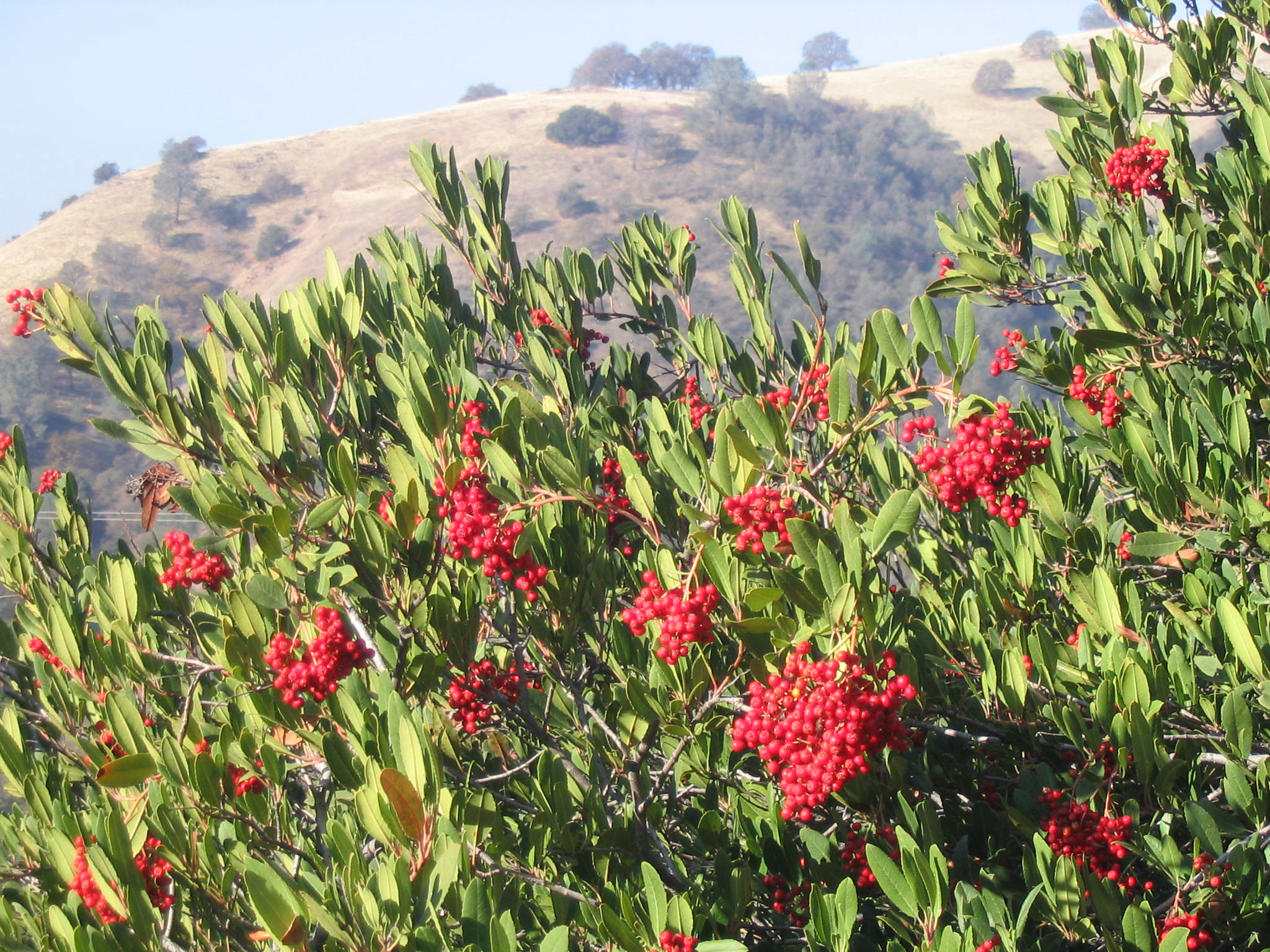
I have noticed an increase in visitors to this blog based on Google searches of photographs. More and more, images are what will lead people to you. This picture of a Toyon  has lead lot's of people to this blog.  It was from a post I did in 2007. I did a search today of "Toyon" and the photo is on the first page. So someone who is interested in Toyon and Google's the name, can end up at my blog.

A lady representing a botanical book publisher called today, and bought the rights to use the photo in  a new online educational book! I was ready to just say "give me credit and use it", but a little voice said, "ask if others are getting paid for their photo's."  Yes they are, and we will pay you! The proverbial check is in the mail, but I was quite surprised by how much they offered. Looks like I am going to be taking a lot more photographs this year.

This is a horticultural industry game changer!

Readers of this blog know I have been talking about garden centers  getting involved in hydroponics or indoor gardening

for over two years. Why let the hydroponic warehouses take all that gardening business? There we're naysayers who warned about garden centers getting involved in this market. Would it offend the older generations that come in our store? What would people think? I also heard from garden centers that said they didn't think there was a market for this kind of stuff in their area.

Take a look at this new"potting Soil from Dr. Earth, a mainstream brand. It's for your, "Organic Medicine Gardens". It's not potting soil, it's "POTting Soil". It's being sold across the country. There are even bumper stickers available.

This is going to get interesting. I wonder if the hydroponic community knows the locally owned garden center is moving in on what was their exclusive market. Out here in nor Cal I have 8 hydroponic warehouses within 15 miles of here.

I have never seen a major, mainstream soil  or fertilizer company go this far. Does anyone even doubt what those leaves on the bag represent? If enough locally owned garden centers get on board this could change the dynamics of a major market in California. What happens when Home Depot, or Lowe's starts carrying a competing product? This is a game changer in that it signals an acceptance by the main stream garden center trade. What are all the specialty soil companies like Foxfarm, going to think of this? I like the fact that at the top of  Dr.Earth's website it proclaims, "Dr. Earth is proudly sold at independent garden centers only! (No chain stores)"