The tall scraggly trees are "grey pines", which occur in the Sierra at elevations below 4000'. This picture is just down the road from us at about 3000' in elevation. It's located in an ecosystem known as California chaparral.
The storm that just passed left about 5 inches of rain in three days, so the ground is saturated. Some plants, like coyote brush, are starting to bloom now that the summer drought has broken.
Come, lets sit amongst the trees
Be like monkeys and hang out in the trees at this tree house hideaway in Bellingin in Australia.
There is an outdoor shower and views from the inside at the link. http://bit.ly/2f9UFoY
Change the world in the garden
"The climate is changing. Food and agriculture must too". This is the theme for the UN's "World Food Day", celebrated today. You might ask, what can I, one person do?
You can change your world by immersing yourself in green. Feed yourself, as well as your community by growing a garden. This simple act changes your surroundings, and your feelings. People who garden naturally feel better than those who do not. When you eat from your own garden you know exactly how the plants were grown. The energy put into growing those plants is given back to you in the form of nutritious food. Weeding, watering, and tending the garden all require a nimbler body and mind, and the plants know this! This is the symbiotic relationship you will enter into with the plants when you garden.
The picture shows a section of our food garden. We use natural methods and avoid any synthetic pesticides, or fertilizers. We improve our soil by adding a layer of compost right on top. We no longer till it in. The "no-till" method it's called. Saves our backs as well. It interesting that the less "hard" we work, the better the results. I think for the longest time people have been under the impression that the garden was "hard work". If it is, you doing it wrong.
Here are some ideas for growing your own organic food garden.
1. Size of the garden is not important, intent is. Be it a small container garden on an apartment balcony, or a five acre truck farm, doing is most important.
2. Visit your garden daily. Besides being a moving meditation, it allows you to see the gardens progress, and nip in the bud any potential problems before they get out of hand.
3. Feed your garden organic nutrients on a regular basis. This is especially important in raised beds, or containers. Usually every couple of weeks we apply a dry fertilizer to our plants. Unlike synthetic nutrients that bypass the soil and feed plants directly, we want to feed the soil, thus feed the plants. Organic nutrients can be made at home from compost, or purchased from a local garden shop.
4. Remove the negatives from the garden. We are not engaged in a "war on weeds", or "battling pests". To receive the healthy benefits of gardening we work with the weeds and pests to keep them at a healthy minimum. Besides, some plants considered weeds are actually tasty vegetables. The often maligned dandelion is a great green to eat. The garden snail? Escargot!
5. Be different! Grow strange and unusual vegetables from all over the world. Just 15 years ago most people only knew of a few tomato varieties. Now we have access to 100's of varieties of heirloom types with flavors unique! Learn to grow exotic mushrooms! We are experimenting with growing our first shiitake mushrooms on tree stumps. "Find the others", means find like minded people who share your interest in gardening. The Internet is very useful in that regard. You'll soon find that their are others working in their gardens, just like you.
#WorldFoodDay
#garden
#gardening
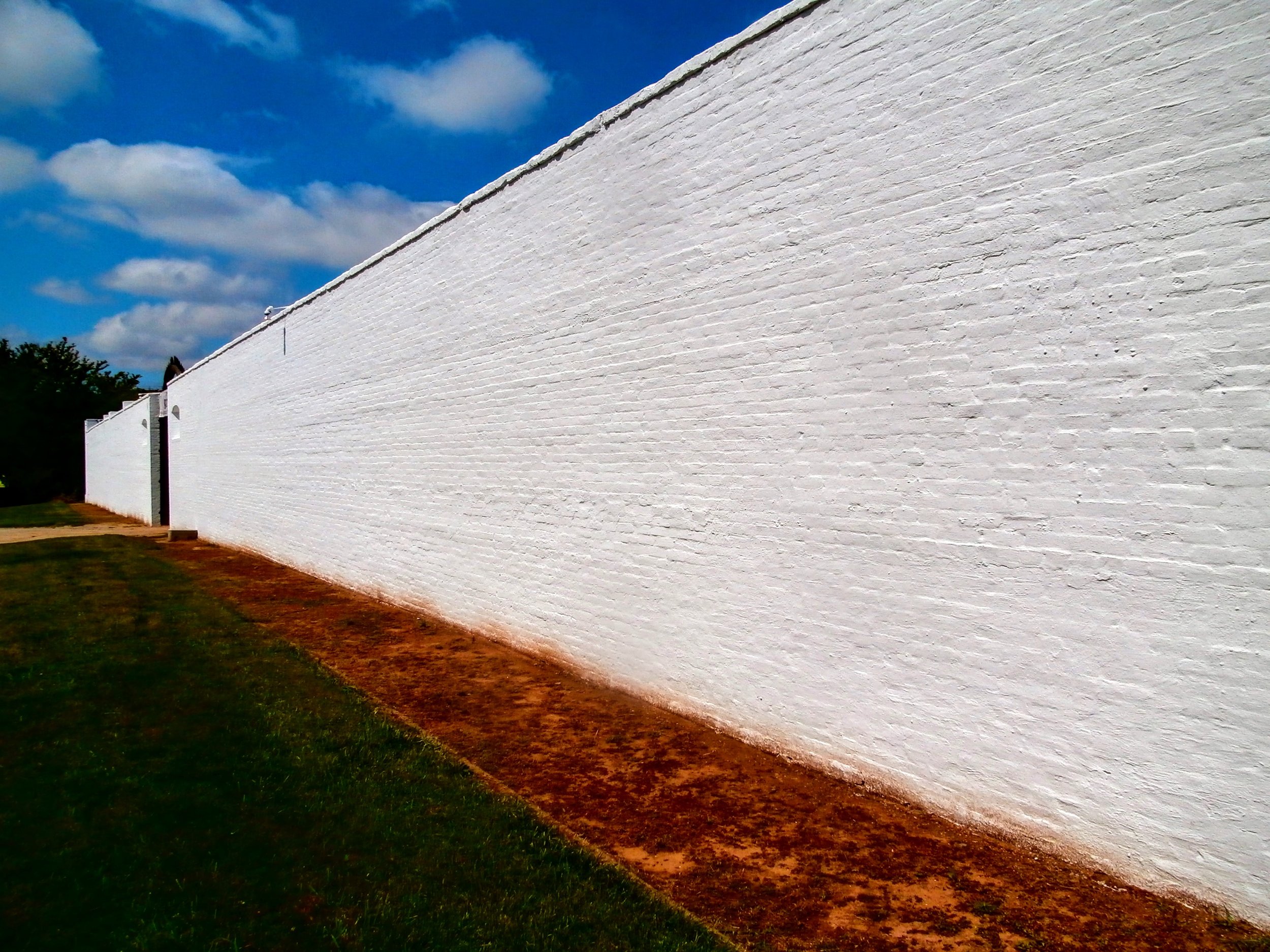
A white wall
A wall surrounding Sutter's Fort in Sacramento.
Rainy season off to a great start
Living Wild: Gardening, Cooking and Healing with Native Plants of California
This book caught my attention while visiting Nevada City the other day. The authors, Alicia Funk and Karin Kaufman are both from Nevada City and have written a book about using the native flora of The Sierra Nevada as both food, and medicine. As my interest in using local produced products has grown, the idea of using the native flora only makes sense. It doesn't get more local than that.
The authors listed 5 essential reasons for taking the time to learn about, and use native plants.
1. Cultivate an Independent Carbon-Neutral lifestyle.
2. Enjoy 100% local nutrition that is gluten-free and vitamin-rich.
3.Say no to nature deficit disorder.
4. Preserve cultural knowledge.
5. Protect biodiversity and habitat.
Reading about Manzanita one finds that the berries, flowers, and leaves can all be used. You can make Manzanita cider, Manzanita hard cider, or mix some Douglas Fir with it and enjoy MAnzanita and Douglas Fir Cider. You can also make Manzanita Blossom Jelly, Manzanita crackers, Manzanita granola, Manzanita muffins, and Manzanita sugar.
Manzanita Berry Sugar
Collect berries in early fall
-Dry berries
-Grind coarsely, on the lowest speed, in a food processor for several minutes
-To separate seeds and skins from the berry "sugar" place slightly ground berries in a coarse-weave sifter or mesh strainer. Use a wooden spoon to push the sugar through the strainer.
-Store sugar in an airtight container in a cool location.
-Keep left over seeds and skins to make Manzanita cider.
TIP: Grind 2 cups of berries to get 3/4 cup of sugar. Add Manzanita berry sugar to oatmeal, tea, and anything else you wish to sweeten. I can't wait to give this a try.
The interest in where our food comes from, and how it's processed will continue to grow. One answer to the concerns about what we are eating is to "go native". Of course to live entirely off the native flora would be difficult, and not really in the cards for me. However adding native plants to the diet seems worthwhile, and fun. How fun to serve Bay Leaf ice cream after dinner.
You can find "Living Wild" at Amazon, or perhaps your local bookstore.
Who let the bees out?
The beekeeper did! I watched as the beekeeper opened up one of 6 hives we just received at the nursery. Quite a sight seeing all those bees come out.
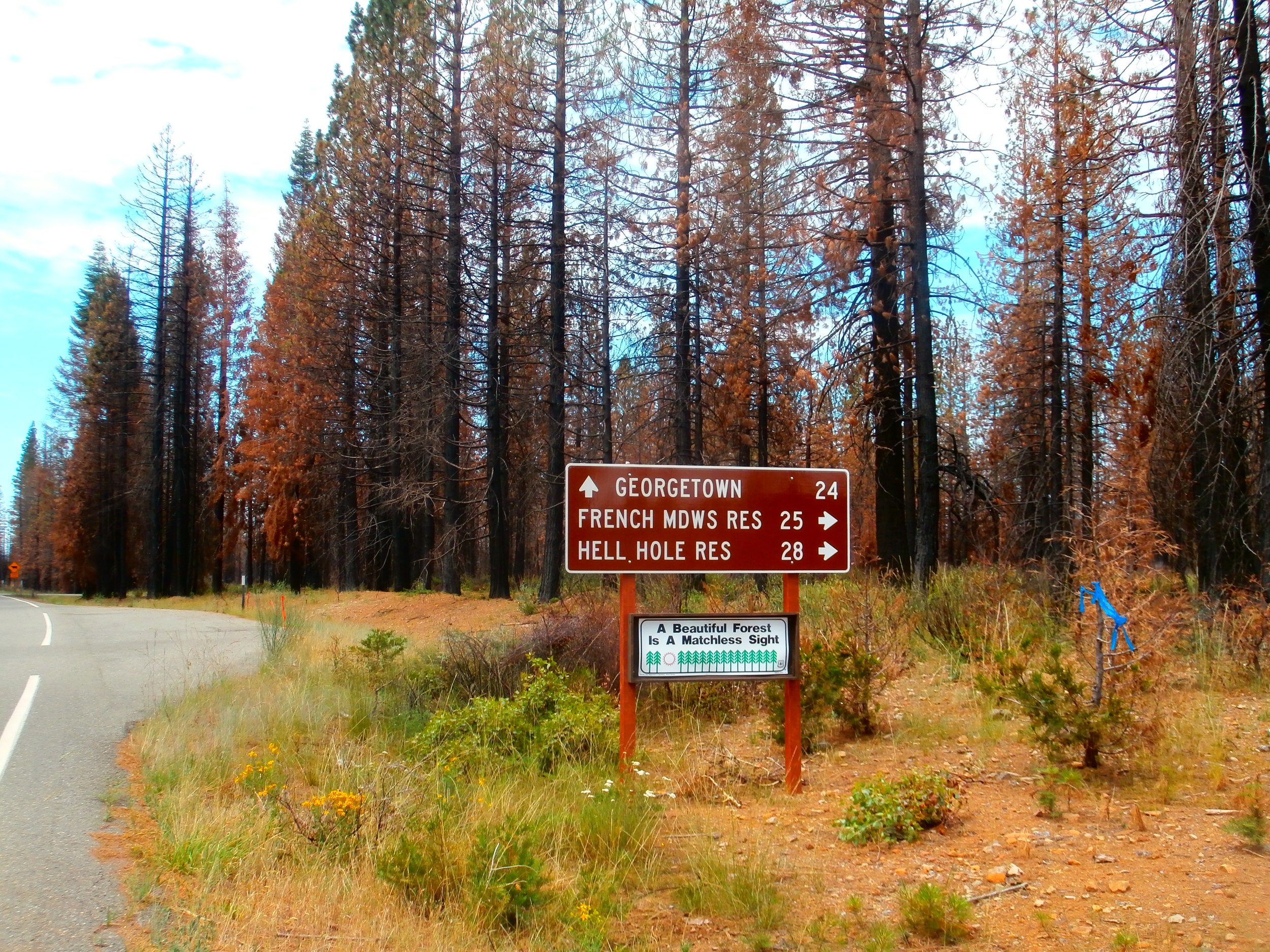
Burned forest, with ironic sign
Last year 97,000 acre King Fire burned much of The Eldorado National Forest near where we live. To get to our secret camping spot we drive through burned trees for several miles. Along the way a turn off leads to "Freanch Meadows Reservoir", as well as "Hell Hole Reservoir. " Just below the brown sign the forest service has put a sign that reads, "A Beautiful Forest Is A Matchless Sight". Not sure if it was there before the fire, or was put up after as a sort of ironic exclamation point to the whole event.
We did see many wildflowers along the way, as well as year old tree saplings. The forest is recovering, but will take decades to look as it did before. Fortunately our favorite camping areas we're spared, so we will be passing through the burned out, but recovering forest, for some time to come.
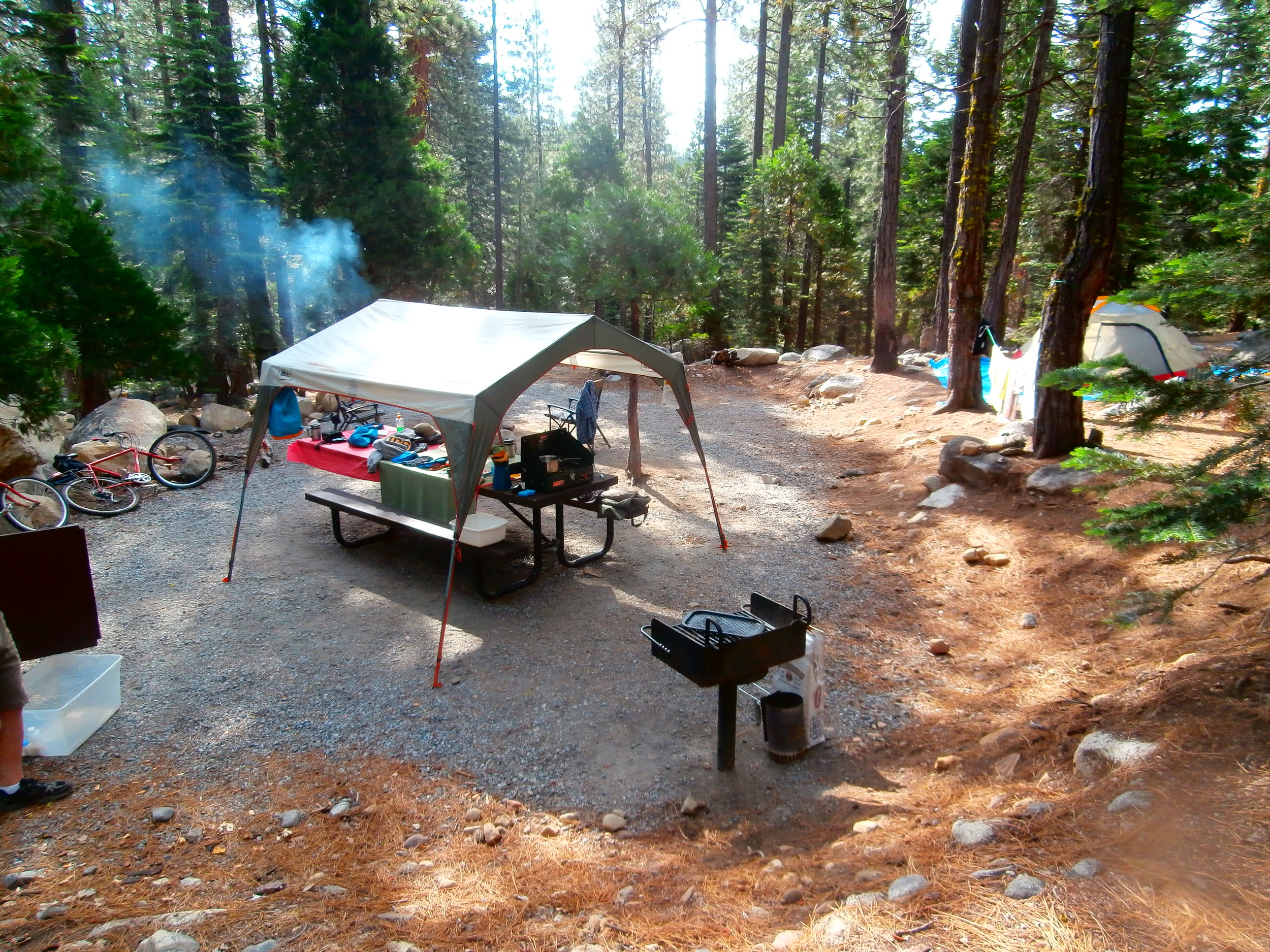
Sierra Camp
This is what our camp looks like when we have everything unpacked. We have worked on streamlining our packing so it's easy to set up, and take down. We can get it done in about 45 minutes, though there is hardly ever a rush to finish.
This is one of our favorite places to camp. Located at about 6500' elevation (1980 meters) near The Desolation Wilderness, it takes us 45 minutes to get here from home. We bring our mountain bikes as there are trails all around, and our kayaks as there is a small lake a few hundred feet from the camp.
I really have to keep quiet about the location. Not very busy on the weekdays, which is when we go. The weekend? Campground full! The weekdays? 10 to 20% occupied. Just the way we like it.
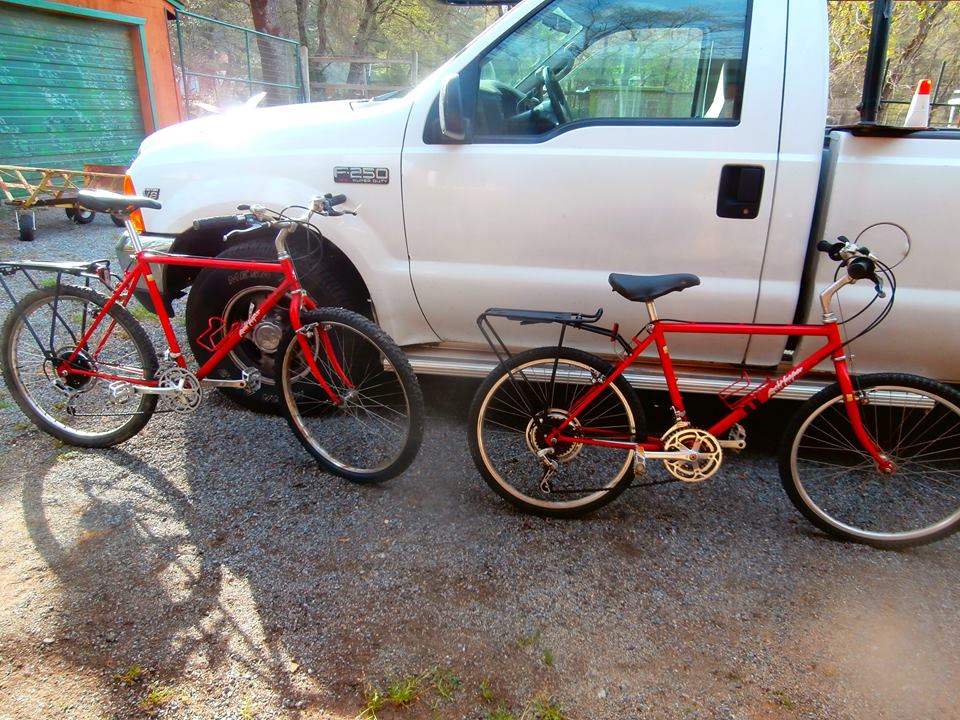
Riding The Eldorado Trail
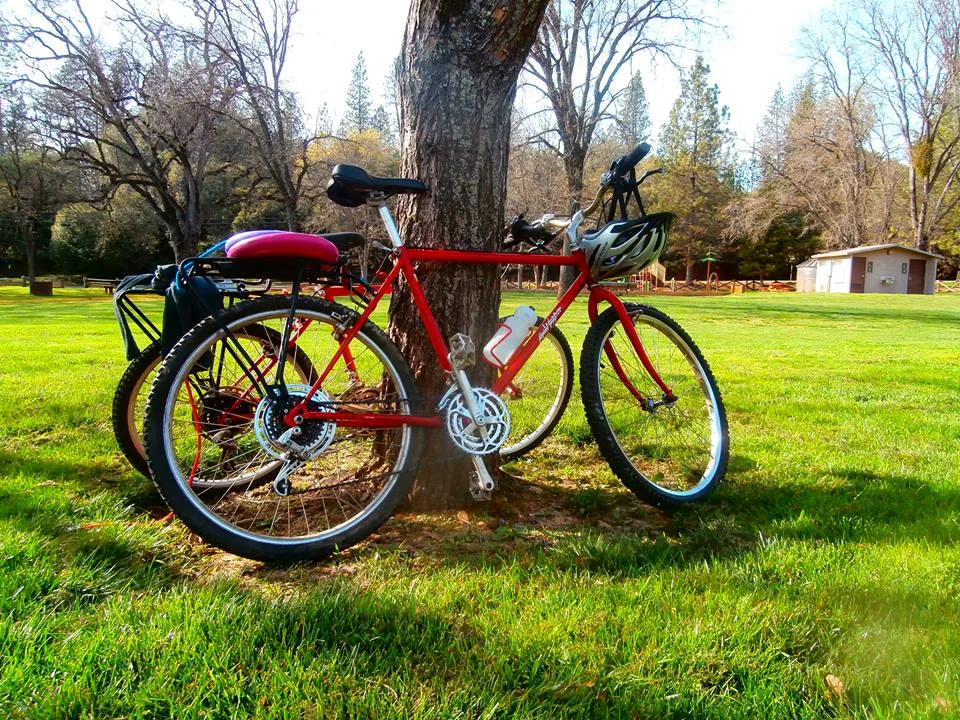
Monica and I took our vintage 1986 Specialized Rockhoppers out yesterday to the El Dorado Trail. The trail has paved and unpaved portions, and we took the unpaved section from Mother Lode Dr. In Shingle Springs to The El Dorado Y at Pleasant Valley Rd., a distance of 8 miles round trip. The trail roughly follows the old Southern Pacific railroad tracks, with most of it single track, and plenty of ups and downs. It's an intermediate ride that left both of us feeling spent, but satisfied.
We bought our bikes new in 1986, the first year Specialized made The Rockhopper model. Very rare bikes these days, they were state of the art back then. Monica's had been hanging upside down for the last decade, and mine was being used by my brother-in-law during that time. A couple of months ago we re-acquired mine and brought Monica's off the hangers. It's fun to be back up on the bikes, and extra fun to be able to enjoy these classics still.
Don't panic, stay calm, and garden!
Working at the nursery the other day I had a chance encounter with a group of young people who work for a state run organization. They are learning about the garden and how to grow food. They have started seeds, and came by to learn about the compost tea we make. Afterward I was told that just the other day the powers to be told them they cannot have a garden this year, due to the drought. I guess they will just have to buy their food from the local grocery store. What kinds of lessons are these young people learning when they are told they can’t grow healthy, organic food to eat? I guess the thinking is, “conserve water buy relinquishing your ability to monitor it and use it wisely.” Instead we are supposed to go to the grocery store during a drought, and buy food that was grown by “professional” farmers who know how to use the very same water better?
A friend and fellow nursery person Annie Hayes, of Annie’s Annuals in Richmond, penned a wonderful post titled, “Home Gardeners are NOT the problem.. Read it to learn why the garden is getting an unfair reputation for water waste during the drought. The garden, be it ornamental or edible, adds immensely to our lives. Our gardens can still produce and thrive during a drought. We just need to be more mindful this year about how the water is used. Gardens and gardeners are easy marks for scorn during our annual low water cycles. It’s so easy to point one's finger and say, “that garden should be allowed to die, or not even be planted this year”.
Annie summed it up well with this, “If you don’t have a large lawn in a hot Summer area, YOU ARE NOT THE PROBLEM. If you’re growing a sensible mix of low and average water use plants YOU ARE NOT THE PROBLEM. Home gardeners who are growing healthful fruits and vegetables or flowers for joy, beauty, and to support and enjoy our birds, butterflies and bees ARE NOT THE PROBLEM. You don’t have to stop watering your beautiful plantings – just be smart about it.”
I offered to help the young people and the organization they work for learn how to still have that garden, while learning how to be good stewards of the water we are allotted. Don’t let all those wonderful seedling plants die just because the bureaucracy in charge can’t see beyond “NO GARDEN”. Don’t send the message to these young people and others that we can’t be responsible enough to know how to handle our own health, and the ability to grow what we need to live. Let's "teach our children well" during this drought. Panic and giving up are not an option. At this time in our history, and at this place, we need to "get ourselves back to the garden" more than ever.
“I have come here to lose the smog
And I feel to be a cog in something turning
Well maybe it is just the time of year
Or maybe it's the time of man
I don't know who l am
But you know life is for learning
We are stardust
We are golden
And we've got to get ourselves
Back to the garden."
Woodstock
by Joni Mitchell, Woodstock
Use the garden as a refuge from the digital world
At MindBodyGreen, 9 reasons Gardening is the Ultimate Mind Body Workout. "According to the Centers for Disease Control, gardening is compared to “moderate cardiovascular exercise.” Gardening 30 to 45 minutes a day can burn 150 to 300 calories. This isn't just standing there watering the flowers, but weeding, digging, hoeing, raking and planting. And there's nothing like being at one with nature to help create a calming, relaxed state of mind while you let go of the pressures and anxiety of everyday life."
The calories burned is a nice benefit, but for myself the real pleasure of gardening is in the mind and soul. We are all so connected and digitized these days that is becoming harder and harder to become "mindful". By "mindful" I mean living in the moment, and taking notice or the world your in. Not worrying about the future or past, but just being. The garden should be a refuge from all the buzz, a place where you can reconnect with nature.
Leave the phone in the house and use the garden entrance as a doorway to another world. A world where you can focus on the moment, and let your mind take a break. Plus, you will reap the rewards of fresh, delicious, healthy food.
San Marzano, the best paste tomato
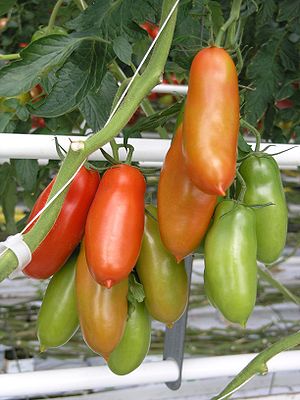
Considered by chefs as the best paste tomato in the world. Compared to the Roma Tomato, San Marzano tomatoes are thinner and more pointed. The flesh is much thicker with fewer seeds, and the taste is stronger, sweeter and less acidic. Also, unlike the Roma Tomato San Marzano vines are indeterminate and have a somewhat longer season than other paste tomato varieties. As is typical of heirloom plants, San Marzano is an open-pollinated variety that breeds true from generation to generation, making seed saving practical for the home gardener or farmer.
According to Wikipedia, "the first seed of the San Marzano tomato came to Campania in 1770, as a gift from the Viceroyalty of Peru to the Kingdom of Naples, and that it was planted in the area that corresponds to the present commune of San Marzano sul Sarno. They come from a small town of the same name near Naples, Italy, and were first grown in volcanic soil in the shadow of Mount Vesuvius.
In the United States, San Marzano tomatoes are the genetic base for another popular paste tomato, the Roma Tomato. The Roma is a cross between a San Marzano and two other varieties (one of which was also a San Marzano hybrid), was introduced by the USDA in 1955.
A California Original
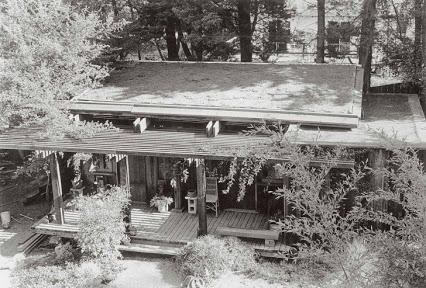
Lloyd Kahn is a writer from my neck of the woods who built this home in 1961. It has a sod roof, and was built without power tools for the most part. Lloyd says, "We sold the property in 1967 and many years later I went back and discovered that a young couple and their child were happily living in the building. I took a photo of them, which appeared in our book Home Work. Some time around 2000, the property was sold again, and the new owners bulldozed all the buildings and built two large homes :-(
Unfortunately tearing down cool homes and putting up mansions is a trend in northern California. For myself, the following is what makes this place appeal to me even more. Lloyd say's, "After building this, I never looked back. From that point on, I’ve lived in owner-built homes (over 50 years now), and have never paid rent or had a bank mortgage."
Did you know the word “mortgage” comes from the French “mort-gage”, literally death-pledge. Why do we do this to ourselves? My wife and I are headed towards a debt and mortgage free life. While we are not there yet, the journey is invigorating and the goal worthy. Does this sound like something you would dream of? Don't know where to start? Lloyd has some great advice. "...when you don’t know how to start, simply begin. As you go along, you’ll figure things out.…"
Out with the old, and in with the new
When I started blogging in 2005, blogging was social media. There was no Facebook, Twitter, or any of the other social platforms that now exist. Do I pine for the days of old? Not really. Change is good, and I am enjoying bringing change into my life now, more than ever.
My wife and I have over the last year dived deep into a minimalistic plan for ourselves. It covers everything from what we own, where we travel, and how we think. We have shed weight, excess physical stuff, debt, and a mindset that says, "more is better". That saying, "he who dies with the most toys wins", is the opposite of where we are at now. It has not been easy, but we follow a couple of rules. If we use the item at least once a year, or it has sentimental value, we keep it. Otherwise it is given away, or trashed.
This allows a greater connection with the things we keep, as well as keeping us more centered with what is truly important in our lives, like family, peace of mind, and friends. One of the criteria was to eliminate as much anxiety from our lives as possible. It's really quite easy to find yourself with too many obligations, and not enough time for relaxation, and enjoyment.
It seems there is just too much endless pratter on some of the social platforms. Social media can be like a drug. You get bored so you head over to see what's happening on this or that platform, and the next thing you know, hours are gone. When I started blogging years ago social media was exciting and new, now not so much.
My thinking is to focus on one or two outlets, and let the others fall to the wayside. This blog is on effort on my part to return to writing, which was why I fell in love with blogging in the first place. I still have Facebook, Twitter, and Google + accounts, but my interactions there will slowing down for the new year.
My hope for 2015 is less anxiety, and and a return to the lightness of being that we are all capable off. Take time to breathe, and don't be afraid of boredom. We need to be bored now and then. Its a chance to find oneself amidst all the noise.
Cheers to The New Year!