Guerilla Gardeners, "dig, drop, done, move on"

The bulb industry is wondering how to invigorate the bulb trade. As we have talked before, bulb sales are way down and the bulb trade is looking for ideas. The have tried the Dig, Drop, and Done campaign, which was panned by most garden centers, and customers. The three ladies who are suppose to represent three different demographics never hit the nerve they we're suppose to.

Seems to me that bulbs would be a perfect match for the guerrilla gardening movement. Since the beauty of bulbs is revealed sometimes months after planting, it's perfect for the delayed gratification that is guerrilla gardening. Guerrilla gardeners savor passing by a "target", and watching the reactions from passerby's. "Who planted these?" someone asks, as the guerrilla gardener smiles to themselves knowing they are responsible.

What if "guerrilla grafters" carried a cache of bulbs along with their grafting bud wood? After grafting their bud wood to the flowering pear tree they drop to the ground, all the while repeating the mantra they we're taught, "Dig, Drop, Done, Move On". Imagine the look of surprise on passerby's when they see pears on formally barren trees, and bulbs sprouting from the soil. "Who did this?" people ask as our guerrilla gardener walks by the site, smiles knowingly, and continues down the street with her bag of recently purchased bulbs in hand. Where will she strike next?

This could be a whole series of fun escapades. Bulb growers, give me jingle if your interested.

Far Out!

Check out this cool blog from San Francisco, titled "Far Out Flora". Megan And Matti write the blog from their home near Ocean Beach. The blog is a visual delight, filled with photographs of plants that grow in the frost free climate.  Megan tells me that investing a few years ago in a decent SLR camera made a big difference in the quality of the photography. The colors really do jump out. It makes me want to use more photographs in my own blog. What's  cool is the two work for different garden shops. Matti works for Flora Grubb Gardens while Megan works for Annie's Annuals. Both garden centers know about, and encourage their blogging. Flora Grubb recently posted about Matti's mounted staghorn ferns  that are for sale at the shop. It's a win-win for everyone involved.

It's been cold and rainy here in Norcal the last few days. I think I'll head over to their latest post titled, "Driftwood Insanity in the Sunset".  You'll feel like you're walking down  The Great Highway on a sunny day, enjoying the show.

Unless someone like you cares a whole awful lot...

My last post "Want Bio-Diversity in the garden? Plant natives" elicited a comment from a nursery woman in St Louis, Ellen Barredo. She say's, "The Horticulture Co-op along with the Missouri Botanical Garden hosted Doug Tallamy. Two weeks ago here in St Louis! Great speaker, great message. Anybody interested in this topic will not go wrong with this engaging speaker. The insect photos were awesome! The sad part was the attendance, 96 people of a possible 200 bought a ticket up to hear his message, attend other lectures, participate in the silent auction, or interact with vendor booths of local nurseries. Economy is improving somewhat here in St. Louis, so I was surprised! The breakdown occurs when you can’t get the media interested in promoting the topic and the speaker. More interested in sensational news." Sensational news like the new Lorax movie by Universal pictures. Many of my friends in the trade are excited about tying promotions to the movie. We're told that it presents an opportunity to take the enthusiasm for planting Truffula trees and turn it into enthusiasm for "Plant Something".   As Frank from New York City Garden say's in the comments, "Have you ever seen the ‘plant native’ back lashing given over at garden rant?! And you would think gardeners are the most likely to support such things, but man do some hate the idea. Meanwhile, I've seen invasive plants being planted more and more (like purple loosestrife). Oy."

So what's our message? "Plant Something?" It apparently does not matter what you plant.  In the case of The Lorax and IHOP you can plant Blue Spruce or Canadian White Pine, neither which grow well here in California. I know most of my friends in the nursery trade will disagree with me on this. "Trey, how can you not take advantage of this great opportunity to leverage the interest in planting trees from the movie?" I certainly would love to see an uptick in people interested in planting trees, but frankly the message Universal Pictures, Mazda, IHOP, and Hewlett Packard are sending via The Lorax doesn't "speak to me". More sensationalism that wanes away once people realize that "Truffla Approved" is for sale to the highest bidder, like Mazda. My daughter, and some trade friends told me I am over reacting. Commercialism is a part of our culture, and most younger people are use to it. Go with the flow, and jump on the bandwagon. Plant something! It's Truffula Tree approved! I can't, on account of the advice of the Lorax.  "Unless someone like you cares a whole awful lot, nothing is going to get better. It’s not.”

Want bio-diversity in the garden? Plant natives.

Did you catch the lecture by Doug Tallamy at the New York Botanical Gardens the other day? Neither did I, but there is a nice wrap up here.   Dr. Tallamy is the Professor & Chair of Entomology and Wildlife Ecology at The University of Delaware. The nature of his talk was, "if you take away the places for wildlife to live and feed, you will lose your wildlife."  He continues, "through continuous and careful research that shows how native plants are vastly better at supporting wildlife than exotics. Even amongst the natives there is no equality–oaks (Quercus) support 534 different forms of wildlife while Canadian redbuds (Cercis) support only 19."

This poses a challenge for those of us in the nursery trade, especially those of us in Mediterranean climates. How do you encourage people to plant according to climate, when so much of what's available for gardeners doesn't take our unique climate into consideration. We talked about this back in July of 2007 when I wrote a post with the catchy title, "California Horse Chestnut" This particular tree does what any sensible California native should do in the summer, it goes dormant during the summer drought, and returns to life with the late winter rains.

My hope would be for people to use the water that's available for maintaining their food crops, and use more natives or Mediterranean plants for the "landscape".  It will mean looking at the garden here with a different approach than we have in the past. I wonder if people are more willing to do that now than they we're back in 2007?

Know Your Local Garden Pro

We had a new neighbor and customer come in yesterday all jazzed about growing their first vegetable garden. It seemed she was thankful to find someone to talk with about the local conditions. It seems that while The Internet has all the answers, it’s almost impossible to find the right answer for the right geographic location. You get info from all over the world, how do you narrow it down? Many if not most new gardeners would love to have someone local they can ask questions of. If you just moved to a new area, or are gardening for the first time the best advice you might receive is, “Know your local garden pro”

In some communities it might be the local Master Gardeners, garden club members, or neighbor that take on the role of "Garden Pro". In most places however it can, and should be the local well run garden center. They are the ones who deal day in and day out with the peculiarities and advantages of where you garden.  Here in the foothills and mountains of The Sierra we have folks all the time who see plants for sale way too early down in the Sacramento Valley, or our local box store. It falls to us, the "Local Garden Pro" to explain why they should wait to put those tomatoes in until May. Some don't like to hear that, and plant too early. After a year or two of disappointment, they finally realize we we're right.

We deal daily with younger people just starting out with their gardening. They have all the savvy and knowledge to look this stuff up on The Internet. I sense they are also looking for a trusted adviser to bounce ideas off. “Hey Trey, I just saw tomatoes for sale down in Folsom. Can we plant them here now?” The answer will save them time, money, and a huge amount of frustration. That’s where the locally owned garden center can really shine. What we said about The Internet is true in the neighborhood. Honesty and trust will, in the long run, trump the quick buck. The solution? Get to "know your local garden pro".

What the frass?

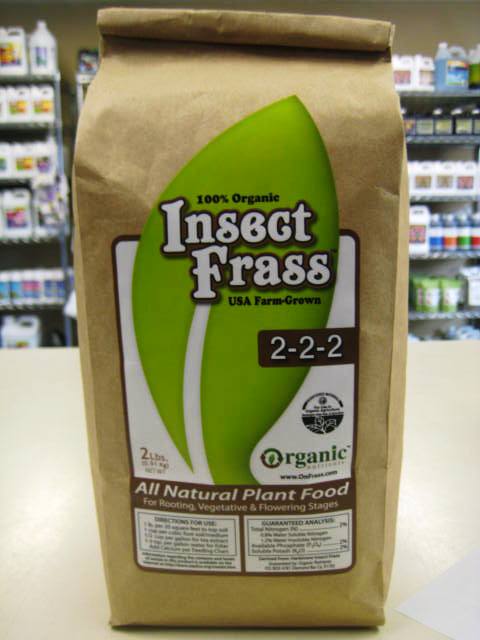
While checking out the feeds of some of my favorite blogs I see one with the headline, "Can you believe this frass?" Carol, at May Dreams Gardens has my picture of insect frass in a bag. Seems Carol wrote a post back in 2010 titled, "Frass" in which she asks, "You know what frass is, don’t you? It’s a fancy word for insect poop! I've been looking for opportunities all week to use “frass” in a sentence…"

Imagine Carol's surprise when she see's Insect Frass being sold in  a bag. She asks, "can you imagine?  How in the world does a company get enough frass to fill not just one bag, but enough bags to market and sell it as plant food? Who came up with the idea of collecting insect poo and using it as fertilizer, anyway? In all my wildest gardening dreams, which include dreams of someone delivering and spreading a wonderful well-composted, odor free load of manure on my garden, I never dreamed of collecting insect frass for fertilizer."

What's really interesting about Insect Frass is an ingredient called, "Chitin".  According to EPA fact sheet #128991, "Chitin appears to control pathogenic nematodes by stimulating the growth of certain naturally occurring microorganisms in soil, which, in turn, release substances that kill the pathogenic nematodes and their eggs." The EPA fact sheet also say's, "Chitosan is used primarily as a plant growth enhancer, and as a substance that boosts the ability of plants to defend against fungal infections. It is approved for use outdoors and indoors on many plants grown commercially and by consumers. The active ingredient is found in the shells of crustaceans, such as lobsters, crabs, and shrimp, and in certain other organisms. Given its low potential for toxicity and its abundance in the natural environment, chitosan is not expected to harm people, pets, wildlife, or the environment when used according to label directions."

Much like mychorizzae, the beneficial plant fungus, Insect Frass may sound weird and exotic now.  Sometimes weird and exotic only stay that way for awhile. If you interested in finding out more, or purchasing some to try visit our online store at Amazon, The Golden Gecko Garden Center

Guerrilla Grafters

The mantra repeated in the horticultural trade businesses at this time is, if we don't start a national campaign to promote gardening people will spend time doing something else. But, why go through all the expense and time of that when we have a younger generation that is very interested in horticulture already? The concern for us in the gardening business is they're  just not shopping at the garden center like mom and dad use too. Don't think the younger generations are interested in gardening? Your not looking in the right places. The newest expression of urban gardening is "Guerrilla Grafters". Talk about taking matters into your own hands, literally.  According to SFBay.com "Guerrilla Grafters bring fruit to the masses". According to the article, Tara Hui is one of the founders  of "Guerrilla Grafters, a renegade agricultural group that  fruit-bearing branches onto public trees in the Bay Area for locals to enjoy for free."

According to SFBay, "Volunteers in the Bay Area collect branches from the California Rare Fruit Growers association or pick up donated branches from backyard gardeners and regional orchards." This bud stock is then grafted onto existing non-bearing trees like flowering pears.  In the short video above you can learn what they are trying to accomplish.

There are a host of unanswered questions we could think up about this. That's not the point, however. This crazy interest in grafting and gardening is what catches my attention. Grafting is not always an easy process, yet this 100 member volunteer group has learned how to do it, and are doing it. It is even spreading to other cities and countries. Call it "Guerrilla Grafting" if you like, but it's still a form of gardening. If we in the trade are going to capture these peoples interest and enthusiasm it's not through large campaigns, or media blitzes. It will be by providing the tools they need, and helping them spread the word of how cool gardening is via social media.

I'm part of the "big business, energy- and resource-consuming compost tea industrial complex"

We started selling compost tea last year, and soon enough the name Dr. Linda Chalker-Scott came up. Dr. Chalker-Scott is a professor at WSU (Washington State University) who has written about compost tea before. She feels the science is far from proven, and has emerged as the most visible counter point to the compost tea hysteria going on in northern California. Yesterday in "The Garden Professors" Dr. Chalker-Scott posted "Compost tea-now a part of landscape design?", as an answer to the APLD (Association of Professional Landscape Designers) recently published "Guide to sustainable soils".

Dr. Chalker-Scott say's, "Imagine my frustation, then, when I was sent the national APLD 'Guide to Sustainable Soils.'  Most of this document is very good - lots of information and graphics from the USDA and other reliable resources.  But scroll down to page 5, under the section 'Soil Additives.'  And yes, there it is, compost tea.  Acccording to the APLD member who sent me this (not a Washington state member, by the way), the advisory committees that write these guidelines include people who make money from selling compost tea.  Surprised, no.  Disappointed yes."

Dr. Chalker-Scott makes valid points, just as proponents of compost tea do. At the end of her post Dr. Chalker-Scott says, "Compost tea is marketed, very effectively, through targeting emotional response.  We've already got science on our side, so here's my suggestion to those of you who fight the compost tea battle:start a little emotional targeting yourself:" You can read the suggestions for "fighting the battle", but the part that caught my attention was where the she suggests to, "point out that using compost is a natural, environmentally friendly approach to caring for the soil, rather than the big business, energy- and resource-consuming compost tea industrial complex that's exploded in that last decade."

As a seller of compost tea that puts me in the “big business, energy-and resource-consuming compost tea industrial complex”.  It seems that beyond the science there is a bit anger that people are making money selling tea. Dr. Chalker-Scott say’s “In this economy, there aren’t many people who can afford to live on principle rather than a paycheck.”

Why is it so important to “fight the compost tea battle”? Wouldn’t it be better that we sell compost tea that my customers like rather than some synthetic fertilizer produced by a real "industrial complex"? I don’t mind talking about, and discussing all aspects of compost tea. What I want to point out is that most tea brewers in my area are small business, not the ” big business, energy-and resource-consuming compost tea industrial complex” described.

The Lorax and IHOP want you to plant trees

Have you heard about the IHOP and The Lorax Sweepstakes? If you haven't you can, "visit any participating IHOP (resturant) starting February 20. Kids 3-12 get a free Lorax bookmark (while supplies last).  Plant the tree seed paper on the bookmark and help IHOP plant 3 million trees. Seed paper contains an evergreen mix of Blue Spruce and Canadian White Pine which may grow 20-40 feet wide. May be planted in a container to minimize size."

The Lorax is the children's book written by Dr. Seuss that, "chronicles the plight of the environment and the Lorax, who speaks for the trees against the greedy Once-ler." The Lorax Movie is being put out by Universal pictures who has partnered with IHOP to make as much out of it has they can. There is a sweepstakes and a couple of links to help you either,  "be more friendly to the environment" or "hug a tree, and have it hug you back."

Is this a worthwhile project? Some of my colleagues feel that it's a positive. Anything we can do to get people interested in trees and the outside world is good.  Hopefully they might come into the nursery asking for advice. Others feel giving away seed of trees that don't grow well in our climate (California) only sets people up for disappointment.  The idea that these trees can really be kept in a container to "minimize size" is not practical, either.  Is this the  classic question of the ends justifying the means? Perhaps  a child inspired by the movie and the potential trees that come from such tiny seeds is worth it? Or is this just a case of a couple of huge companies trying to capitalize on the Eco-movement, and nothing more? A little of both?

This is not good

According to the website care2.com, Walmart, "is set to sell a new form of genetically-engineered (GE) sweet corn as early as this summer. Monsanto’s Bt sweet corn contains three GE traits that have never before been consumed directly by humans, and have not been subjected to thorough safety testing. There will be no labeling whatsoever indicating that the corn is a genetically modified organism."

They problem is the corn will not be labeled as a genetically engineered. There will be no way for you to tell . If this isn't a reason to grow your own, or support your local farmers market then what is? We have talked before how the interest in growing your own food is partially fueled by food safety.  How can you feel safe eating the food from the grocery store? Walmart could make a decision to at least label this stuff, but they won't.

If you want to take control of your food supply this year here is a great primer from Farmer Fred for the beginning gardener.

Is this nursery catalogue insensitive?

It appears that Plant Delights Nursery (PDN) as sparked a bit of controversy over their new catalog cover. So much so that Tony Avent who owns PDN, has had to remove comments from PDN's Facebook page. It appears it's upset some Penn State fans and others.  So many comments that Tony started a new Facebook page just for people to say (vent) what's on their minds. PDN and Tony Avent have created covers that have always been satirical, and controversial.

I post the cover here for you to see, and comment on. I have been at the center of controversy before, and it's not easy thing  listening to people say and do the darnedest things.  I guess it's the price we pay for allowing comments, and encouraging people to participate. It's OK to disagree and say what's on your mind, but before you do take a deep breath. Now, do you still want to say what you we're going to say? If so, OK. I think some people have let their emotions influence their better judgement.

So what do you think?

Why not heirloom fruits?

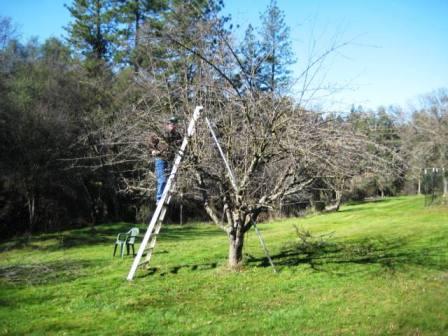
Spent Sunday pruning our Arkansas Black apple tree. It hadn't been pruned for a couple of years, so it was due. We planted it about 20 years ago when I worked at Gold Hill Nursery. It's an old variety from 19th century Arkansas. Apparently you can keep the apples for up to six months under the right conditions. That would have been an important attribute back in  the day when you didn't know when the next taste of fresh food might be after a long winter.

I brought home two new apples for the garden. The two varieties we are going to plant are antique varieties, "Cox Orange Pippin" and "Snow".  Apparently, Cox Orange Pippin  accounts for up to 50% of all dessert apples planted in The United Kingdom.  It was first planted in 1825 in Colnbrook in Buckinghamshire, England, by the retired brewer and horticulturist Richard Cox.  Wikipedia say's, "The flesh is very aromatic, yellow-white, fine-grained, crisp and very juicy. Cox's flavor is sprightly subacid, with hints of cherry and anise, becoming softer and milder with age. When ripe apples are shaken, the seeds make a rattling sound as they are only loosely held in the apple flesh. One of the best in quality of the English desert apples".

The other apple variety we are planting is "Snow". Snow was introduced to the US from Canada in 1739, but can trace it's heritage back to France and the 1600's. It "is delicious for eating out-of-hand.  Popular in the United States for more than 150 years. Deep crimson, tender, aromatic, juicy, sweet and tart, hardy and long-lived. Snow white flesh." Interestingly it is one of the few apples to reproduce true from seed.

Why don't we plant more of these antique varieties? Why do people come to the nursery asking for "Fuji" , "Pink Lady", or "Red Delicious"? I can go to the store or Apple Hill and pick up those varieties. We should look back to see what we might be missing in flavor and qualities of the forgotten fruit varieties. Did you also know the antique apples are also more healthful than modern hybrids? One of the benefits of heirloom apples is they help control blood sugar levels, which some have found contribute to obesity.

There can be issues growing these trees commercially in North America.  Certain non-fatal diseases  can make it harder to grow than some of the newer bred for disease resistance varieties. Never-the-less heirloom vegetables have many of the same issues when it comes to commercial growing. That doesn't mean the individual gardener cannot have success growing these delicious reminders of summers past.

This is not "social media"

Today Twitter announced that, "soon, small businesses based in the United States will have the chance to take their Twitter marketing efforts to a new level. Starting in late March, we will introduce a new advertising offering that makes it simple for companies of any size to grow their businesses using our Promoted Tweets and Promoted Accounts products."

Social media is about making connections with those who want to make connections. It about receiving permission from the viewer to interact. As soon as you force your way into someones Twitter feed you are no longer being social. We talked about this last year when I noticed a tree company whom I didn't follow, showing up in my feed.  If I had wanted to follow them, I would have "followed" them. "Promoted Tweets" are a companies way of saying, "you don't know who to follow, so we are going to elbow our way into your life."

Here is a great post titled, "Is Your Business Antisocial?". Brian Solis say's, "when we take a step back to examine many of the leading business examples in social media, it’s clear that many are in actuality, illustrations of traditional marketing masquerading as genuine engagement." Promoted Tweets are just more traditional advertising, not social media.

What will happen with Twitter when it's filled with promotions for stuff you never wanted to receive? Will another platform arise that offers users an "ad free" experience? I guess we will find out.

Be the trend!

My last post on "Up-cycling?" included some thoughtful comments. Of course I like to think those who read and comment here are "thoughtful people", so no surprise. I have never advocated following trends. It's fun to watch and be aware of trends, but by the time they are trendy it's often too late for you, or your business. Rather it's better to offer a remarkable product or service, and let the trends catch up to you.

Here is a post I did in February 2007 concerning "Gardening Trends".

"We in the garden center trade are under intense pressure by media and experts to follow trends. They say the way to success is to look at what the mass of people are doing. Selling organic products from your store is now trendy because everyone is into it. When you have Wal-mart selling organics, Scotts putting out a line of organics, and the media types all telling how organic they are you know it’s a trend.

I think the trend towards organics is great! As a business person we sell lots of organics and the more people are aware of them the better sales will be. Of course the list of places where you will be buying organics will be increasing so to stay ahead of the curve we in the garden business will do like we have always done. Offer a better product, packaged more thoughtfully, and backed with better information on how to use.

The problem with following trends is everybody else is doing it. To stay ahead as an independent small garden center you have to create the trends. The hard part of that is that its lonely creating trends, and most of the time you don’t know you are doing it. Sometimes you’re the first to notice the very beginnings of an upcoming trend and can ride the wave. Most of the time you’re just doing what makes sense to you but it takes awhile for the consumer and especially the industry to notice.

Garden centers selling organics is nothing new. John Dromgoole, owner of The Natural Gardener Nursery in Austin, TX has been involved with organic gardening for thirty years. He has been teaching and selling organics before it was trendy. You can hear him speak at the upcoming Independent Garden Center show in Chicago. He must think it’s great to have so much interest now in what he has been doing for so long. Still he must wonder why there is so much excitement in the garden center industry now. Where has everyone been? The time to have gotten involved with this and reaped the greater profits was years ago. Sure there is room for the organic market to grow but the competition is getting a lot tighter. Now that Scotts and Wal-mart has recognized the importance it’s going to be everywhere. We are about to be bombarded with an advertising campaign that will try to incorporate every eco-catch phrase possible. Organic, ecological, natural, eco-friendly, and earth friendly seem to be the most popular now. I think we’ll be "The Home of Eco-Friendly Gardening."

The secret to success as an independent is to not follow the money, but rather have the money follow you. If you follow the big money it leads to large corporations who leave nothing to chance and only move a certain direction when they are very certain of a result. By the time they are certain this trend will be profitable for them the real trend setters have already moved in a different direction. The real trend setters might not know the direction they are moving. An aversion to following trends will lead them to a niche that they might enjoy for awhile, before everyone else figures it out. Real change takes place on the fringes, not in the middle.

What’s the next trend going to be? I don’t know. Most likely it’s getting started by someone who is passionate about what they do and willing to buck the trends and set their own course. Following trends is safe but boring, bucking the trends and creating your own style is scary but ultimately more rewarding."
Up-cycling?

How are your up-cycling efforts going? Do you find much of your recycling efforts go towards down-cycling instead? Do you have any idea what either if those terms mean? Neither did I until yesterday. How many of us in the "green knowledge" fields do?

When often use terms that we're more appropriate to the past. Terms like "garden center", "nurseryman", or "recycling" are somewhat archaic. How many places that sell horticultural supplies are truly the "center" of most peoples gardening efforts anymore? 20 years ago there was only one place to buy horticultural supplies, the local garden center. Not today. The term "nurseryman" really doesn't describe what most people selling garden supplies in retail do these days.

I am wondering if semantics may be a larger impediment to the survival of the "local garden center"  than we think. Do the younger generations just entering into their love affair with greenery even know what we mean when we say, "garden center"? I don't know. It caught me, and a roomful of Sacramento "Master  Gardeners" (another outdated term?) by surprise when the term up-cycling was used last night.  None of us knew, until someone online looked it up for us.

Words are powerful symbols. Maybe it's time to be more imaginative, and update our terminology to reflect the world we live in today? I am not suggesting we rush into making any huge changes yet. We should however open our minds to the idea that how we describe ourselves  or our offerings, may not relate in tomorrows world.