
Addressing the 500lb gorilla

Those of us in the retail nursery trade in California will have to face the 500lb. gorilla that has been hanging out in the corner of the room for the last last 20 years or so. This November California we will be voting on Proposition 19, The Marijuana Legalization Initiative. If passed it would allow "people 21 years old or older to possess, cultivate, or transport marijuana for personal use. Permits local governments to regulate and tax commercial production and sale of marijuana to people 21 years old or older. Prohibits people from possessing marijuana on school grounds, using it in public, smoking it while minors are present, or providing it to anyone under 21 years old. Maintains current prohibitions against driving while impaired.

Not sure if it will pass or not. The last time this was tried was 1972 where is failed 66-33%. Now states and local municipalities are licking their chops for the tax money that will come. One municipality, Rancho Cordovawants to implement a tax. "The city's Personal Cannabis Cultivation Tax measure on the Nov. 2 ballot would impose an annual tax of $600 per square foot on indoor marijuana cultivation of up to and including 25 square feet, and a $900-per-square-foot tax for anything larger. The tax, which makes no distinction between medical and recreational cultivation, would cost a resident $15,000 a year if he or she cultivates pot in a 5-foot-by-5-foot growing space indoors."

If the initiative passes what is a nursery to do? These people will have to buy their supplies somewhere. Right now hydroponic shops get the majority of that business. That's why we have seen the explosion of growth of these places around here. Make no doubt about it; this is the fastest growing segment of horticulture in this state. Most nurseries have eschewed this business. Nursery owners have shied away do to unknown or murky legal issues. Right now the growing of medical marijuana is allowed with the proper permits.

Nurseries are selling equipment and supplies for growing marijuana, whether they know it or not. Just what is grandma doing with that potting soil? Seed trays? Fertilizer and pest controls? No one knows. What happens when the legal issue is mute? What are you going to do when a customer asks you how to optimize their 5X5 plot of herb? Will you jump in and help? Or send them to the hydro shop down the street?

This could be the biggest change in the horticultural businesses in this state in quite a while. It has implications not only for Nurseries and allied businesses in our state, but also in other states who are watching to see how this all plays out. What about garden columnists, and other media personalities? Will you be taking questions and offering advice to these people? There was quite a discussion at Garden Rant concerning the GWA (Garden Writers Association) refusal to consider a book on growing marijuana for their annual book awards. Why? They felt marijuana cultivation "wasn't gardening", despite the huge popularity of the book.

The implications are huge, and i's about time we addressed that gorilla before he is possibly let loose.
Where is the passion?

Interesting comment at my post on "The Slow Decline of the CANGC" California Association of Nurseries and Garden Centers." The commenter, who's is from one of California's "biggest and best known nurseries," lists the reasons why they feel The Association has declined, many of which I agree with. One passage caught my attention since I had heard the same thing from author Amy Stewart, after her visit to the IGC (Independent Garden Center) show in Chicago. Here is part of the comment from my post. "Finally, and maybe most significant for me at least, was that all too often CANGC was not about gardening and the celebration of plants and flowers and soil and everything green and alive. I and many others are in this business to encourage gardening – REALLY! CANGC was not (and sadly is still not) led by passionate gardeners. It’s led by administrators and clerks who all too often are more interested in the process than the product."

Here are some of Amy's observations from the show, which in many way's mirror the commenter above. "We told Hort Coture that their handbags-and-high heels marketing was sexist and insulting--that it assumed that women were only interested in plants as fashion accessories. (And that women give a shit about fashion accessories. Have these people met any women?) One funny thing that happened during the panel was that we went on and on about how our reader survey said that what our readers want from their IGC is FABULOUS INTERESTING UNUSUAL PLANTS that they can't find elsewhere, and the Hort Coture guy actually raised his hand and said, 'When you say different or unusual plants--what would be an example of that?' Like he had no idea that there were other plants out there. (in Hort Coture's defense, this guy was  a regional sales rep, not actually working for HC)"

Amy continues, "here's the problem with the plant brand people: They all say, 'Yes, we get it, we like interesting and unusual plants too, but our customers are too stupid to get it. So we have to take this dumbed-down approach because they are not as smart as we are.' That's so insulting. If you think it's cool, you can convince your customers that it's cool. Look at Annie's Annuals, for christsake. As you can see from our post-IGC posts on GardenRant, we got very tired of  these vendors telling us, 'Yes, that may be what you want, but you're gardeners. What about the non-gardeners?' To hell with the non-gardeners! Let them play golf!"

See what's going on here? Both at the CANGC and with the plant brand's, people who may not be passionate gardeners are calling the shots. We are looking at it from outside, instead of from the inside, as a fellow gardener. We have assumed, just like CANGC and the plant brand's, that we know best.  Just like CANGC, who thought it important to get the box stores (non-passionate, non-gardeners) into the membership (huge mistake), the big plant brand houses think it's important to attract non-gardeners , rather than appeal to those who already consider themselves gardeners.

Here is more of what Amy had to say. "As you know, I own a used & rare bookstore with my husband. We don't cater to non-readers. We cater to passionate book lovers. Our way of expanding our customer base is to MAKE MORE PASSIONATE BOOK LOVERS! After all, nobody is born a book collector. Someone had to get them fired up! If we can't get them excited about paying $100 for a signed first edition of some rare book, that's our problem, not theirs. If you can't persuade people to become passionate gardeners by showing them fabulous plants, beautiful gardens, amazing products--then you've given up and you should just go home.  My local IGC has NOT ONE SIGN anywhere in the garden center expressing the slightest bit of enthusiasm for a single plant. NEVER ONCE has anyone at a local garden center been effusive, excited, elated over ANYTHING and attempted to share that magic with me. As one reader said in our survey,'I wish the employees were as excited to be (at the IGC) as I am.'"

I know from experience that you can get burned out in this business, just like any business. The passion and enthusiasm we felt about selling garden plants and supplies when we started is often crushed under the strain of keeping the doors open. Lack of small business credit, customers who are more interested in price than quality, competition with box stores, increasing taxes, increasing regulation, vendors that don't get it, etc. Amy is passionate about the floral industry and say's, "... honestly? Most people I meet in the hort industry or at garden centers don't strike me as gardeners. They might do a little 'landscaping with plant materials' around their home, but they are not obsessed, dirt-under-the-nails gardeners. It's like the floral industry. I met a lot of people who are not total flower floozies. They run warehouses, greenhouses, trucking operations, or retail stores. They do not swoon over flowers. They process merchandise. (The exceptions were the few wonderful independent florists run by people who loved flowers so much they couldn't NOT open a flower shop!)"

What a breath of fresh air! The whole purpose of this blog has been to bring into the light issues I, and may of you care about. Not always what we want to hear. This blog has never been a cheerleader for "the industry". The industry has fragmented. Those of us who want to operate small garden centers realize that what's good for "the industry" may not be good for us.

Honesty and enthusiaum

The way for a small garden center to attract new customers is through word of mouth. Satisfied customers spreading the word is worth it's weight in gold. You can amplify that word of mouth through various mediums such a nursery Facebook page, like ours. Go ahead and fan us. You'll receive updates, and help the nursery spread the word. I think the most important thing we can do right now is help people grow their own food. Growing some, or all of your own food makes you a more self-reliant person. Just the knowledge that you can grow food that is tastier and healthier than store bought opens up a whole world of possibilities.

Growing your own food is not always easy. It's work. If you have invested the time and money to do this you want a friend who can steer you right, without glossing over the difficulties.  One of the reasons people start gardening and then abandon it is the realization that it can be hard work. That's o.k. It's not for everyone.

Many of us in the nursery industry obsess over attracting new people to gardening. Sustaining and growing a large horticultural concern requires a constant stream of new gardeners. To attract those gardeners we need to make gardening look cool and easy. So we come up with terms like, "Proven Winners", or "Hort Couture". Fail safe and chic!

We work hard to keep our current customers. New customers seem to show up often because a friend told them about us. Our customers work hard to grow their gardens and want the tools and advice to do it right. We had a workshop over the weekend on planting the fall and winter vegetable garden. We talked about the importance of knowing your soils pH.  The role of fertilizers in our Sierra soils. We talked about mycorrhizae. Yes, mycorrhizae. How to tell if your over or under watering. The kind of stuff people need to know when growing your food.

As the economic situation seems to worsen, more and more people will be looking for the feeling of self-reliance that comes with growing your own. The local, independent garden center is the place that should be at the forefront of educating the community on how to go about this. We should offer honesty about what gardening entails, along with an enthusiasm for the positive changes we will be helping create.

P.S. Just this morning Seth Godin published his blog post titled, "Little Lies and small promises.  It's premise is the same as mine. Honesty is in short supply. Business and individuals that are honest in their dealings will have the advantage going into the future.

Proven Winners under review

We operate our nursery in a rural area just east of Sacramento. Perhaps because we are set in a rural area we don't have many of the same issues our friends in more urban areas have. Around here a plant being a Proven Winner means very little.  Having the newest introduction in the plant world just doesn't mean as much here. Deer resistance, drought resistance, speed of growth, etc. seem more important. That being said it's interesting reading the the comments at my last post, What did you learn at the IGC show? One commenter Mj say's, "I’m all for patent fees, there are some great new plants being developed by breeders, but they are ALL now being funneled through one of these hort companies. You cant get away from it, and they leave you no choice, requiring you to buy their tags and pots if you want their plants. Its almost like there are two products being sold now, the plant and the marketing of the plant. I’ve sure seen a lot of nurseries fold in the last two years, but I havent seen one of these marketing companies having much of a problem. Coincidence?"

We have been talking for a couple of years about how the horticultural world is splitting into two different industries.  One side dominated by box stores, chains stores, and their suppliers. The other side is the rest of us, smaller, independent nurseries and their suppliers. It all about efficiency. Why deal with a thousand small businesses with their assorted concerns when you can deal with just a few of the largest suppliers and their concerns. It would not surprise me to see the day when all new introductions are funneled through the box stores by their exclusive suppliers. The major suppliers for these box stores are already headed in that direction. When Hines Nurseries came out of Bankruptcy they said they were going to focus on their core concern, the box stores. It didn't use to be this way.

Sid say's, "I heard today from someone who heard the Garden Rant presentation first hand that a plant brand company basically talked down to them and that was part of the problem. I can 'see' that happening. There are a lot of people in the industry in places where they should know better that just don’t understand the power of what’s going on online and whose voice is more heard." Excellent point Sid. The larger concerns like Proven Winners, Home Depot, etc. try to use social media, but juts can't quite get the message across. They instead turn to what has always worked for them before, the marketing department. Larger hang tags that focus on lifestyle rather than the plant being sold and it's needs.

If you are a employee of Proven Winners read the comments from my last post. I am sure they are being echoed by independents elsewhere.

What did you learn at the IGC show?

This post from Garden Rant shows how little we in the horticultural trades have learned over the last couple of years. Elizabeth relates her adventures at The IGC (independent garden centers) show in Chicago. She say's, "I was talking to some PR guys about plant marketing. Never mind what specific instance of plant marketing. OK, it was Hort Couture.  But that doesn’t matter. What matters is that they—and so many companies—are starting out by assuming that most homeowners would rather be stabbed through the heart with a dull spade than create a bed with plants in it. The conviction is so entrenched that it has spawned a new vocabulary. Those of us who attend events like the IGC are inundated with terms like 'lifestyle,' 'outdoor rooms,' and 'outdoor living.'  Anything but gardening. Thus, the come-on of companies like HC—homeowners need to be tricked into liking perennials through savvy marketing techniques. (Cute silhouettes of women with purses and so on.)" Ouch!

We are still peddling "outdoor rooms"? "Lifestyle"? Yikes! We had a workshop over the weekend that was well attended by poeple quite interested in growing a fall and winter vegetable garden. We talked fertilizer, mycorrhizal fungi, pH, timing of planting, etc. We sold lot's of pH meters, mycorrhizal fungi, and organic fertilizer.These people wanted an honest presentation of what it would take to be successful at growing safe, tasty food.

Elizabeth finishes her post by saying, "After looking at the conversation in comments, I'd like to add to it here (because I can). I honestly believe that raising the level of education and offering prospective gardeners a challenge—rather than coming down to some perceived level—is the way to get and keep dedicated IGC customers." 

Bravo! We have been talking about this for years, and it seems that some in our industry still don't get it.

Some food for thought

Great comment by Sid Raisch concerning my post on "The Romance of the Small, Independent Business." Here is part of what he said, "The real problem here is that the vast majority of independent shops are very poorly run. The opportunity is that these big companies can solve a lot of those problems and provide a retail experience that comes close." Exactly! Nostalgia is like driving by looking in the rear view mirror. It's o.k. to check it out now and then but you need to keep your eyes on the road ahead. I often write about supporting small, independent business. Few people are going to support a poorly run business of any size. Most small business are poorly run. The few that are well run soon have validation in their business practices through rising profits.  The opportunity for small business is to profit from the nostalgia by providing something the customer can not get elsewhere. Better service, products, price, or a combination of the three. People do want to support local business, but those businesses really need to earn that loyalty.

My post on "The Slow Decline of the CANGC" also has some great comments.  I too remember the good days, and camaraderie that was at the local chapter level. I worked for the only man to be the President of the state organization twice, Jack Christensen. We at Christensen's Nursery in Belmont we're required to attend the local meetings. Most of the other nurseries in the Peninsula Chapter also attended. They we're great meetings.

I agree with the comment that growers and retail operations have different agendas. It was nice in the past to get together and foster a sense of common purpose. Now that the nursery industry is splitting into different factions, small vs. box stores. The growers have also split into two groups thus making it more difficult to foster that common purpose. What's a small garden center going to talk about with a supplier like Hines, or Bonnie?

My feeling is much of what was accomplished at the meetings is now accomplished online. Yes, there is not the personal interaction that was at the meetings. There is great value to sitting with fellow business people and discussing things. Never the less I believe the nucleus for a new organization lies in the internet. As different people with different agendas find each other online they will naturally form groups that have common interest. Yes, an organization of smaller retail garden centers is quite possible. The growers who wish to support those business will naturally migrate to that organization. Other allied organizations, i.e. florist, fertilizer companies, professional gardeners, small farmers, etc. may also migrate to these organizations. Take a look at what is happening in the blogosphere. Garden writers, garden bloggers, small garden centers, lawn services, small farmers, etc., are connecting and even meeting up at different locations. The connection starts online and often extends into functions where people meet in flesh. We will see.

The slow decline of the CANGC

Interesting turn of events for the CANGC (California Association of Nurseries and Garden Centers). This organization has been around 100 years! Never the less the tough economic times has forced the organization to fall under the umbrella of The California Grain and Feed Association. According to a CANGC Press release, the Grain Association"has 30 years of experience and has a team of professionals that offer complete service management to satisfy organizational needs.  By sharing resources and overhead with other organizations, the team management approach will allow the CANGC to provide a high level of membership value, utilize its finances more efficiently and receive the highest level of service by qualified and experienced professionals.  They currently manage or provide services to over 20 other associations such as the California Seed Association, the Pacific Egg and Poultry Association, the California State Floral Association, the California Pear Advisory Board and the California Warehouse Association." I feel the downward turn of events for this association was when they decided to allow the box stores to become members about 15 years ago. The box stores came in, copied the California Certified Nurserperson idea and created their own certification program, that they administer. Just my 2 cents.

What do you think of this move by the association?

The romance of the small, independent business

Urban Outfitters is opening a new store in a New York that looks back at the "romance" of the small, independent mom and pop stores of yesteryear. The store front is designed to look like four "faux" storefronts. According to the designers of the store, "the whole idea was to do this kind of ironic statement of lining the building with storefronts that would be reminiscent of independent businesses. It’s the story about the streets of New York as they once were." What an amazing thing to see.  Apparently we love the "idea" and "look" of small,  independent businesses, just not the stores themselves. It just like I have been saying since 2006, Small is Cool!

Old Kim, your not alone

erics-garden.jpg

Got a comment a couple of posts ago from a regular contributor and nursery person by the name of Old Kim. Here is the comment.

 "Driving up past Oregon’s Hines growing operation in Cornelius for the past 5 years going up the Gnos road for better plants, Hine’s acres were boring with standard old timers. Did I want to stop and inquire? I was in Boring Oregon. I’m in Wa and no one looks at the actual plant that was tenderly grown. Shoppers are snobs. Only a few care about plant adoration. Mostly the poor. I’m poor, my business is in the red with black back up. I’m in the black. My plant expertise is going down the drain. I’m screwed. Can make more money as a dim witted greater at Walmart. Ouch!"

Old Kim, you’re not alone! I have been in the nursery biz for over 30 years now. When I started there was no Home Depot, Lowe’s, or Wal Mart (on the west coast). People bought flowers in small cell packs with no blooms on them. They established better! We read Sunset Magazine because people would come in that weekend and want to do some of the things they saw in the mag. Becoming a certified nurseryperson was a big deal. Our meetings of the Peninsula Chapter of The California Association of Nurseryman we’re well attended, with entire staffs showing up. Yes, it was a different world.

So what now? What does an “old timer” do now? No one wants to fail.When I see huge corporations with all the brain power money can buy go belly up because of bad decisions it takes a little of the pressure off our small enterprise.

The nursery business has split up into different factions, with the mass producers and box stores servicing one faction and small independents servicing the other. When I started really listening to my customers and stopped thinking like an old nurseryman we started to see a change. My customers want to grow consumables, with some still wanting to landscape, but nothing like before.

We have never sold so much fertilizer, soil amendments, pest controls, annuals and perennials. Landscape shrubs and trees are dead in the water, in our area. Landscape designers are treading water. Landscape installation firms are sinking. Nurseries that serviced that crowd are vanishing. This is survival.

Everywhere is different, and what we can do here in the mountains of northern California may be different where you live. When is the last time a 20 something male came into your store and purchased $300 in fertilizers? Let me remind you we do not sell Miracle-Gro. When is the last time a fifty year old female came in and bought the same fertilizers? They we’re going somewhere else before we started carrying what they wanted. I now carry six different potting soils. Why so many? People requested them and wouldn’t listen to my spiel about why they should buy what I wanted to sell them.

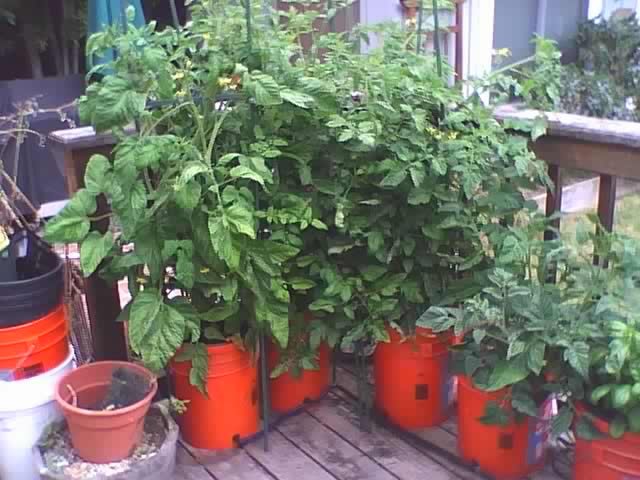
An old school chum on Facebook just loves to talk about his hydroponic setup on his deck. He post’s pictures of his outdoor garden there. That's his garden in the picture. Don’t pre-judge, as it is all vegetables. He just loves the results he gets from hydroponics. Could he buy his supplies from you? Why not?

When I started in the business in the late 70's we did not sell organics. That was something the hippies we're doing in the hills growing who knows what. Sure they we're growing herb(s), but they we're also growing food to eat. Well, fast forward, and organics are the happening thing in this biz. Gee, who saw that coming? Stop listening to the so called experts in our field. They really don't know what's going on any more than you or I. Our customers will tell us exactly what to do if we will listen.

I don’t want to give advice. What makes me qualified? I am just as confused at times as you are. “The times, they are a changing.” If we don’t change with them we are doomed. As I get older I realize the change, while uncomfortable at times is vital to keeping me young at heart. What will the garden center of the future look like? I don’t know. But I want to be a part of that future and make a difference.

Localwashing? Farmwashing?

Everyone want's to jump on the surge of interest in "grow your own".  Frito-Lay, the makers of potato chips, and a subsidiary of Pepsi co. have a traveling greenhouse. According to the Lay's brand press-release, "Visitors to the 'Lay's Mobile Farm,' a 70-foot long, 10-foot wide and 14-foot high traveling greenhouse will have an opportunity to interact first-hand with plants, meet a Lay's potato farmer and enjoy interactive stations. Families will also receive take-home educational materials that provide simple tips and fun activities to inspire at-home gardening." One of The Lay's  brand potato farmers is Gregg Halverson of Black Gold Potato in North Dakota, a 17,000 acre "farm" located in 11 states. That's no small potatoes!

The greenhouse is actually a really cool thing that might inspire people to take up food gardening. Yes, it is weird that Pepsi Co. is behind this. They will, "give away away approximately 8,000 individual basil plants to people who participate in the farm experience. And, at the culmination of each city stop, the brand will donate all contents of the greenhouse to local community gardens, resulting in the planting of hundreds of vegetables and fruits in these urban areas."

When you have one of Americas largest corporations trying to jump on the community gardening movement you can see the writing on the wall.  We in the small, locally owned garden center businesses have a huge opportunity here. After all we really are small, and locally owned. A new term for large corporations trying to appear local centric, "localwashing?"

Todd Chisam Jr., former vice-president of sales at Hines Nurseries

Received an e-mail from the Laura Lehrer, daughter of Todd Chisam Jr. Todd joined Monrovia Nursery in 1951 and in 1958 became a sales representative for Hines Wholesale Nurseries. He rose through the ranks to become vice-president of sales at Hines. Todd passed away on June 29th at the age of 87. Laura had wanted to let his friends in the industry know by publishing a notice in Pacific Coast Nurseryman Magazine. This magazine has for years been the way for this kind of industry news to get out.  I remember reading it way back at the beginning of my nursery career 30 years ago at Christensens Nursery in Belmont, CA. Well, like so many in our industry the magazine stopped publishing in March after seven decades due to poor economics. Apparently Todd enjoyed reading my blog, and especially the information about Hines Nurseries.  Laura asked if I would publish his obituary. Here is a link to the Orange County Register and more information.

While I didn't know Todd personally, I am glad he visited the blog and enjoyed what we we're talking about.  So many people have spent lifetimes in the horticultural field. It's a shame that there is now no venue for this kind of information to get out. I am pleased to help spread the news about the life and death of an accomplished fellow nursery person.

Hybrid garden shops

Gardening doesn't get the same media play as the culinary professions. While garden shows and magazines are suffering food related media grows. I think we are going to see and are seeing a melding of the two arts as we head into the future. The biggest trend I can see coming down the pike is people growing and then preparing their own food. Not so much as a survival technique but as an artisan revival. Found a hydroponic shop that sells gardening supplies, wine making supplies, and beer making supplies. The gardening supplies sell during spring while the beer and wine making supplies sell during winter. I expect to see more hybrid stores like this in the future. You could come up with some fun fall and winter workshops with these subjects.

Hines Nurseries, focus on the box stores

Interesting article concerning Hines Nurseries at Grower Talks Magazine. Titled "The Rebirth of Hines" the article talks to Steve Thigpen, CEO of Hines Nurseries (then Hines Horticulture), and his long-time Hines colleague and friend Joe Gray. Ten years ago Grower Talks Magazine interviewed Steve about the direction of the business which at the time was rapidly growing and the first publicly traded nursery company. Over the last 10 years the companies sales have fallen, from $423 million to $130 million. In between a bankruptcy, a change in management, and now it's no longer publicly traded.  As it tries to rebuild it's business one thing is clear, the nursery business is splitting into two different factions. One side dominated by box stores and their suppliers, and the rest of us and our suppliers. As Joe Gray say's, "The more data we get, the more information, the more planning we can receive, it helps us in our production and in servicing them (box stores). Personally, I think we’re getting closer, we have a better working relationship, we understand each other’s needs a lot better. I think it’s good. I think a good, healthy relationship helps us plan out our production and our business and partner better.”

The box stores and their suppliers  must work more closely together. With the relationship becoming tighter it only seems logical that the independent garden center will have to search out alternative suppliers for it's needs. The days of independents and box stores using the same vendors seems antiquated. How can the independent distinguish itself from the box stores if it is selling the same plants as the box stores?

There will always be people who favor the box stores over independents. There are also people who want to support smaller locally owned businesses and make a point of not shopping at boxes. Then there is a whole group of people who shop at both. The best bet for the smaller independent is to service the second group. I have seen an increase in the number of people who want to shop with us not just because we have what they want, but also to support the local business. I think we are entering an era where many people are becoming more conscious of the ultimate cost of loosing locally owned business. If you don't shop there, one day they will be gone.

.

Lawn culture in a desert climate

According to The Los Angeles Times, the new lawn at the LAPD headquarters has been installed. As  the paper mention's, "Just after the new 10-story building and its landscaping were dedicated last fall, trucks and cranes rolled in to erect a massive tent for a Los Angeles Police Foundation fundraiser. Work on the gala ended up destroying the lawn, the LAPD says." Here is the background story. "The rare open space, a hit with downtown loft-dwellers and their dogs, debuted as an alluring oasis in the city's urban core, complete with a stand of palm trees at one end and edges of benches, native plants and tall grasses," said The Times. "Just after the 10-story building and its sustainable, park-like landscaping were dedicated last fall, trucks and cranes rolled in to erect a massive tent for a Los Angeles Police Foundation fundraiser. Ironically, work on the gala, which raises money to help improve the department, ended up destroying the green, the LAPD says. Vehicle tracks gouged in the turf can still be seen, and sprinklers in a water-conserving irrigation system were damaged, officials say."Here are some more before and after pictures.  My question is, in a city where the average rainfall amounts to approx. 15 inches a year could we have come up with a better alternative to this expanse of green? I am not anti-lawn, except where conditions don't seem right. This would seem to be one of those situations. Los Angeles is a desert served with water shipped from many miles away. In addition the city offers a rebate to citizens for ripping out their lawns. The rebate was offered in June of 2009, during one of the areas frequent droughts.

What happens with the next drought? Will this lawn be ripped out and replaced with a water conserving landscape? What message does this send to citizens of the city? Could this area have been designed a bit differently?

More on embracing change...

My last post on embracing change talked about how gardening information is being dispensed through media not usually associated with gardening. Just after the post I checked the site meter and found some incoming links from this source. Checking it out I found the comment board discussing late blight on tomatoes. What's the site? "AR15.com, Home of The Black Rifle". It's a gun site devoted to the "history, manuals, ammo, manufacturers, discussion groups, mailing lists, and distributors of AR-15s" (a type of gun). What is it about guns and gardening? I would gather it has to do with the whole self-reliance trend. No matter how you feel about guns, the fact that still another magazine like Garden & Gun, Soul of the New South exists shows how gardening information is now being dispensed through areas not formally considered "garden related." It's a huge opportunity for the local garden center to reach out to people and groups that formally might not have been considered "garden focused." Interesting...