
I was going through my Twitter page when I read a "tweet" from Genie in Oakland. She mentioned how she had been awaken by a huge crashing sound on the freeway near where she lives. A few minutes later the news was on the tv. Right when you think Twitter is just a social conversation piece it shows up as a first on the scene news report. We are getting close to throwing out the old tv we have had for 12 years. Buy a new flat screen, plasma, tv? No. We get the news via the web and that's great. We can download most of what we really want to see on the computer. So the tool that I grew up with is now outmoded and a whole new world comes into being. I think it's better. More chances to interact and that's a great thing!
Hines Nurseries Bankrupt?
RogerODoger comments " Well, the days are now numbered, we have heard that Hines will be selling or fileing BK in a week or less." I don't like to spread rumors but Roger has been informing us of Hines problems over the last year or so. Read his comment and make up your own mind. If this comes to pass it will change the face of wholesale in the nursery business. We're heading into a new era and no one knows what it will look like.
Yes, I Twitter
I held out as long as I could but I have finally given into Twitter. You'll see a section on the right hand side bar of this blog entitled Twitter Updates. I don't know how long I'll keep doing it but it sounded like fun. The other reason is that whether or not you think it's important lots of other people find Twitter important. As a matter of fact it one of the reasons you find lots of bloggers posting less. They Twitter.
Big opportunity for "real" green businesses
We had talked earlier, actually July 11th, about green issues and whether the public would tire of the constant onslaught of "green claims". According to this article, Cooling off on dubious eco-friendly claims in the New York Times, advertisers are starting to see this. According the the article, "with everyone from oil companies to dishwasher makers to banks trotting out their environmental credentials, complaints about greenwashing, or misleading consumers about a product's environmental benefits, have risen."
Two things to take away from this. First, if you truly back up your "green claims" you have nothing to worry about. People are interested in the environment, and they simply want reality to match a companies marketing claims. Second, we we're talking about this issue in our blog and others a week or so earlier than The New York times came out with the story. Blogs are becoming the the news source for the new millennium.
Gardening Tribes
Just read the latest post from Billy at Garden Wise Guy. He talks about AllTop a site put together by Guy Kawasaki who is one of the top bloggers in the world. It is made up of “'all the top' sites on the web.†My blog is listed and that's exciting. So is Billy and a bunch of others.
This is the future of blogging. The grouping of blogs by various criteria. The top blogs, just gardening blogs, gardening blogs for California, etc. As more and more blogs are started some way of grouping them is bound to arise.
Also just read a new post by another top blogger, Seth Godin who writes “Are you in the tribe†Again, like AllTop it's about people coming together in “tribes.†Seth says, “I'd like to invite you to join a members-only tribe. A tribe for marketers, for leaders, for those focused on building communities or creating products or spreading ideas.†He makes an offer to join this tribe, under the condition you pre-order his new book, “Tribes, we need you to lead us.â€
The pull to be a part of a group is strong. Seth says you can join the tribe only if you send him an electronic receipt that you have pre-ordered his new book by August 10th. After that the tribe is closed. The pull to order and be part of a great group of people is strong. I ordered the book.
I want to talk more about tribes and how it relates to gardening and the garden business, but that will have to wait till later as I need to open the store. The tribes await.
On being different
Here is my final take, (for now) on the interesting issue of plant guarantees.
-
Most nursery owners say it's a small issue in their business. Quality is great, service is good, our customers are happy, why offer a plant guarantee?
-
Most nursery owners spend an inordinate amount of time on the issue. This is an observation based on articles I have read in trade magazines, and observation made here at this blog.
I have never advertised a plant guarantee or store guarantee. When someone asks if we guarantee our plants we answer, yes. Rarely do they ask how long the guarantee lasts. If and when they do we answer “as long as your a customerâ€. Easy to understand. No confusion. No one year time limit. No requirement they use our soil amendments or fertilizers.
The issue of plant guarantees shows just how far we have to go as a industry. I have a feeling we spend way too much time wrestling with issues that most customers could care less about. The people that care about plant guarantees are shopping at the box stores. People that care about plant garden success tend to shop at independent garden centers.
The same thing can be said about organics. Such a simple thing can be made so complex when you get a group of nursery people together. Gee, if we go organic will we alienate our other customers? How can we appear more “green†and profit from this trend? More green? We are nurseries. We sell green every day! We are the definition of the “green industryâ€
The days of playing it safe and profiting by playing it safe are over. Being average won't work any more. Look at any industry and the sacred cows of that industry and thats the place where change will most likely happen. The business that does what the rest of us we're afraid to do. Yes, it doesn't always work, but at least it's exciting and might get the notice of the information overloaded customer.
How much do we trust our customers?
The last post on “Lifetime Guarantee†elicited the response that we expected. The reasons not to offer it are clear and time tested. The reason's to offer it are not. That's why I thought it's time to broach the subject.
One of the things that happens when you have been in this business, or any business long enough is you start to grow blinders. When the subject of guarantees comes up the first response from all of us is the exceptions. The person that abused the policy. The person that just does the craziest things, like trying to return plants bought somewhere else. We remember these events because they are so outlandish. We forget the other 99.9% of the people who don't abuse the policy. Most every guarantee that is offered by garden centers is based on having been burned in the past. Someone abused the policy and so we add a layer to the guarantee to “protect' us from the customer, who is always looking to find a reason to return something.
Reading the comments on guarantees one thing stands out. We all have a story of some outlandish claim made by a particular customer. Formulating a guarantee in 2008 we still remember that guy that pulled some outlandish stunt in 1999. If a person continues to return plants over and over again I find nothing wrong in asking them not to shop with us. Why do I want this person driving me nuts. If they are not my customer then I don't have to offer that guarantee. The idea that we have to do business with everyone regardless of how they behave is wrong.
How many people are going to plant a hedge and return it three years later because it didn't grow fast enough for them. If they do, we would refund the purchase price or give them credit for what they spent, not the value of the hedge now. How many people are going to waste three years of time only to dig up the hedge, haul it to the nursery, and get the purchase price refunded. I would guess less than 1% of the customers.
Victor rightly says, “ I believe all businesses need a firewall to protect them from those who would take unfair advantage.†The firewall is to not do business with those individuals. If they are taking “unfair†advantage why do I want them in my store? Life is short and they can shop elsewhere.
Chris's response, “I’m not sure that I see the real point of a guarantee for the life of the customer. Do real gardeners expect such reassurance, and for that matter do reasonable customers expect such a warranty?†No. The 99% of my customers are reasonable and don't expect such a warranty. They will never use it, but like the idea that, as Chris said, “ guaranteeing that you will always help them figure out what has gone wrong, or prevent problems from occurring, seems reasonable and doesn’t have the feel of a marketing gimmick.†This is the approach I want to take.
We don't want a ''lifetime guarantee†to be gimmick. We want it to be a statement of fact. You are our customer, and if you ever have a problem we are here to help. In the rare case when a customer does feel the need to return something it's nice to know there are not a list of requirements to meet before the replacement is made. These are my customers, why would I not replace that plant because its a few day's over the guarantee period?
It's so easy to see and remember only the “bad†because those instances are so rare in our business they stand out. We develop policies based on bad experiences, and not based on the overwhelmingly good experience we have with our customers. The good customers live with policies based on the “bad†customers.
Our business are facing big challenges ahead. It's the sacred cows of our business that need to be re-looked at. Our relationship with our customers has to be based on trust. They trust us, we trust them. The question is how much do we trust them? And if we don't, what hope is there for the future of our business?
The lifetime guarantee
Do you offer a guarantee? One year, two years, etc. Does the customer have to meet certain criteria to avail themselves of the discount? "Use our plating mix and starter food to receive a guarantee." Or 100% 6 months, 50% one year, etc.
What if you offered a lifetime guarantee. Not the life of the plants, but the life of the customer! Yes, if you are a customer of ours then you have a lifetime guarantee with us. Think about it, that certainly would beat the competition. Who else offers it!
Now I know all the reason's why you think this wouldn't work. People digging up plants after a couple of years, bringing them in, and wanting to change them out. Is that really going to happen? After all isn't our goal a satisfied customer that will return year after year?
What about someone who takes advantage of this offer over and over again and never seems satisfied? I would think after a honest attempt to satisfy this type of customer it would be appropriate to ask them not so shop at your store. Then they won't be a customer, and you can drop the deal. Why do we have to accept the 1% of 1% of customers who are a pain? After 4 years being in business there are only two customers that we may ask not to shop with us because they are a pain. Always returning things and generally being unpleasant.
The rest of my customers we want for life, and why not make them a offer they can't refuse. It will calm some of the fears they have knowing we are there to back them up.
Do you know anyone that offers a lifetime guarantee in the garden center business?
Will people tire of "green" issues?
 Will people soon tire of all the talk about green issues. This article at "Project Green Industry" would seem to indicate that they might. I think what people will tire of is false claims of being green.
Ikea, the Swedish retail , in a attempt to keep plastic out of landfills has started changing 5 cents for a plastic bag. This was splashed all over media when they did this. Ikea "cares". Recently we went there to get some furniture and after spending over $500 I was refused a plastic bag for the small stuff unless we paid for it. O.K., Ikea "cares".
You have to assemble Ikea products. They are packaged in cardboard and plastic and by the time you are done assembling the products the mound of plastic and cardboard is actually surprising. It's almost like they go out of their way to use extra plastic and cardboard.
The furniture is well protected from shipping damage, which is good. What's irritating is the claim that Ikea is going "green" because they charge for plastic bags. Gee, they are helping keep plastic out of the landfill, yet after assembling the furniture the amount of plastic and cardboard is hundreds of times greater than the small plastic bag.
So is Ikea "green"? Everyones opinion of what "green" means is different but Ikea does not seem very green to me. It seems to me that Ikea is using the green issue and the anti-plastic bag movement to score points. If they we're truly concerned about the environment they wouldn't be penalizing the customer 5cents for a bag and instead would be working on cutting down on the amount of plastics and cardboard their products use.
Just before we left we went to get a cup of coffee at the Ikea coffee shop. The coffee maker was low after we filled the cups half way so the crew nicely made a new pot for us but threw away the half filled cup's and used new cups! Cups hot so could we have a cup holder? No problem, they put that cups inside other cups. They meant well.
It's obvious the the company culture is not "green", despite their attempt to appear green. This is what's going to tire the public. Claims that are not backed up by action. If Ikea was really attempting to reduce the waste in landfills they wouldn't be fussing over the obvious target these days, the plastic bag. To me the whole 5 cent per bag issue smacks of phoniness.
This is why I don't go out of the way to advertise that we are a "green" business. Our actions speak louder than words. Sure it's o.k. to promote organics, organic gardening, and being green, but if you don't walk the walk it's going to seem like a obvious play to garner favorable press. This is what people are going to get tired of. The blatant phoniness of trying to weave "organic", "natural", or any other catch phrase into their ad campaigns just for good press.
Our new blog
 "Gardening with The Blogging Nurseryman" is The Golden Gecko's new blog. This blog as become my way of participating in the great conversations going on about the business of horticulture. It was originally designed as a way to talk to my customers about garden related subjects. It morphed into something else, and that's o.k.
Now we have a new blog that will be our way of adding information to our existing web page. We hope to have information valuable to the gardener, especially the northern California gardener. I would also like the new blog to be a way to up-date people on garden issues immediately. Where as changing the web page involves having the web master make changes and takes time, the blog can be updated immediately. I could see it's use as a way to quickly get important info, like frost warnings, and drought concerns, to the customer immediately. We'll let our customers know that they might benefit by subscribing to it. That way it will show up on their reader or in their mail box and they will get info right away.
"Gardening with The Blogging Nurseryman" is The Golden Gecko's new blog. This blog as become my way of participating in the great conversations going on about the business of horticulture. It was originally designed as a way to talk to my customers about garden related subjects. It morphed into something else, and that's o.k.
Now we have a new blog that will be our way of adding information to our existing web page. We hope to have information valuable to the gardener, especially the northern California gardener. I would also like the new blog to be a way to up-date people on garden issues immediately. Where as changing the web page involves having the web master make changes and takes time, the blog can be updated immediately. I could see it's use as a way to quickly get important info, like frost warnings, and drought concerns, to the customer immediately. We'll let our customers know that they might benefit by subscribing to it. That way it will show up on their reader or in their mail box and they will get info right away.
I got tired of trying to get my blogroll from one blog to the other, so we started by adding California blogs I could think off. If I missed you it was by accident. The blogroll from The Blogging Nurseryman will move over to the new blog, with the exception of industry related blogs, which I will keep here.
When the organic movement started...
Where do you find young people discussing “pollinating in the greenhouseâ€, “the effect of planting date on the productivity of telegraph type cucumbersâ€, “compost tea in plant growing systemsâ€, and “early crop production in unheated 'poly tunnels'â€? I'll give you a hint. Here is another story, “hydroponics and feeding the planets hungryâ€. Yea, I am back on the hydroponics subject we started at the last post.
You don't get this kind of discussion in Garden Design, or Sunset magazine. Remember back in the 70's when the whole organic movement got started? I do. It was considered the realm of hippies growing what they do out in the hills. Nothing for us here. Why would a garden center want to get involved with a bunch of people with no money and some complicated “back to the earth†mantra?
Fast forward to today and we all know that organics is the HOT subject. What happened.? Well the hippies got older and it turns out the organic thing actually works. How many garden centers saw this coming? Very few. The only place you could go and learn about organics was the Mother Earth News or Organic Gardening.
Victor mentioned that he doesn't even think Houston has any hydroponics stores. I checked and there are four! Hap mentions that in Berkley there are 5 hydro-stores in a 10 block radius from his store. Fern mentions that insects are needed for pollination in hydo-systems and because of that most food crops like Tomatoes don't do so well in hydroponics. Guess what, I read about it and pollinating tomatoes is just a matter of “flicking' the flowers to get the fruit to “setâ€.
So it would seem that this aspect of horticulture is mis-understood. It's believed that everyone involved is “up to somethingâ€. They are, and it's not necessarily what you think? Just like the hippies of yesterday todays young people are actively involved in and not listening to “the establishmentâ€. Who is the establishment. US! Those of us in the “industry†who feel this is the way to attract he young. The California Pack Trials are full of this strange thinking. According to Amy's post “One exhibitor even posted a series of banners with a single-line caption on each banner. The first three showed a picture of a woman, and the last one had a picture of a man. The captions went like this: 'She Looks. She Shops. She Buys. He Pays.'†Or how about, “ horticultural consultants tell garden center owners that they should not refer to their customers as 'gardeners' at all anymore. This new generation of customers would be insulted by such a term, as they consider a gardener to be someone who gets paid to work in a garden, and apparently, according to this consultant, that's not a good thing.â€
My friends, if you want to watch your garden center slowly become obsolete and out of touch then keep listening to the “experts†that tell us the way to the young people is to “dumb†things down. This is very trendy in the “industry†right now. We are told the young just don't have an interest in gardening. That's not true. They are quite interested in horticulture. The young people that come into my store have great questions about fertilizers and growing plants. As a matter of fact I am excited about the enthusiasm. I don't get questions about the different types of bat guano available from the older crowd. I have started carrying Mexican, Jamaican, and Indonesian Bat Guano, as well as Peruvian Seabird Guano. They are selling! So are all of my fertilizers and soils. Not one bottle of Miracle-Gro in sight!
Get out of the office! The bills will still be there when we get back. There are so many opportunities out there but we are being blinded by the way things have been done in the past. Don't listen to me or the other “expertsâ€. Remember how organic gardening was perceived back in the 70's? None of the experts we're telling us to get involved with that aspect of gardening then, we're they?
Rethinking hydroponics
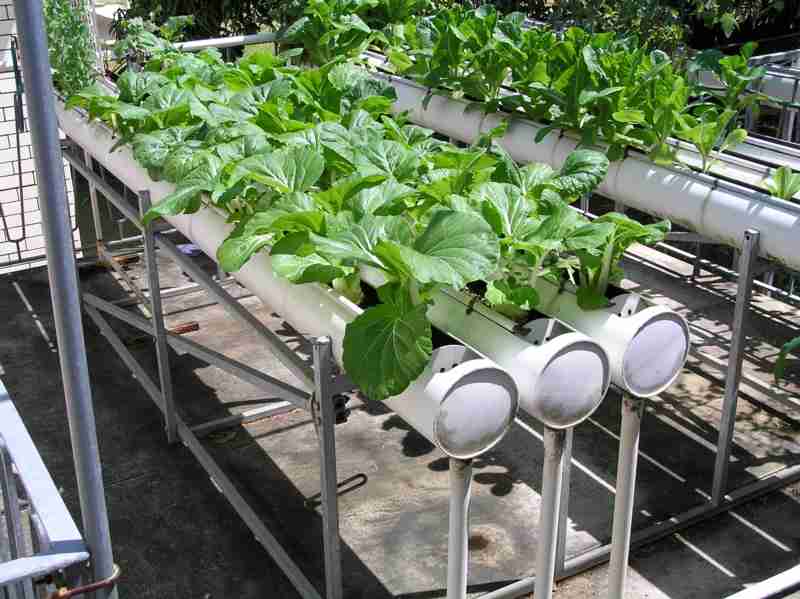 The business climate out here in northern California is a bit stormy. Talking to a number of other business owners, from fast food chains to insurance brokerage we find ourselves wondering what's next. From what I read California and Florida got hit the worst with the decline in home prices. Considering our shrub and tree sales are down for the year it's now obvious that people we're using the equity in their homes for financing much of their home improvement. Meanwhile vegetable sales we're through the roof along with fertilizers. This would indicate a desire to maintain what's already in the ground rather than a lot of new landscaping.
I took the day off yesterday and visited two hydroponic shops in our area. Both said their business was flat or down. As a nursery person when is the last time you visited a hydroponic business? That's why I went, the need to get out of our business and see what some of the more unconventional players in the garden businesses are up to. Let me tell you I would love to have some of the sales that I watched being made. Fertilizers and soils we're the main things I saw going out the door. Fertilizers you don't generally see in nurseries. Why?
The times they are a changing when it comes to the nursery business. It's important right now that we get out and re-evaluate what we are all about. Why am I letting all those sales go to the hydroponic store? I am sure it's different in various regions but here I was quite impressed in the dollars I saw being made at one of the stores. In the hour I was there the phone never stopped ringing and one person after the other walked in and walked out with expensive fertilizer.
My take on the hydroponic business. It has a reputation that is probably deserved. If you had wanted to get in on the ground floor of that trend you should have started 10 years ago. What I did find out was the competition between these business is thick. These two stores I visited are within two blocks of each other. They are in the midst of a price war on soil amendments. Not good for the bottom line.
I believe that a new era for hydroponics is starting. The time is right for us to delve into this aspect of gardening. First, buying this stuff in a garden center is a much different experience than the hydro stores. I also believe that vegetable gardening is going to become much more a part of this indoor hobby. What could be more self-sufficient than growing your vegetables outside during summer, and then growing fresh, healthy vegetables inside during winter. Sure the electricity for the lights will cost, but with the price of gas reaching close to $5 and the interest in growing and buying local what could be more local than vegetables and herbs grown in your basement? Think about it.
During rough times people look for ways to feel more self-sufficient and not at the mercy of outside forces like the government that declared tomatoes unsafe, and now are backtracking. When you grow you own you have control. This is why I believe that our garden center can utilize this fun way of growing in our effort to help people become more self-sufficient in their garden pursuits.
This year and next are going to watershed years for the nursery businesses in my neck of the woods (northern California). With drought looming, housing crises, gas prices, and government regulations, we cannot afford to hunker down and wait for the storm to pass. Great opportunity exists for those who don't let fear and "we have always done it that way" stand in the way. What other aspects of gardening or home improvement are we missing out on because of pre-conceived notions? I'm looking.
The trusted resource.
The lack of water is the biggest issue facing the nursery businesses in California. In the long term our state hasn't built a new reservoir in the last twenty years. While we have certainly come a long way with conservation , with the massive increase in population conservation will not cut it by it self. I don't know if we have the collective will to start a new water project until things become dire, which may be sooner than later. Even if we did, that's a long term solution. Short term we are in the midst of a declared drought with the prospect of extreme water shortages, if we don't get a lot of rain this winter. Remember, it does not rain here again until October! No summer rain. We have a mini drought every year. I remember in the 80's our county baned all new plantings, unless you had a well. Talk about a business stopper.
Here is what we are going to do. Education and outreach now. Don't wait for people to come in looking for drip systems, mulch, drought resistant plantings, etc. We need to let them know now. Education is the key to the small garden centers survival. We have to become the trusted resource for the customer. We need to lead the way when showing how to garden in California. The idea that we can just continue to garden like we live where there is summer rain has to stop. We live in a unique climate, and our gardens should reflect that fact.
We want to be a vital, trusted resource for the gardener. “How can I maintain my landscape during a drought?†We need to offer solutions. Should we be selling redwood trees in the hot interior of the state? We need to help educate so better solutions, like drought resistant Deador Cedars are planted instead of Redwoods. Sure, most well run garden centers do that anyway, but if the suburban neighborhoods being planted around here are any indication, a lot more needs to be done.
The small, local garden center has a huge opportunity here. While the chains and box stores sell plants, and garden supplies at prices that the smaller independent couldn't match, and shouldn't, they have no advantage when it comes to education. Using the mediums available to us we can compete on equal footing with the big boys and girls. We need to have a lot more interactive workshops. We are going to expand our demo vegetable garden so that it can be used to educate, as well as feed us. How about a series of workshops on high intensive gardening held right in the garden at the garden center? “Learn how to grow food organically with our summer seriesâ€. See how to plant seed, fertilize, irrigate, harvest, pest control, etc. all while doing these things in the demo garden.
The time is ripe for a whole new activism on the part of the local garden center. Sometimes we in the garden center business are so worried about alienating any customer that we don't take the risks that are needed. “I am so sorry but we don't carry Miracle-Gro, try our Marine Cuisine instead, and here is why it's better.†“We don't sell pop up sprinkler systems, but we have a great drip irrigation system that might save you money on water while making for healthier plants.†You get the idea. Our climate and topography is so different than most places that the new folks who move here are usually perplexed, and go through a long and expensive learning curve. If we can shorten that curve then we have succeeded.
Here is a video of the vegetable garden area at the nursery.
[youtube]http://www.youtube.com/watch?v=hMHytbFrq1A[/youtube]
Hines Nurseries to sell only to box stores?
My post, Hines Nurseries De-Listed from Stock Exchange, August of 2007 is still getting comments! The latest one from Roger-Dodger claims that Hines will be soon be selling only to the box stores. No more sales to independents. That won't bother us, as we long ago decided to not do business with companies that serviced the box store. Now it's going to go the other way, with wholesale companies deciding to eschew the independent for the boxes. According to Roger it won't matter as the company will eventually be sold off. I love this quote, “We did hear that even the Box stores were looooosing $$$ now! It is about time someone did the math, you can’t sell a $4.50 plant to the box store for $3.99 and make money!â€
This is part of the fragmenting of the nursery industry we talked about here. Some companies will decide to do business only with the box stores, while others will service the independents. Trying to service both is just about impossible. If you service the box stores you have to price your plants and service accordingly. What independent is going to buy plants from a company that gives a better deal to the boxes? We have a local wholesale company out of Sacramento that tries to do just that. Their plants are in the boxes and at some of my independent competition. Why my fellow independents would support a company that sells the same plants to the boxes at a bigger discount is beyond me.
The nursery businesses are facing some challenging times. The shake ups have only begun! I believe that it will become harder and harder for wholesale nurseries and suppliers to service both the boxes and independents. It's like us independents trying to offer the best service and quality at box store prices, it won't work. Sooner or later you have to decide who your market is and what they want. What the independents and boxes want from the nursery business are two different things. The boxes generally use the garden department as a loss leader, while the independents use the garden department for making a profit and staying in business. Each has it's own customer base with different needs. Wholesale nurseries that try to have it both ways will face more independents like myself who question why we should be supporting their business.
Along that line it's time for wholesale nurseries to start treating their customers (us) a little better. Tell me why I should be doing business with you? Do you offer extraordinary service? Are you sales people really finding out about the needs of their customers? Most don't! Most don't even read my blog. What an insight for them. They just call and ask if we need any plants? It's of course funny how they show up when business slows down in summer. Fair weather friends. Considering how hard we work at understanding and creating relationships with our customers, I don't have the patience for a wholesale business that cannot articulate just why I should be buying from them. They just bounce along like nothing has changed.
"We have Photinia's in one gallon sizes" So what, so does everyone else. What makes your's so special? What makes your company so special? Most don't have an answer.
These are very interesting times.
We love vegetable gardeners.
Will this current interest in growing vegetables and fruit's continue once people realize the work involved? Doug Green has a post on the subject here. His take in a nutshell is the interest in vegetable gardening is fueled by current affair's. ie. fuel prices, mortgage meltdown, etc. Once folks realize the work involved in growing your own the interest will diminish once current affairs change. He's seen it before and so have I. That's OK. Though, as it's important for people to understand just how much work is involved in bringing food to table.
Vegetable gardening is entering a new phase of interest. While the majority of people may loose interest in the long run, there are plenty of people who find growing their own a fun pursuit. It's about being outside, getting exercise, fresh food, and the feeling of self-sufficiency that comes with the knowledge that you can grow your own food. It's also becoming something of a status symbol. Who has the time and money to grow the very best?
As a nursery person I enjoy working with people who take a ongoing interest in their garden as opposed to folks who install a “landscape†and then move on to the next project. People working in the garden visit the nursery more often, their purchases are smaller but more frequent throughout the year.
Things are a bit different here than the rest of the country but our sales of bat guano, alfalfa meal, kelp meal and other obscure fertilizers are better than ever before. Starting this week we will carry Indonesian bat guano, Mexican bat guano, as well as Jamaican bat guano. I would have never though we would have needed these fertilizers. Did you know that some bat guanos are high in nitrogen while others are high in phosphorus? I didn't, but apparently some of my customers do.