It does matter WHERE you buy your garden supplies

This is why I say it does matter where you buy your garden supplies. We work hard at our nursery to keep all the plants that we have looking great. Have we ever had to throw out or give away plants? Yes. All nurseries have at one time or another had to get rid of plants that were diseased, or just in really poor shape. We have however, never thrown away plants that were still salable just to get credit from the wholesale nurseries. You see, we have to buy the plants before we sell them. If they die because of something we did we “eat the loss”. No credit from the wholesale nurseries for the small independent nursery.

Now read Freda's comment at my last post. She says she worked at Lowes' so her description of what goes on is interesting. Then I found a Google alert that sent me to Garden Web and a thread on plant practices at Home Depot. It's worth reading too. What I like is the comments from various folks in response to bestestmommy and her post.

Like many of the commenter's to bestestmommy I agree that chain and box stores are not evil, just ruthless. Like one of the commenter's said, its often the local manager that makes the difference in the shopping experience. Some of the commenter's said they are tired of hearing about this issue. If you like the boxes so be it. If you don't, don't shop there.

My complaint stems from the view of a small independent garden center. I realize that the volume these box stores and chains do is the reason they get preferential treatment from the wholesale nurseries. I just don't understand why the box stores get plants to sell and don't have to pay for them until they sell them (pay at scan). Why not offer that to the independents? We take better care of the plants, and I would guess that the percentage of plants that would be “tossed” would be lower. It's almost as if these wholesale nurseries have been working against the independents. Of course many have! We are small! Smaller loads, more deliveries, more little businesses to deal with. It's all so much easier when its big stores taking volume.

Now we hear that Hines wants to court the independent because we account for a “strong 25% of their sales”. Not only that but it would appear that Lowes' is in some financial difficulties, and Home Depots sales may be down due to the slow down in the economy.

We are just 40 miles from Sacramento and 12 miles from the nearest Home Depot and in the four years we have been in business here I have never seen a sales rep from Hines. Not that I would buy anything from them anyway.

Gee, what fair weather friends we have.

So now you want our business

According to Todays Garden Center Hines' Nurseries says, "Tom Batt, was promoted to vice president of sales and marketing last week." Hines Nurseries has for years been one of the major suppliers of plant material to the box and chain stores. Now after a couple of tough years they have re-discovered the independent nursery. According to the article “most of Hines’ business is with home improvement chains, mass merchandisers and supermarkets, independent garden centers represent a strong 25 percent of sales with about 8,000 retailers.” We independents are "strong 25% of sales". According to Batt, “Independents are important to us and our industry. While a lot of our volume goes to the box stores, independent garden centers are a significant piece of our business. Some of them are big movers of products.” Batt, according to the article “brings more than 20 years of experience in the horticulture industry and was most recently national sales director, managing the Lowe’s account for Hines.” This explains why he said of independents that, “many of them are big movers of product.” I guess if your not a big mover of product then good luck. It also explains why they have suddenly found an interest in independents. Batt was responsible for the Lowes accounts at Hines, and as I understand it Lowes is having some financial problems right now so it makes since to make this move, as independents are a strong 25% of Hines sales.

We talked before how the wholesale suppliers of the box stores were going to come calling on the independents now that their biggest customers are not buying as much. I guess we are suppose to be happy that after years of neglect the big boys are sniffing around for business from the lowly independent. I don't think they will call on us as we are not “big movers of product”. In addition, being in northern California we might have more wholesale operations to choose from than other areas. It may be easier for us to not do business with nurseries that sell to the chain stores. I wonder if the strong 25% of independents get the same "pay at scan" deal that Home Depot and the others get. It was my understanding that a wholesale nursery like Hines is not paid for its plants until the box store scans the plant at check out. If the plants don't sell, Home Depot does not have to pay for them. Hines eats the loss. Is this still true?

Organics, Scotts Miracle-Gro, Home Depot, and your local independent nursery

My friend Angela at Garden Bliss asked some questions of me in the comment section of a recent Garden Rant on Scotts Miracle-Gro support of the GWA Garden Writers of America. She wanted to know if independents garden centers have a co-op that could buy organic fertilizers and sell them at a price that is comparable with what Home Depot sells Scotts Organic Choice Lawn Food for.

Angela's comments concerned how she had bought a bag of Scotts Organic Choice Lawn Food at Home Depot at a price that the local independent garden center couldn't match. Her point is that if she can buy a organic product that is produced by Scotts at a low price why not buy it? Is she suppose to ignore, what in her eyes is a quality product, just because its produced by Scotts and sold in Home Depot? Shouldn't we be supporting this chemical company in its efforts to supply the world with its organic products, weaning them of their synthetic products. She asked if the independent nurseries had a co-op that could produce an equal or better product for the same price.

There are nursery co-ops. One of the biggest, and the one I am most familiar with is 600 member Master Nursery Garden Centers. I had been member of this organization in the past. They do offer their own brand of products as well as central billing which helps independents get a better price on its products. There is also the GCA (Garden Centers of America) which I am not as familiar with.

To put this 600 member buying power in perspective the Home Depot has 2,234 stores. Over three times the number of outlets. When The Home Depot goes to Scotts and asks for a deal do you think they get one? I would suggest that with that number of stores the discounts would be deep. Add Lowes, K-Mart, Wal-Mart, and the rest, and you can see the chain stores are a big portion of the business Scotts does. Why would an independent even consider carrying Scotts products under those circumstances?

Here is how it works. If we order one pallet of planting mix (50 bags) we pay one price per bag. If I buy three pallets per load I get a better price. The discounts continue as you buy more and more pallets. I might have a delivery every two weeks during spring of maybe 10 pallets per load. During that same moment in time the 2,234 Home Depots are receiving 10 pallets or more every week at each store! You do the math. I would guess I am way underestimating the amount they receive. Scott's offers big discounts to big buyers.

This is why most independents carry something different than Scotts products. I do know that many nurseries carry Scotts with the assumption that while they might not make as much per bag as Depot does , it beats having the customer go elsewhere to buy. Think about it, if the independent wants to sell Miracle-Gro at the same price that Depot sells it for the independent may have to price it FOR LESS than they can buy it for. Yes, its that crazy! In many cases we can't buy it for what the box sells it for. The same for plants. My post on redwood trees and Leyland Cypress at Costco is a great example. They we're selling the plants for less than I could buy them for. Of course the quality of the trees being sold is not the quality we would carry, but the buying public doesn't know about that. They see big redwood trees at amazing prices. They don't see crappy soil, forced growth with high nitrogen fertilizers, no watering while sitting in the warehouse, etc. They just see an amazing deal!

As far as nurseries lowering their prices because of bulk buying of organics, its not going to happen. It's not so much the price of organic products thats the problem, but rather the freight charges incurred in the delivery of the product from warehouse to store. Remember that 10 pallets of material that I buy every two weeks in the spring? The freight charge to get it here is picked up by us. Either in the pricing of the product to us, or in a flat delivery fee tacked on the end. As a matter of fact it's quite trendy these days for suppliers to tack on a surcharge during “these unusual spikes” in gas prices. They say that as soon as gas prices fall they will get rid of the surcharge. Yea, right. Freight charges are eating away at the slim profits we make. Any extra savings in bulk purchasing is eaten up by the freight charges.

There is another problem for the small independent. Where to store the pallets of material that we bought so as to get the bulk savings? A store like Home Depot will blow through those pallets in no time. The independent has to store the extra product somewhere. Meanwhile the bags start to get bleached in the sun and soon enough the extra savings that was incurred in bulk buying is lost in product that looks like its been sitting around and needs to be put on sale to get it out of the store. Still want to start that small garden center or nursery?

Angela's argument concerning Scotts Organic Choice at Home Depot being a better deal than the more expensive alternative at the local independent only holds true if we are comparing like products. Sure Organic Choice might be a good product, but is the more expensive independent product better? I don't know since I haven't had a chance to compare. I think that since I have the day off, and my chores involve a visit to town I'll check out the local Home Depot and see what's up. I'll report back.

The wealthy gardener?

When one of the most read Bloggers mentions blogging and gardening I take notice. Seth Godin has a post today called The Wealthy Gardener. He pretty well sums up the gardening professions. Seth says, "my guess is that the people who do make money gardening probably didn't set out to do so." About blogging, "benefits kick in best when you don't set out to achieve them." My take on this, love what you do or do something else.

Courage

Courage is something that seems lacking these days. The courage to speak you mind, the courage to try something new, the courage to admit mistakes and move on, etc. So its great to hear of stories that involve courage and overcoming fears. Pam at Digging has such a story about her recent public speaking event. Great story Pam!

If we are going to get more people interested in the joys of the garden its going to be up to us to have the courage and spread the word. If those of us in the blogging world don't do it then we will be left to places like Sunnyville at the Lowes web site to do the job. Or Scotts new web page with people like “Fear the Vest” telling us when the next application of Halts needs to be made.

Don't underestimate the power you have to make change. Do you want a world where our kids learn about gardening from computer created Sunnyville or Scotts weird blogger page? I would rather spread the word via our blogs where real people reside, through public speaking to small groups that want to learn, and at your local quality independent garden center. Each one of those endeavors require a certain amount of courage. Are you ready?

We're in this together

Being located outside of metropolitan regions makes our choice of growers who will call on us a bit more limited. While there are a number of bedding plant growers who do call on us only one really has the quality that is necessary to set us apart from the Color Spot fare offed at the chains. So when that one grower we have come to rely on decides not to grow the early spring annuals, that effects our bottom line.

A couple of years ago we had a very cold a rainy spring. Our grower found themselves with lots of pansies, violas, snapdragons, etc. that we're not selling. Eventually the weather changed but by then the summer annuals were happening so they had to get rid of all those flats. That must have hurt. So naturally they are a bit weary about these early season flowers. In addition they realize that perennials command a higher price so they have focused on those plants. Their perennials in 4” pots are the best! But so where their annuals. Their flats of pansies were to die for.

This year they decided not to grow the spring annuals, which meant that we had to scramble to find another source, which we did but the quality is not as great. The only other quality source of flowers said they were not taking on any other business right now, and in addition we were to far out of their way. So we got stuck.

It's got me to thinking how tied into a few growers and suppliers we are. When you shop quality the choices of suppliers is greatly diminished. Remember we do not buy from anyone who supplies the chain stores, so those suppliers like Color Spot are out. In addition if one of those suppliers makes a strategic, or not so strategic move it becomes our unwanted not so strategic move. We could have been selling tons of the best quality pansies and violas yet because of our suppliers decisions we found ourselves lacking.

What happens if that vegetable grower with the really nice vegetable starts goes out of business, or the water plant supplier changes focus, or the major plant grower decides to move operations. We end up paying the price. If we are going to offer something better than they box stores we have to rely on those key growers and suppliers.

I think that its time for the growers who supply the small and medium sized independents to start filling us in on what there plans for the future are. We independents need to speak up and tell the growers and suppliers that we need to be let in on their (our) future plans. What are your plans for next year and after? It's not just our bedding plant supplier, but a lot of suppliers that make decisions regarding what it is they are going to carry and not carry that affects us. Maybe if these companies had blogs they could fill us in on what the boss or bosses have in mind. The blogs could be private for customers eyes only, but some type of ongoing conversation with the customer would be nice. After all its our shared success that is at stake.

Who do you love?

After my last post and looking around my own area I realize that "would you miss..." is not enough. You gotta have love. You might miss a place once it is gone but would you go out of your way to patronize a place because you love it? I would miss the local Borders store if it closed, but it wouldn't ruin my day. The local magazine store on Main St. in Placerville, Placerville News, which has been in business for over a 100 years is such a part of the community that if it closed it would be a real disappointment, a lost love. I love that place for its old wood floors, huge selection of magazines, location right downtown, and the way it makes me feel. I would miss Borders, but I love Placerville News. This is that undefinable quality that Barb mentioned in the last post. We need customers that love us and are proactive. While it would be nice to be missed, I don't want to find out how much we were. We need customers who would go out of their way to visit because they "love" what we do. They tell their friends about us because they want to spread "the love".

Think about places in your area that you "love". The kind of place you drive right by the competition to get to. The kind of place you tell all your friends about. Are there any where you live? When I get down to it there are only about 3 places in my area that I "love". There are lots of places I would miss, but the list of places I "love" is small and special.

Of course to be loved you have to "love". Do you love your customers or do you find them a pain in the "you know what". I know of nurserypeople and other businesses who actually feel that way about their customers. They look at their customers as a distraction instead of the whole reason for their business "being". I think those places have a short lifespan. There are just too many choices of where to shop to patronize a business that doesn't "love" its customers, and let them know it every time they come in the store. Not a smothering love, but a unspoken agreement between our customers and us. They know they are loved, they don't have to be told.

In you area what places do you love? If their are few or none, that means there is a business opportunity for someone!

Would you miss The Golden Gecko Garden Center?

Over at Brand Autopsy the author John Moore has been running a series called, “Would you miss...” The latest post covers Pizza hut. Does Pizza Hut provide such a unique experience that if they were gone tomorrow would you miss them? Do the workers at Pizza Hut have such a great working experience that they would have a hard time finding any other work that would be as great? What about the customer experience? Is it so fantastic that people would miss this company if it was gone? John covers other companies as well, including Walgreens, Polaroid, Cost Plus World Market, etc.

I thought about our company, The Golden Gecko Garden Center. Would people miss us if we we're gone tomorrow? If we closed up shop would there be no where else people could go to have the experience they get here? How about your business?

Its an interesting question. If what we are offering can easily be replicated somewhere else why are we still doing what we do? If your plants are brought in from the same places that the local box store gets theirs what makes you so special? Same with the fertilizers and other items for sale in the store. Are the employees so good that the service they provide couldn't easily be found somewhere else? Is the atmosphere at the garden center one of a kind?

This is why I feel its so important to be truly independent, and offer something besides what is being offered everywhere else. Another reason why I have no sympathy for the small or medium sized garden centers that don't offer a completely different experience from the big box competition, and the other garden centers in the area. This is also why I think we are seeing so many small garden centers going out of business. Are they just offering the same old thing or a completely novel and wonderful experience. I think if they we're really offering a unique experience they wouldn't be out of business.

I am going to start asking the question “Would you miss the Golden Gecko if it were gone tomorrow?”. Is our service, plants, people, and gardens really so special that people would be upset if we were gone? If the answer is no, then we are just spinning our wheels. I would like to think that we would be sorely missed, but I am going to take an honest looks today and see if that is really true.


Hope for a nurseryman's daughter

I receive comments all the time from people thinking of starting a small nursery or garden center. My latest was from Allison who wrote “I'm wondering if there is any hope for a nurseryman’s daughter to take over his family-owned retail business. I’ve grown up living beside my family’s 100 year old nursery my entire life. Recently, my dad has decided that it’s time to get out. He’s not making any money, and competition is getting all the business due to a better location. I feel that my dad is losing business due to his lack of motivation, but he blames it on the location. He’s let the nursery lose its charm that it once had. His heart hasn’t been in the nursery for a while. I, on the other hand, can’t stand to let the nursery go, and would do anything to keep it around. We have great wholesale contacts. My dad’s been a loyal customer to some for more than 30 years. My cousin lives down the road and sells wholesale. Our annuals come from the very best in the country. We are also very competitive in pricing. Why is it so hard to make this business thrive? Is this a completely a lost cause, or is there something I can do? Any advice is appreciated.”

I also received a comment earlier from Lorna that more or less asks the same question. I e-mailed Lorna mentioning a online resource she might like The Art of running a small garden center or nursery.

The nursery business is changing, along with most business theses days. I started in the nursery business during the last era of the garden center business. The era Allison's dad remembers. Things were different. No box store competition, no Internet, gardening clubs that were growing, etc. Now there is competition from box stores, the Internet, and shrinking garden clubs. In addition there are so many other ways to spend your time and money than digging in the earth. I understand Allison's dad being burned out and wanting out. Meanwhile Allison and Lorna see possibilities but little or no help from the older generation of nursery people who are as confused as to what to do next as the rest of us.

Other than the conversations we have here I don't have any specific advice other than keep the positive vibes and energy. Running a successful business requires both. My wife and I have a couple of commercial rental units that are vacant and need filling. A young lady came in the other day asking about them. She had ideas about what she wanted to do as far as a business but said everyone she talked to said this or that business had been tried here, and failed. I guess the people she was listening to figured if it was tried once that was it. What they don't ask was “were these new businesses that failed run properly?" Maybe that coffee shop should have served better tasting coffee, or that take and bake pizza place would have been more successful if the service and pizza was better. Just because it was tried once doesn't mean it was tried right.

My advice is to live the dream. Sure there are all sorts of business details that need to be factored in but optimism and enthusiasm mean so much. These days people feel bombarded with so much information, and so much negativity that they are dying for an optimistic message. Just by being enthused and optimistic you can attract like minded people who are looking for that positive message. I believe that there will a resurgence in the small garden center business led by people who refuse to be brought down by bad news, and instead want to make their own positive news. That's why I think that word of mouth advertising, supplemented by a great in store and online experience is the small businesses best hope for getting the word out.

There are of course many details that can affect your business, location, local economy, weather, business skills, etc. I do believe that the first requirement however is enthusiasm for what we do and optimism in the future. When challenges arise these traits will come in real handy. I believe that the smaller garden center can provide a refuge from the hustle and bustle of modern life. Rather than just a place to buy plants it is a place to become rejuvenated, and learn about the natural world. You enter the garden center tired and burned out and leave enthused and excited about creating change in your own world, via the magic of the garden. Tell me why a business that provides those valuable benefits wouldn't be a success?

Choices

Michele is concerned about how the slowing economy is going to affect her gardening budget. We in the garden center business are also concerned. We know when money is tight, or it seems tight that the first place we cut back on is what we consider extras. These non-essentials of course vary from one person to another. While I might think of the garden as an essential, others consider it a luxury. Now is the time for people to make some choices. What is worthy of spending your hard earned money on, and what really isn't. Should you buy and plant those cherry trees, or put gas in the fuel tank. Should you spend more time in the garden, sunshine, and fresh air, or is it time to hunker down in the house reading the latest depressing economic news.

Choice about how to spend you money and time are even more important during economic down times. Yea, the housing market is down. That house you we're going to “flip” and make a bundle on is now what it should have been thought of as all along, a home. It's time to put some thought into our gardens, and design ones that bring joy and nourishment, rather than just heighten “curb appeal”. Get rid of the front lawn and put it in the back, where the kids can actually play on it. Turn the front yard into the envy of the neighborhood. I remember just having moved out of my parents house into a duplex with a small front yard. My room mate and I turned it into a vegetable garden. We had lots of fun hanging out there talking to people walking by. We need more of that stuff.

Time to learn how to grow you own vegetables. Not because it's cheaper than buying them at the store, it's not! It's because growing your own food brings you closer to the essence of life. Invite the neighbors over for a dinner party held in the garden, using food that you have grown in that very garden. Fruit trees, berries, and vegetables can be incorporated into almost any garden plan.

I think this will be the “trendy” thing coming down the garden pipeline. To entertain, have fun, and serve the freshest food, all the while living the “good” life in our own yards will be where it's at. The ability to enjoy life and spread that joy to our friends and family during the good and rough times is the true measure of success.


Why I don't sell tomatoes early

savannah.jpgI wanted to comment on Sid's comment at my Speak up!post I had mentioned that “We don’t start selling tomatoes here in the foothill until the middle of April. Plant them sooner and odds are they will succumb from a late frost or the cold ground. My local Home Depot already is selling tomatoes. We get people in telling us they have already planted their tomatoes. Well they didn’t get them here! These are my customers, too. They mean well, they just saw all these great summer vegetables at The Depot.” Sid commented, “I don’t see anything irresponsible for selling early plants, just in not getting to know the customer and their expectations and then helping them enjoy eating a fresh own-grown tomato as early as they’d like if they’re willing and able to protect and grow it. If they can do that they can grow a lot of other things, and will be more inspired to do so.” I agree! As a matter of fact if I had a greenhouse or somewhere I could store tomatoes during the cold early spring I would have no problem selling a tomato early. Sure we would not recommend it, but maybe they have a greenhouse and want an early start, or just go ahead and try it in the ground. Fair enough.

This is where I think the regional differences show up at various garden outlets around the country. I was interviewed the other day for a magazine and the writer asked how we were cutting expenses or saving energy in our greenhouse. When I told her we don't have greenhouse she had a “ah ah” moment. This is California and we don't need a greenhouse. Unlike much of the country, most retail garden centers here in California don't have greenhouses. Since I don't have a greenhouse, we bring in our vegetables from our grower that does have a greenhouse. If I take these tomatoes and place them outside for sale in the cool nights of early spring, they will be stunted. Were still getting down into the thirties Fahrenheit at night. If we don't want to lose, or sell stunted vegetables we have to wait till mid to late April.

This is true of the local Home Depot, which like most California garden shops also does not have a greenhouse. They bring in vegetables, straight out of a growers greenhouse and display them outside day and night. The vegetables that are flying out of their store right now are not being nurtured by homeowners with greenhouses or “Wall of Waters”. They are planting them right out in the soil, just like they did where they moved from, Sacramento, the Bay Area, or Southern California. These places are either frost free or have a much earlier planting season than we do in the foothills and mountains. Of course with Home Depots policy of paying the vendors only after the plants have sold, they just throw out any that die in last nights frost and have more sent in. No monetary loss to the store, just some disappointed customers. That's o.k., since you can just take back your dead tomato and they give you a new one. No loss on The Depots part.

We offer a guarantee, too. We just don't have a vendor that will replace them for us. They want to paid, and any loss of tomatoes that we brought in, and had die is ours. A double loss, since we will replace the dead tomato for the customer. Actually a third loss since we have lost the trust of the customer, who finds out later as they get to know people in the area that planting a tomato in the foothills before May 1st is a big mistake. The soil has just not had enough time to warm up, even if we don't encounter a late frost, which we will.

I agree that if we had a place to store a few tomatoes and people wanted to buy them early, thats o.k. Where I have a problem is with displaying greenhouse tender plants outside when the threat of cold nights, mid thirties just the other day, are still a possibility. At that point it's not just a customer taking a chance, but a business selling plants that have not been hardened off for the local climate. That's where proper horticultural practices come into play.

Sid is right! Tomato season really is the beginning of the gardening season for most people. How I would love to capture some of that early season business. Alas, we have the same weather here that my customers have, and if I don't want to loose the vegetables that we sell, I have to wait. Meanwhile some of my customers are buying and planting tomatoes from Home Depot, because we didn't have them! Here is the up-coming forecast for Garden Valley.

The picture above is of my Granddaughter, Savannah. This was from an earlier post.

What's your story?

lawn.jpgI was asked today, does this blog help my business? I don't know. It has morphed far beyond what I might have originally envisioned. We have a web page that we like to think of as our virtual store front. This is where you go to sign up for our e-news, learn about plants, or just check things out, like our hours or location. The blog is something else. If the web page is about the store then the blog is like sitting down on the old pickle barrels with me. We might not talk about what sale is coming up, or which workshops are scheduled, that's at the web page. Generally we talk about whats going on in the business or the larger world of horticulture, as seen through the eyes of a small business owner, me. Sometimes its interesting, and sometimes its not.

This is where I think the future of advertising is leading the better businesses. More and more weleaning-willow.jpg want to know what the companies we do business are really all about. Blogs are an excellent way to allow anyone with an interest to learn more about your business, and who you are. “Whats your story” will matter to more people when choosing a business to patronize. Small garden centers depend on a loyal “fan base” to survive. People who choose to shop at your store not just because you have the best, rarest, cleanest, or whatever, but also because they have had a chance to get to know you, weather its in person or via the blog. They understand that all your pots may not be perfectly uniform, but are being recycled to grow new plants. You have chosen to re-use those plastic pots rather than buy new. These are also the same people who might be more understanding of a few creekside.jpgmunched leaves on an ornamental plant, because you have chosen to use organic pest controls in your nursery. As long as your plants and everything else about the business is the “best” it can be, they will support you because they are “invested” in your story.

Sometimes price is the deciding factor when it comes to a purchase. I have bought things from places that don't have the best stories, but had the best price. More and more though, I find myself gravitating towards places that may have something that “costs more”, but tells a better story. Ifountain-with-moss.jpg want to support the business so it can continue to tell a great story. The more you look at what you buy as a part of a story the more you realize its not just bout the end product.

The pictures you see here are a result of Annie the Transplantable Rose request for pictures of me blogging from my gardens. I have been a bit lax on picture posting so I will include a few here, though since I was taking the pictures none include me. We are just coming out of dormancy here with the native alders, oaks, and willows just starting to send out new growth.

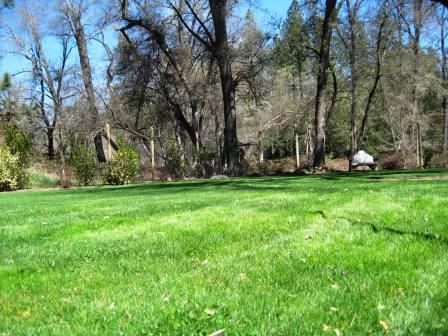
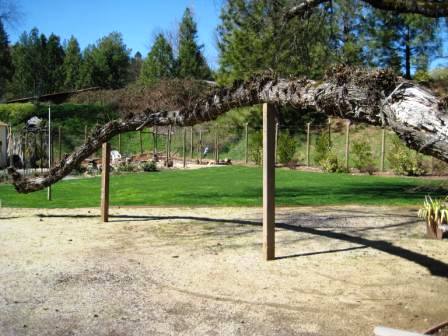
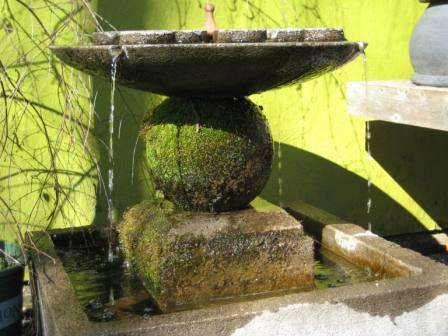
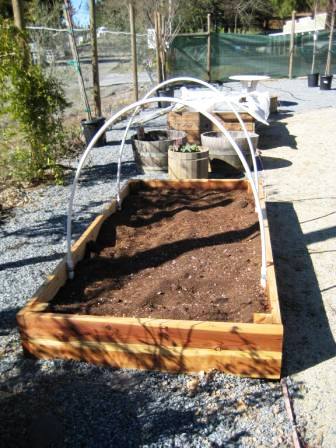
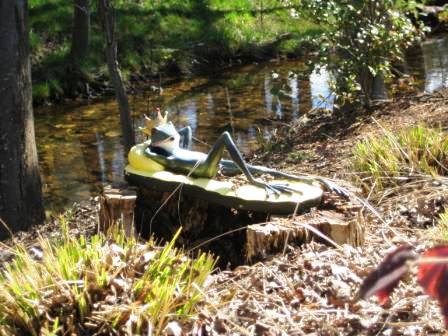
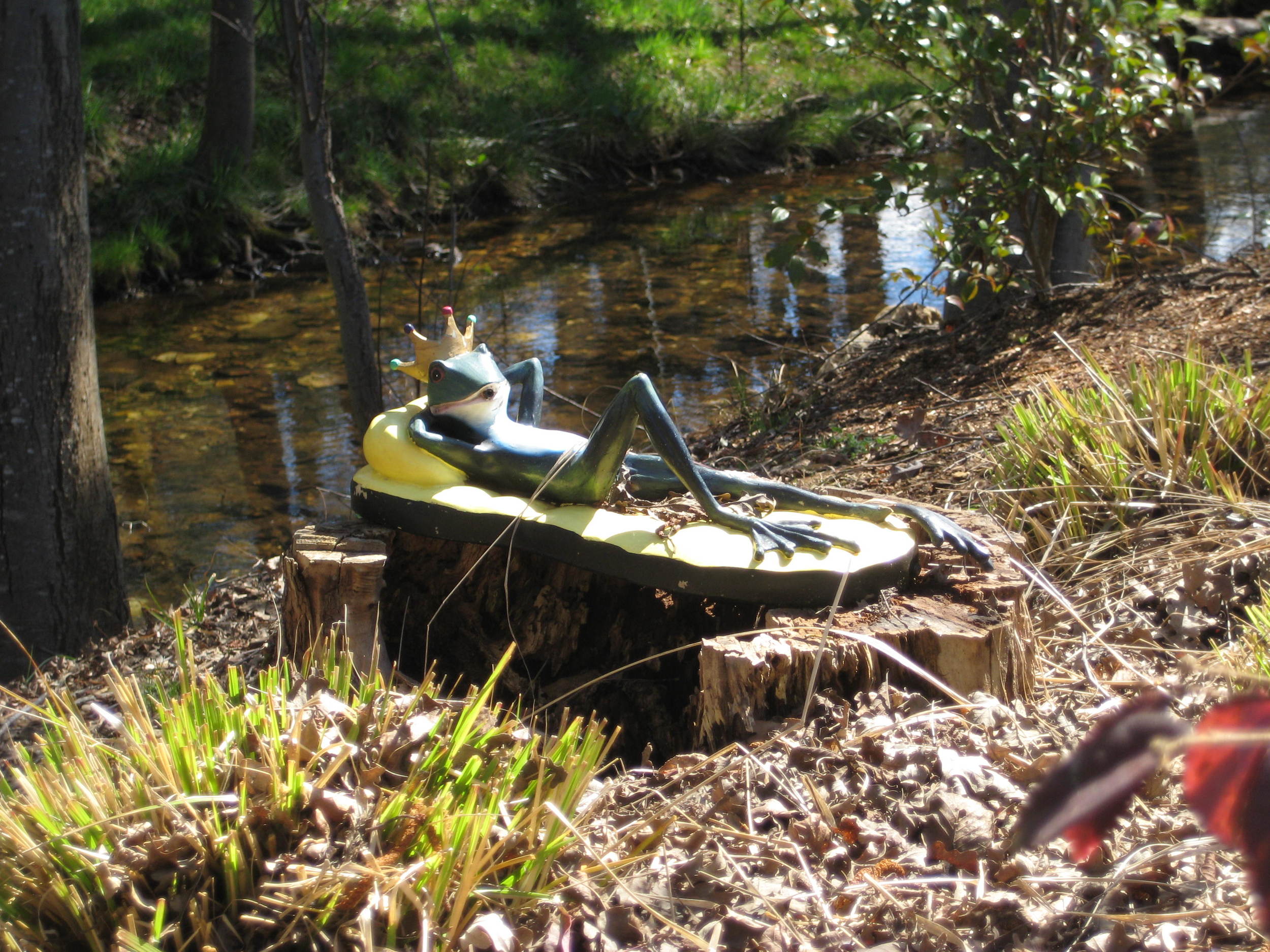
raised-bed.jpgThe picture on top is of the picnic area with the lawn and its second cut of the season. It's sooooooooo lush! We use it for picnics and Frisbee tossing. The second is the willow which we have managed to keep from falling over. Monica has just cut off the willow shoots from last year and sells them in the store. We also added a second stake to help hold it up. The third is our portion of Empire Creek, spring water fed from the mountains.The fountain just above is behind "The Guacamole Shed, hence the color of the wall. The fountain has gotten nice and mossy.The next is the yet un-planted new raised bed we built at our workshop of a few weeks ago. Finally the frog prince hangs out amongst the cut back pennisetum grass. By summer he will be well hidden again, left to doze in peace.

frog-prince.jpg


Speak up!

My post on “This is what happens when chain stores sell plants” got a lot of interest from people concerned or surprised at whats going on at chain stores when it comes to what they are selling. My most recent comment comes from John Peter Thompson who says “As Chairman of a 78 year old family-owned nursery in Maryland (Behnke Nurseries), I have worked very hard to get the word out to the public and to the industry. I have opportunity to serve on the Maryland Invasive Species Council as the industry representative. And, as the current Secretary of the National Invasive Species Council Advisory Committee (NISC ISAC), I am working to help facilitate discussions at the federal level, and to assist with State efforts with on the ground control and eradication.” He ends by saying, “I think I will pay a visit to the local box stores this spring and see what they are offering up outside of Washington, DC.”

I couldn't find the comment, but somewhere at a post I did someone mentioned how interesting it was that various factions in horticulture were having problems with how the other faction was doing business. There is the idea that somehow since all of us are selling plants, box stores, chain stores, independents, etc. that we are all on the same page. Nothing could be further from the truth.

Since I am an independent and tend to stick up for independents it might be construed that I like all independent nurseries. I know of a number of independents that do a terrible job. It's not about being independent or being a box store. It's about giving the customer a great experience coupled with great horticultural practices.

We don't start selling tomatoes here in the foothill until the middle of April. Plant them sooner and odds are they will succumb from a late frost or the cold ground. My local Home Depot already is selling tomatoes. We get people in telling us they have already planted their tomatoes. Well they didn't get them here! These are my customers, too. They mean well, they just saw all these great summer vegetables at The Depot.

I am also learning that garden centers are vastly different from region to region. I can't say that our experiences here in northern California are like anyone else's. I hear from people who say the local independents just don't cut it, and that the box stores are the best choice. What a drag!

If you are a quality independent now is the time to get the word out about why you are better. I think its important that we don't just say we are better but show people each and every day how much better we are. Using the medium of the Internet its getting harder and harder for these poor horticultural practices to be hidden behind slick advertising and and the perception that they are nursery professionals.

I was at the Sacramento Perennial Plant Club sale over the weekend. I met a bunch of nurserypeople from small nurseries including Sean and Christy from Mad Man Bamboo. All of these people work hard to produce what they believe to be the best they can offer. It's not an easy route. When I think of the competition we face from large corporations with loads of cash to advertise its hard not to get mad at the mis-information and poor plant choices these places seem to excel in. I am not against becoming a large corporation if thats your companies goal. In my mind however it should be coupled with a decent knowledge of proper horticultural practices.

The chain and box stores are not going to go out of business anytime soon. There will always be people who shop these places based on perceived lower price , convenience, or a poor selection of independents in the area. There are however lot's of people who are starting to realize that where you spend your money is about more than just those perceived qualities the chains like to advertise. It's important that we small independents that do work so hard to do it right, get the word out and not be afraid to call out these shoddy horticultural practices and show people who care a better way.

Sacramento Perennial Plant Club Sale

Saturday I will be at the Sacramento Perennial Plant Club sale trying to entice people to make the trip up the hill to see us. I will be selling some special plants that I have picked out from the nursery. Very special prices for the plant sale, too! Every year Saul Wiseman, who is the president of the club has tried to get me to attend. I usually bow out as "we are too busy" this time of year. I think he grew tired of hearing that, so it was more difficult to say no this time. I actually like doing these things as it is something different that gets me out of the nursery. It also allows me to me lots of people who would have otherwise never heard have of us, and what we have to offer.

According to the club, "Beginning at 9 AM we will have 11 different specialty nurseries here with their wonderful assortment of healthy plants to aid us with a great jump-start on this year's gardening season. They will include trees, shrubs, perennials, annuals, Mediterranean and California natives; aquatic plants, miniature water gardens, and much, much more, including delightful garden related art."

"The guest speaker, Sean O'Hara, will speak at noon. He is the co-chair of the Northern California Branch of the Mediterranean Garden Society (MGS), which produces a quarterly journal for our area. 'The Garden Resource Guide for Northern California's Mediterranean Climate.' Copies will be available at his talk. MGS is headquartered in Athens, Greece. It is an international forum devoted to furthering knowledge and appreciation of plants and gardens suited to the Mediterranean climate regions of the world."

Stop by and say "hi" if your in the area. It's located at The Shepherd Art Center at McKinley Park, 3330 McKinley Blvd. Sacramento. The event ends at 3 pm.

This is what happens when chain stores sell plants.

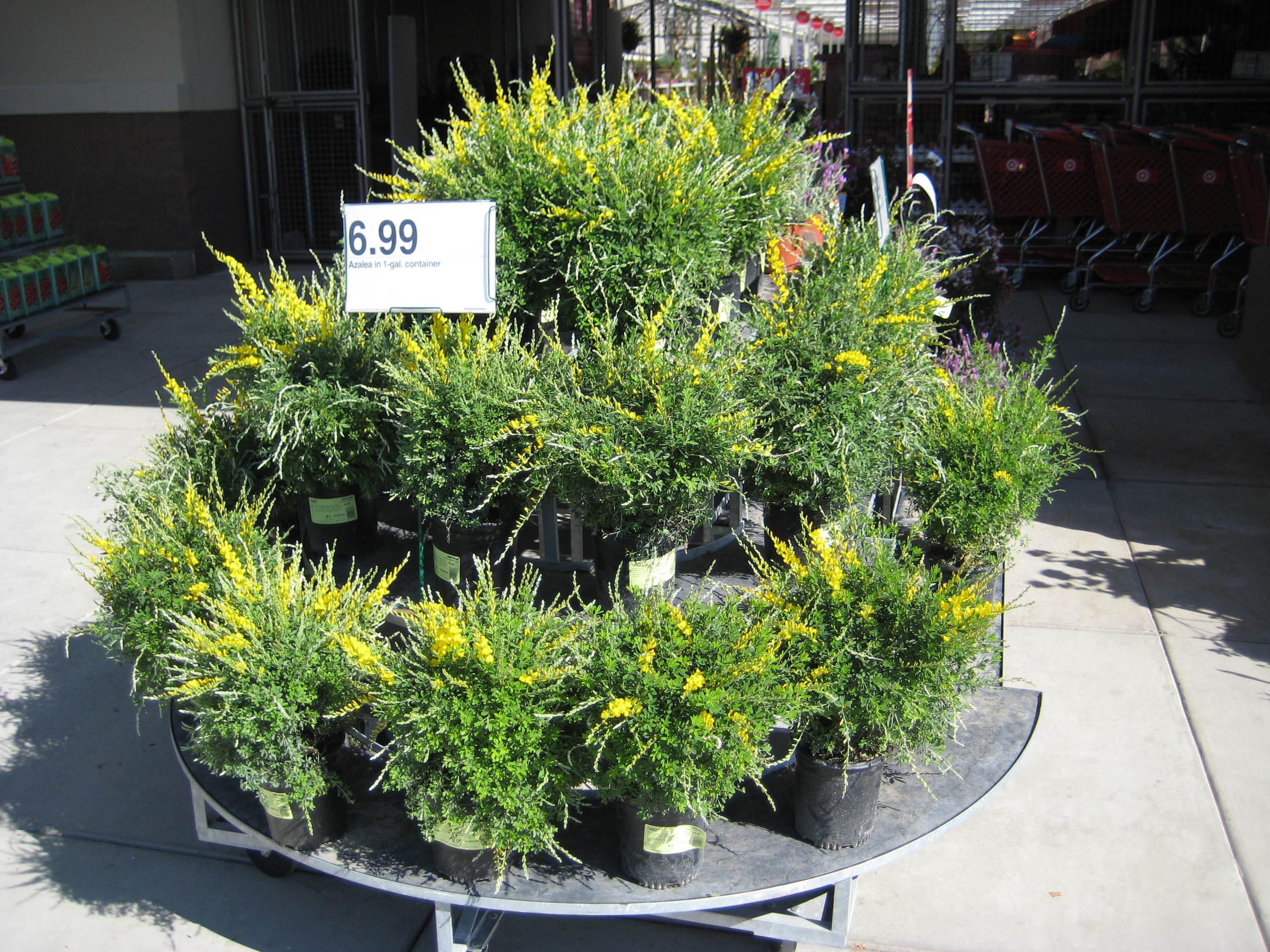
044.JPGOne thing I don't get a chance to do much is visit other "garden centers" during the spring. I am just too busy, so when I get sent on an errand outside the nursery I tend to take the long way back, just to get out and about. On the way back from Folsom I passed by a Target with an attached garden center. I stopped because a table full of yellow flowers caught my eye. I knew what they we're since they are an invasive pest in El Dorado County and Sacramento County, Cytisus recemosus (Scotch Broom). We are not even suppose to sell it in our county, yet the Target is in Sacramento County, right next door does. Sacramento County apparently doesn't care about invasive pests. In my last post we talked about Costco selling Leyland cypress (Cupressocyparis leylandii) in the Central Valley. Here is what the Wikipedia entry says about these trees, "it is poorly adapted to areas with hot summers, such as the southern half of the U.S.A., and in these areas becomes very prone to the disease cypress canker caused by the fungus Seridium cardinale. This causes extensive dieback and ultimately death of the tree. In California's Central Valley, they rarely live more than ten years before succumbing, and not much longer in southern states like Alabama. In these areas, the canker-resistant Arizona Cypress is much more successful."

We haven't sold Leyland cypress for years! If I tried to sell Scotch Broom where we are we would get run out of town! Everybody knows this pest, and there are even groups of well meaning people that spend their free time removing these plants. Why do these corporations get a free pass? These are our real competitors for the gardening dollar. They should be exposed for what they really are, opportunists that really don't care about what these plants mean to the person buying them. There needs to be a counter to these sloppy horticultural practices. Thank goodness for the internet, where we can finally get the word out.

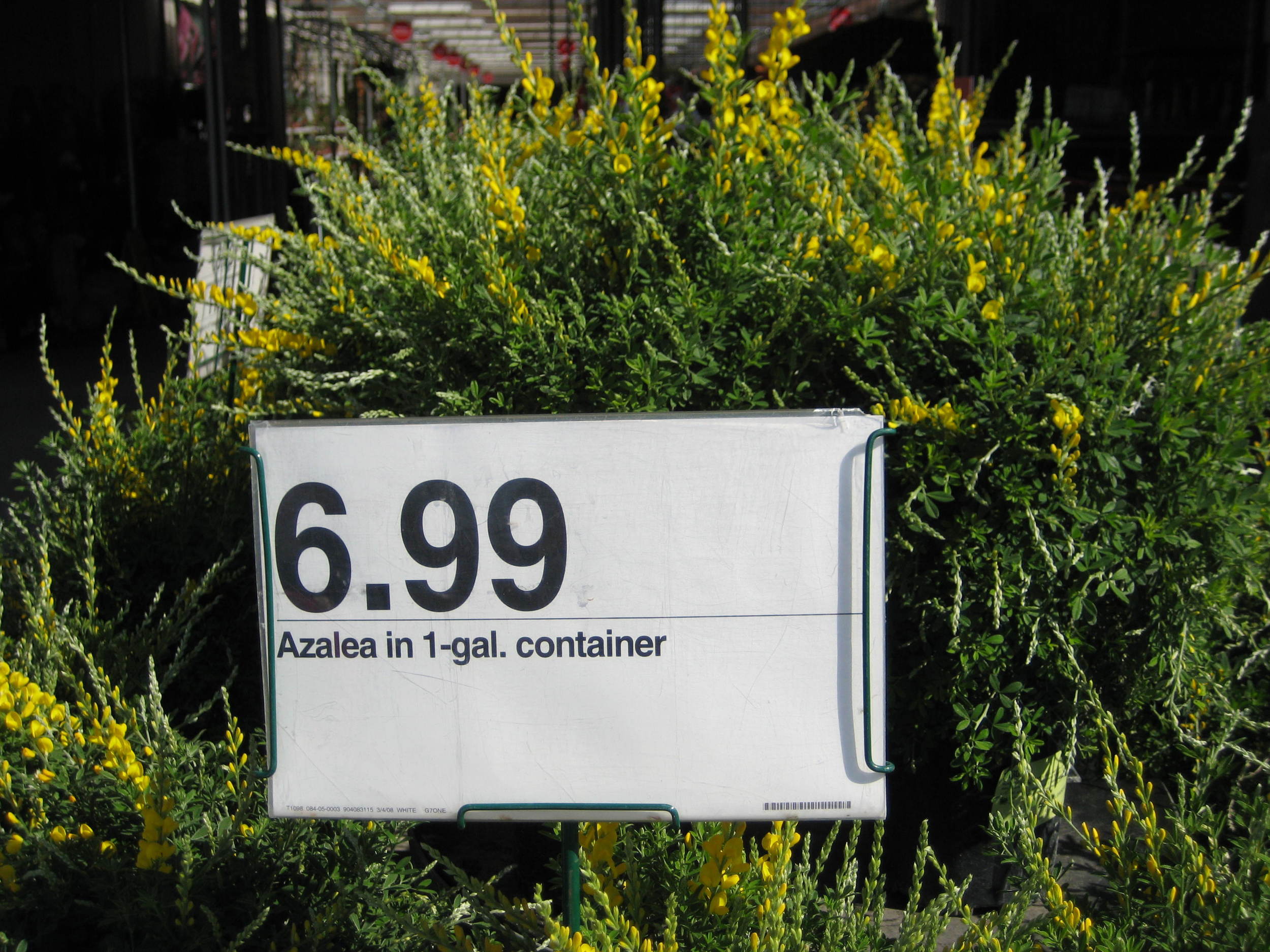
Check out the sign in the Scotch Broom. No, I didn't stick that sign in there. The display is just how I found it! Needless to say I am not a fan of sloppy nursery practices. I don't like the idea that as a small independent garden center we work hard to prevent the spread of invasive plants as well as recommending longer lived solutions for privacy screening than Leyland Cypress. Yet the buyers for these companies don't care at all. What about the wholesale places that are growing these things. I guess a quick buck trumps proper horticultural practices.045.JPG

Here is what's cool. We can now speak up and be heard. The internet allows us to spread the word with the chance that someone contemplating buying these plants can find out more about them before they make a big mistake. For years we have been running scared of these box stores and chains with their unbelievable low prices. I have even had customers tell me that they are selling the same thing at Target, Home Depot, Costco, etc. for a much better price. There is no way that can be, I don't buy any plants from wholesale nurseries that deal with these places. We take the time to make sure we can stand proudly behind what we sell.