
What a deal?

sequoia at costcoKatie at garden punks sent me a link to another article on the solar vs. tree issue. In this article we have a picture from the solar panel side and its pretty clear that the solar panels will be shaded. Oh well, the courts decided in favor of solar man so the trees will now be topped or removed.

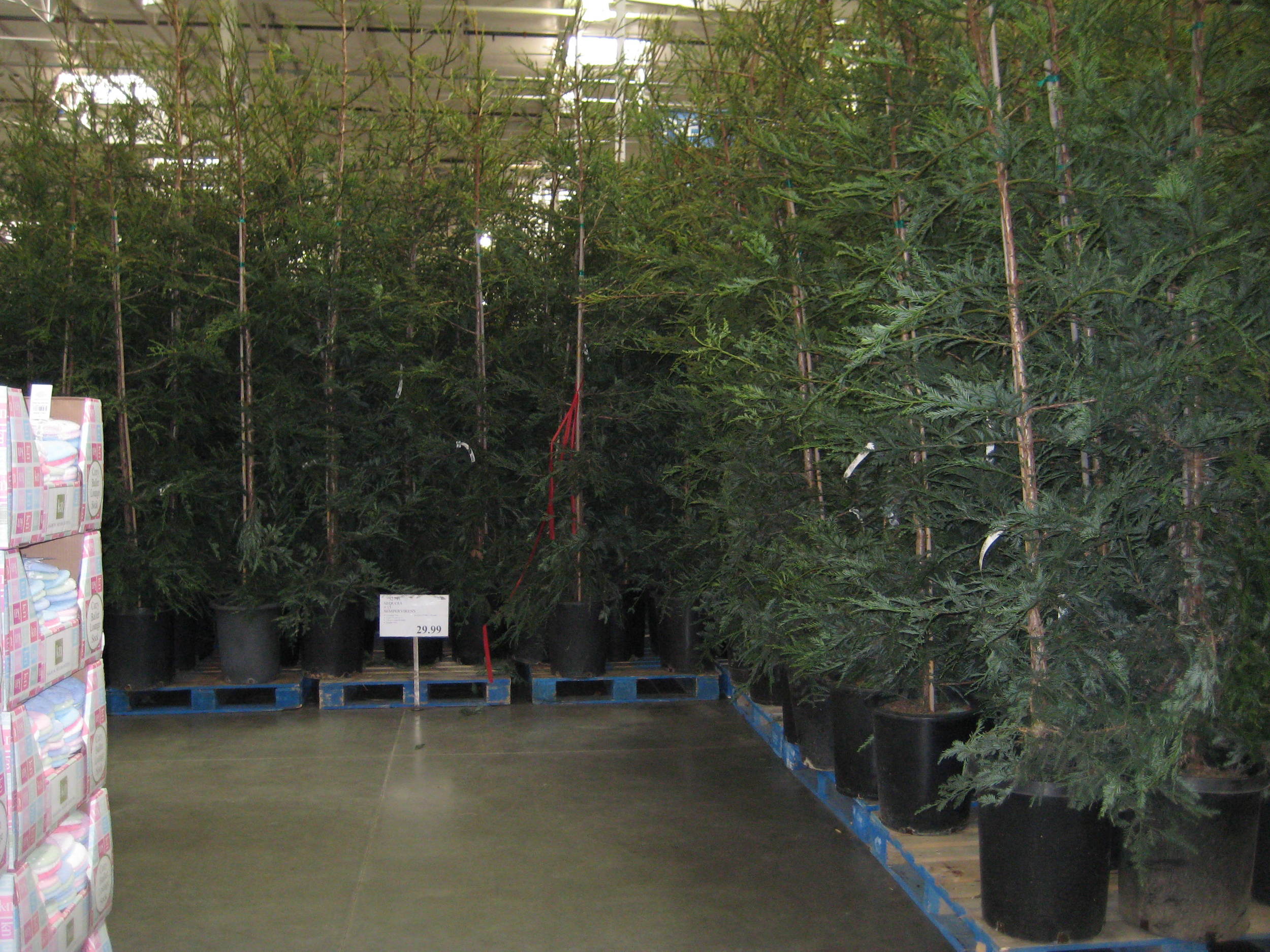
Over at the Costco in Folsom near where Katie lives there are 15 gal. sized Sequoia sempervirens (redwoods) for $29.99. These trees are at 9-10 feet tall. I have asked my vendors, but no one seems to be able to tell me how it is that Costco can sell these trees for a price less than what I as a nurseryman can buy them for. Whats up with that? Could someone out there tell me how it's possible to grow a tree for a number of years only to sell it for $29.99?

I am wondering is if there is a correlation between plants sold as commodities, like these redwoods and their mis-placement in the suburban landscape. There are all sorts of large sized plants, like the redwoods for sale at Costco. Leyland cypress, palms, photinia trees, etc. They are all displayed on pallets inside the store. How do they water these things? Do they even have too? My guess is that at $29.99 they expect all of them to sell out BEFORE they have to water them. Maybe one to two weeks.

The home owner who shops at Costco loves a deal, and so you see truck loads of these trees and others be distributed and planted around theleyland at costco neighborhood. “Honey, I'm home and I have a surprise.” Next thing you know you have redwood trees growing larger than most suburban lots have room for, blocking the neighbors solar panel, view, sun deck, etc. I have a special issue with the Leyland cupress they we're selling, which are better suited to the coastal areas. Here, in the hot interior of California they have a short life span of about 7 to fourteen years, by which time they are attacked by borers and die. Last year it was Queen palms that people we're getting real cheap, planting in the foothills and having die that winter.leyland at costco
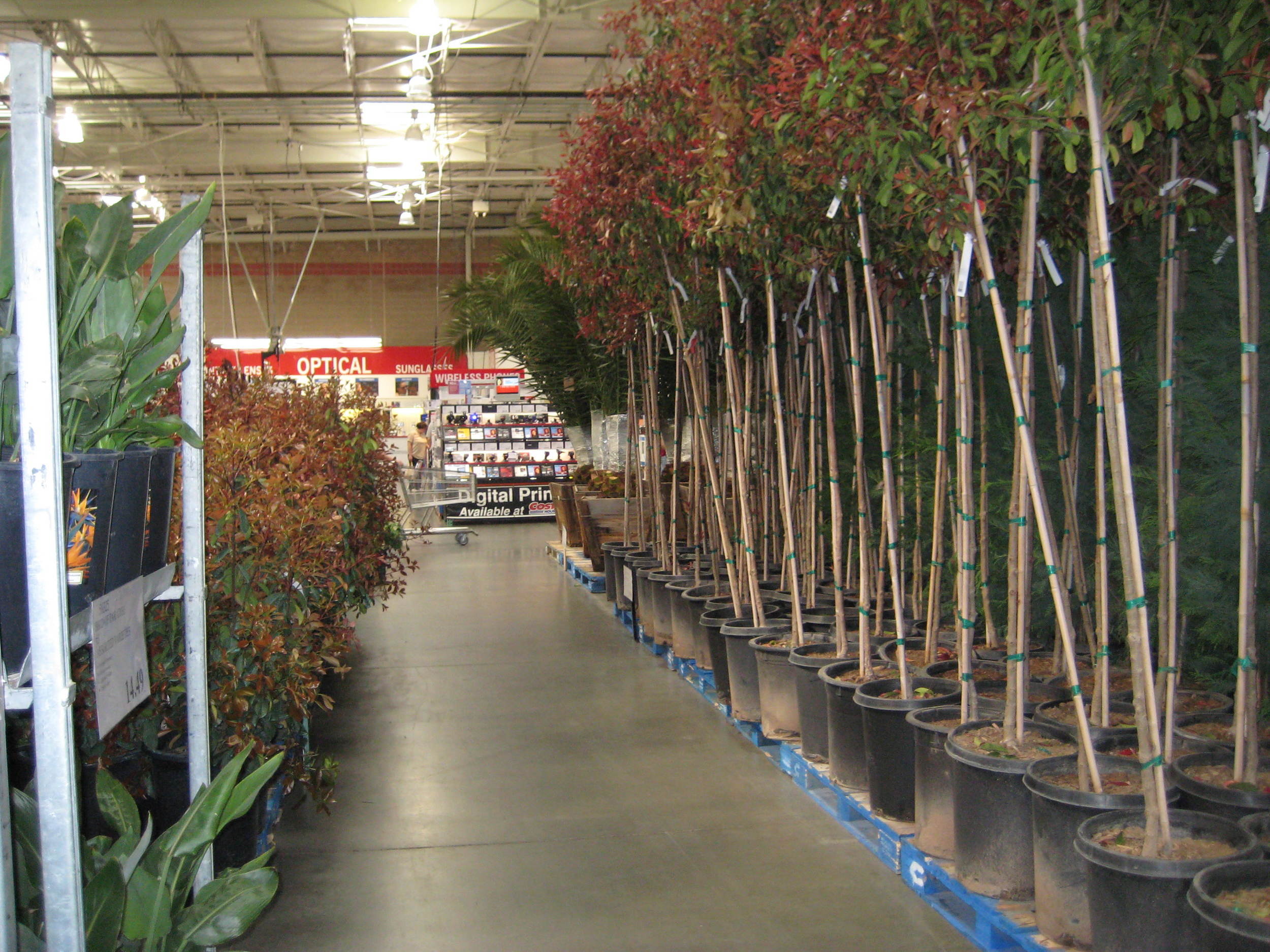
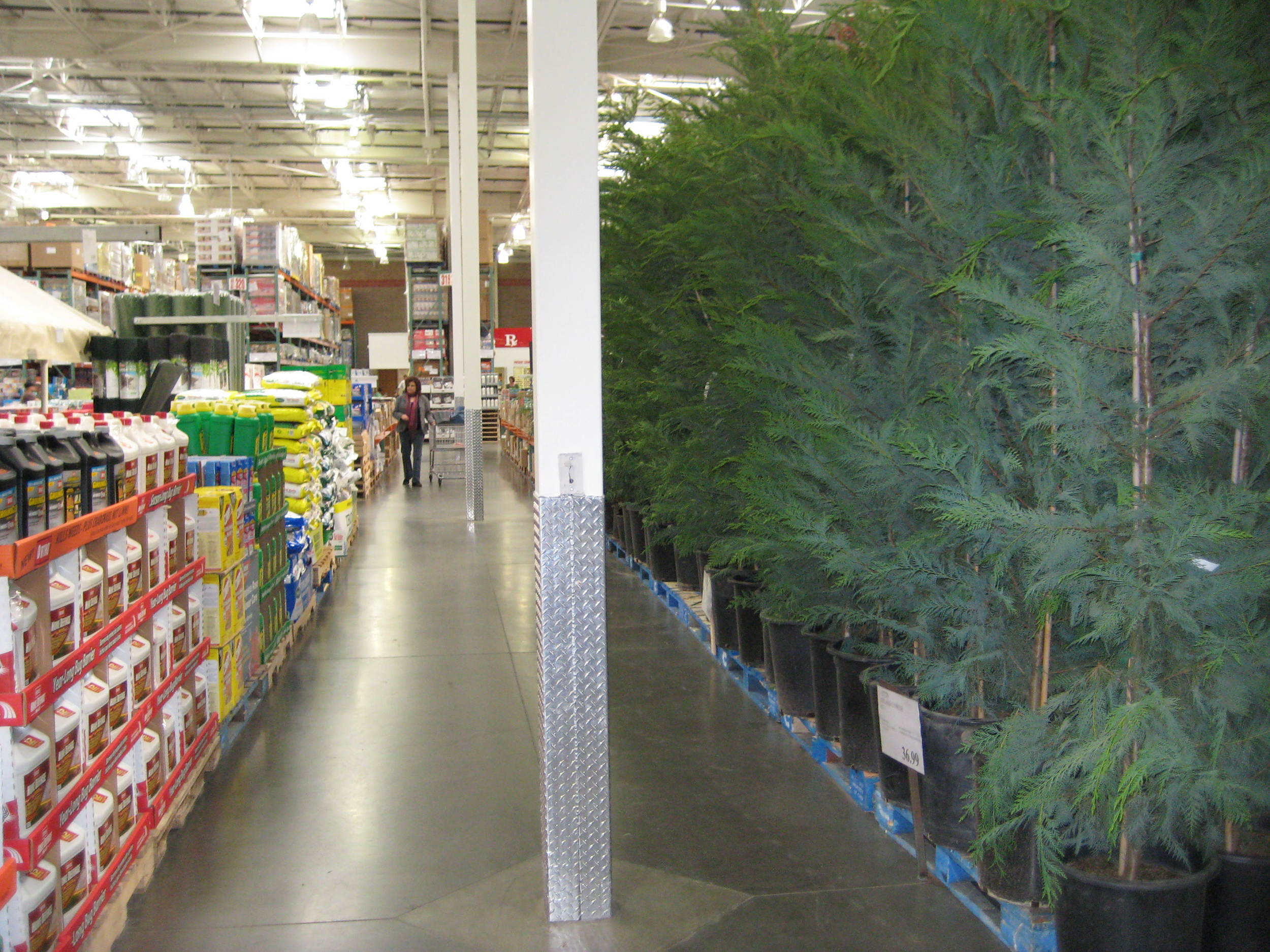
There is something strange about seeing all these plants on pallets, shoved together, and kept inside a warehouse. Water, that will have to wait. The proper planting instructions, who need those? How big will these things grow, and are the appropriate for you small Folsom neighborhood? Why would they be selling them if they weren't. Who grows these things? Are they proud of how their plants are being displayed? Must not be since I can't find any labels proudly displaying their name. I guess they want to remain behind the scenes.

Right across the aisle from the Leyland Cypress are all the fertilizers you'll ever need to keep these things healthy. Giant boxes of Miracle-Gro from Jim, who loves independents!

 

Do you guys have an association?

I wrote a post about what to do with the empty nursery pots here. I just got a comment from faboomama. She asks “It would be nice if there was a comprehensive statewide effort to reduce the waste of these pots, but barring that, I’m looking for anyone who can take my pots and recycle them. I’m actually really surprised that there is no concerted effort among nursery owners (do you guys have an association?) where you can direct gardeners to dump them.

Well faboomama, we do have a California Association of Nurseries and Garden Centers (CANGC). This was at one time a powerful and influential organization. What has happened to them? I joined when we started our business here four years ago. I soon dropped out because I sensed it was an organization that seemed to have lost it's way. I tried to e-mail them a couple of times concerning a number of issues and never heard back.

I have come to the conclusion that it's up to each independent to do what needs to be done. Counting on associations to help, at least here in California is a uphill climb. Am I missing something, or can someone tell me what the C.A.N.G.C.'s position is on recycling plant containers?

Apperances are not always what they seem.

I want to address Jays concerns with my last post, Reducing inventory while increasing sales. Jay says,“They (the chain stores) offer the most popular items which account for the major percentage of their sales and give up the opportunity to sell slow moving items (which either don’t contribute to profit or do so minimally).” He continues, “The downside to this is that the shopping experience becomes homogenized. Walk into any Box and it’s predictable.”

I agree with Jays assessment of the homogenized shopping experience that is encountered at these stores. I don't however think that by simply reducing the number of items you carry will make you become homogenized like the chains. The very nature of being independent allows us to pick and choose which items we carry. The only way you can experience a homogenized experience at my store would be if I choose the same items that my local Home Depot carries. We don't! I choose in most cases to buy from those suppliers that do not service the chain stores. My goal is to give you the anti-homogenized experience.

My goal with the last post was to suggest that we in the small garden center business sometimes try to carry everything, just like the old fashioned hardware store that Jay mentions. We have the oldest continuously running hardware store west of the Mississippi right here in Placerville. Placerville Hardware is a joy to visit. Exactly what you would have expected Grand Pa to shop at. Pot belly stove, hundreds of drawers with all sorts of nuts, bolts, etc., wood floors, and those cool ladders that run along a rail so they can get to the real high stuff. Tourists stop to visit and spend money. The locals do too, but not to the extent that it would survive strictly on local business. The tourist traffic on Main street keeps this store alive. It's more like a living museum. It's not making it because it has every little thing you want, it's making it because it appears to carry every little thing you want. Its a representation of what we picture the “good 'ol days” to be. Locate this store off of Main St., away from the tourist trade and I doubt it would still be operating.

I think that re-creating the old fashioned nursery atmosphere is a viable business model. The kind of store Grand Ma would have shopped in. It doesn't mean that you would have to carry every item an actual garden center would have carried in those days. The competition for the gardening dollar makes it impossible to compete with the infinite selection available through the Internet or a well stocked chain store these days. So yes to re-creating the ambiance or feel of the old fashioned garden supply store, but to try and carry everything that they would have in those days won't work now. They didn't have box stores or the Internet back in the "good old days".

Reducing inventory while increasing sales.

I thought this post has a lot to offer the smaller independent garden center, even though it involves bookstores. Recently Borders cut it's inventory by 5 to 10% and saw it's sales increase by 9%. What they did is start placing more of their books on the shelves facing with the cover out, rather than with the spine of the books showing. I love this stuff. It's not about the volume of books you have, but rather how you display what it is you do carry.

This method assumes that maybe most people don't know what it is they have come into the store for. They may have a basic need, privacy from a nearby neighbor, or they want to try vegetable gardening. It's up to us to show them all the possibilities for reaching this goal, in ways that they may have never thought off.

This is a very hopeful way to think of our business. Realizing that the amazing choices that are available from Amazon.com or some cool mail order nurseries is a great thing, but doesn't resonate with everybody all the time. There are plenty of people that really don't need a large selection of varieties, but are looking for new ideas, excitement, or different way's of using the varieties that we do carry. More and more I feel that the small garden center shouldn't be about just stuff to buy, but rather a place that inspires, rejuvenates, and surprises with every visit. Do that and sales will follow.

The Poison Garden

northumberland_alnwick.jpgThe San Francisco Garden Show is being held and two traditions continue. The garden show is one, the other is my non-appearance. I remember the garden show when it was held at Fort Mason, before the Cow Palace. I never made it since it's held in spring and thats when we are the busiest. Some of my customers show pity and bring me photos, or I can head over to Jasmines Blog and read about it there.

I would have loved to met Jane, the Duchess of Northumberlund. She was there to promote her book, The Poison Diaries. The book is about poison plants which sound interesting but what really interested me was her Poison Garden, located at the families castle in Northumberland. The castle is where Harry Potter was filmed! Alnwick Garden's, opened in 2002 contains a section known as The Poison Garden. It contains such plants as strychnine, cannabis, devil's eye, stinking nightshade and mandrake which - legend has it - because its fleshy root resemble a man, emits an ear-piercing scream when pulled up, and begins to sweat blood. When you tour the gardens you are escorted by garden marshals since some of the plants are quite dangerous to those not in the know. Very Cool.

I had never heard of these gardens but the post at Jasmines Blog had a picture of the Duchess signing books, and she seemed so young, petite, and accessible. Not quite what I picture a Duchess to be. Besides anyone who would plant a poison garden gets my interest right away. She uses the garden to help teach children about the affects of drug addiction. Actors portray drug addicts throughout the garden and after the tour, children see a musical presentation focused on drug education and resistance. What a fantastic idea. Usually the effects of various drugs, good and bad, and where they are from is clouded in mystery and prefaced with, “stay away”. Well , you know what that means. Children are a curious lot and I think seeing these plants, especially at the place where “Harry Potter” was filmed is quite an education. Heck, I would take the tour in a heartbeat.

Now that you have that nursery...

I wanted to address Jodie's concerns concerning my last post, Before you start that nursery... She asks, “... what does everyone else do with the dribs and drabs of stuff that doesn’t go? That odd garden stepping stone, or a chipped statue that’s been here gathering dust for 5 years–yes, 5–or more, years.”

Why do we small garden centers allow are selves to get in the situation where we end up with these odds and ends that just sit around? I remember one winter when we had just about run out of money and as I walked around the store it became crystal clear what the term “money tied up in inventory” meant. When I would rather have had $1000 in the checking account all I could see where plants and merchandise that represented that $1000 and then some just sitting. Being winter I knew there was not much hope of releasing the money these good represented until spring. Geez, I wished we had put this stuff on sale earlier so we had some money instead of product thats just sitting around getting older.

It seems to me that we become attached to the items we have bought. We know that they should command full price and are disappointed when they don't sell. So we move them around, create new displays and wait. Meanwhile the product, weather its plants or “dry goods” gets older and less likely to sell. Let's take an example. We pot up a bunch of daffodils in fiber pots for spring sales. They start to bloom and we wait for them to sell. Now it starts raining and sales slow and you just look at the daffodils and know they will be done blooming soon. Why not put them on sale while they still look good? Half-price, our buy one, get one free. Because we hate to see quality walk out with little or no profit. Yet, if we don't sell them, even at cost, they will eventually just be planted out in the nursery, donated, or dumped. A complete loss in time and money. It would be even o.k. To GIVE them away with every purchase of $50 or more. Think of the good will that generates. They key is to bite the bullet and get rid of them while they still look good.

We came up with a great way to prevent that last plant of a group remaining while the rest we're bought. You have 11 Arctostaphlos “Emerald Carpet” and a customer wants 10. Normally we would have left it at that and that one plant would just sit there. Now we pick up that last plant and put it on the cart, free. Yup, no since in leaving that last lonely plant there while all its friends get to go off to their new home. The customer loves it since it represents an extra plant they really could use and it allows us to get a group of fresh Arctostaphylos that won't have that one “off” looking plant from the last group. Yea, we didn't make the full profit we could have but, that plant wouldn't have sold otherwise.

We brought in a bunch of Master Gardener, and Moon Phase Calendars this year. Not all of them sold, so Monica has them sitting at the counter for half off. Wait, we are already in March and we are still trying to sell these things? I have been giving them to our special customers when they come in. Lady just bought $50 in stuff, we hand them a calendar worth $11.99. Better to have that customer think of us every time they look at that calendar than to have tried to eek out a buck. Customer relations.

I am starting to think that there is really no reason that we shouldn't have a time limit to sell on EVERYTHING! Yup, even those really cool Weeping Norway Spruce. Sure they are a little unusual, and should have been sold out by now, a year later! But the reality is at this point it would be better to slash the price, get them out of the nursery and get in a new crop or something different. What are we, a arboretum where every thing is in cans? A museum of un-sold merchandise?

We are going to be a lot more aggressive this year in moving stuff. We are going to keep track of the date when various items we're put out for sale. At the end of a agreed amount of time we are going to bite the bullet, despite how great the items still look, and aggressively mark the price down, or offer buy two get one free, or something that is going to get peoples attention. One other thing is we are not going to timidly make them down 10%, wait a little, then mark them down again, etc. One great markdown and that's it. Get them out of the nursery and into someones home.

The reason this is so hard for many of us is we think like gardeners, not business owners. As gardeners we know the value of these things. We know that the plant that just doesn't look that good, could with proper care be a excellent addition to a garden. That chipped fountain really would be cool in the herb garden. Well you know what, I want it to be an excellent addition in somebody else's garden, not mine. Isn't that why we are in the nursery business? To supply OTHERS with items for THEIR gardens.


Before you start that nursery...

Just read a great article on the difficulties, and rewards of starting a small retail garden center. The article can be found here at The Green Beam. It follows owner Cliff, who had a dream of starting his own garden center in Alabama.

What I found interesting and you may too is how long it takes a start-up to become profitable. In Cliff's example 6 years we needed to break EVEN! So much for the dream of over night success. Cliff and his wife even had to take on jobs outside the nursery to keep the boat afloat.

I was interested in the fact that to pay of the debt Cliff didn't buy in any inventory for three years. I don't know how they did that, but they did pay off the loans. Three years without adding new inventory? I would be afraid the customer would leave and never come back. But it worked for them.

Sid Raisch, owner and consultant with Horticultural Advantage in Hillsboro, Ohio hands out some advice in the article which I find interesting. I am most interested in the idea that inventory should be bought in with the idea that it be turned (sold) within 30 days or when the vendor bill for those items comes due. This means being tough and not becoming too attached to what you are buying for re-sale. After thirty days you would put the items on sale and move them out. This is harder than it sounds as often what you as an owner thought was so cool and would fly off the shelves, now needs to be put on sale. Our sin has been to try and eek out the last full profit margin on stuff we should have put “on sale” and blown out of earlier. We are going to try and do a better job of that this year.

If you have ever been interested in starting your own horticultural business, especially the small retail garden center this article would be a must read. Even if you don't want to start your own business it will give you some insight in why there are so few small garden centers opening and why competition from the box stores, with their ready supply of investor cash, is so tough.

Check out the new Scotts Miracle-Gro website!

About a year ago Scotts Miracle-Gro started a ad campaign in various nursery trade publications, most notably Nursery Retailer Magazine. The campaign called “Jim Loves Independents” is designed to woo independent garden centers with their new line of fertilizers and pest controls designed just for independents. The ad has printed in LARGE letters “Jim Loves Independents”. It shows owner Jim Hagerdorn traveling to different larger independents looking “concerned” while listening to “us” independents.

You see Scotts has been supplying the box stores for years, and really could have cared less about the independents. But now “Jim Loves Independents”. I am sure it has nothing to do with the fact that sales were declining at the box stores and Scotts needs another market. The first time I saw the ad it made me laugh. The man that owns the largest lawn supply company around and largest supplier to the box stores suddenly “loves” independents.

Now word comes from our friend Sid that Scotts has revamped its website to appeal directly to the consumer, bypassing the independents all together. Lets see how much "Jim loves independents." Go to their retail locater and type in my zip code 95633, and some products I am looking for. Lets see, Scotts Turf Builder All-Purpose Lawn Food. Ta Da! I can find this wonderful product at Lowes, Home Depot, or K-Mart. Not one independent listed. “Jim Loves Independents.”

Lets hit the “connect” tab. Hey cool, they have blogs. Not one blog but space for 10. They are also looking for authors to write their blogs for them. I like the one called “ItsMeAgain...talkinaboutdalawn”. Here is what “Male, Age 41 recently had to say, “I'm cocked and loaded. I have a bag of Dimension from Southern States left over from last year. That will cover 5000 sq ft of our acre lawn. I stopped in at the local farm supply and bought two bags of Howard Johnson Enterprises professional pre-emergent. These bags cover 1/3 acre each per the label and contain TeamPro pre-emergent. Minus the house, porches, driveway, landscaping, etc, I think that will cover my lawn.” What interesting information! Check out the other blogs. Are these things for real? Do people really care this much about their lawns to shill for Scotts? To comment you must register with Scott's.

As an independent nursery owner I would invite all independents to shed themselves of Scotts and its products. There are so many other quality products out there that can set you apart from the box stores. We carry no Scotts products, and as soon as we sell out of the last bottle of Osmacote (Scotts owned) that will it for that product here. Even with their so called "independent" line the name Scotts is still imprinted on the bags. Let the box stores carry Scotts, after all they have been for years.

Set your self free, and be truly independent. Just say NO to Scotts.

Gardening Revolution?

Over at Garden Rant Elizabeth ask, “Are we in the middle of a gardening revolution?” She sites a number of gardening articles at various newspapers that all speak to this new awareness, especially in vegetable gardening.

What I find amusing is that all of these main stream media outlets save one, cite “pinching pennies” as one reason people are returning to the garden. The Arizona Republic says, “The price of food is sending them back to the garden.” The Ocala Star-Banner says, “in this day of tight economic times, gardens can help stretch the family budget.” The North Andover Eagle Tribune says, “Home vegetable gardens appear to be booming as a result of the twin movements to eat local and pinch pennies.”

None of my customers vegetable garden to “pinch pennies”. The days of growing your own food to save money are long gone. How can we have tomatoes in the middle of winter and complain at all about the cost? If people think they can grow food less expensively than the huge agricultural concerns they are in for a disappointment. The real reason people are growing there own vegetables was summed up by a commenter. “Mostly, the younger crowd is concerned about pesticides and decreased nutrition in their food.” In addition, once people taste fresh vegetables the flavor is so much better than whats available in the store it's hard to go back. There are additional reasons, but saving money is generally not one of them.

So Elizabeth asks, “Are we in the middle of a gardening revolution?” We must be since the main stream media is reporting on it. If you wanted to see the beginning of the revolution, or keep up to date on whats really happening, keep reading the blogs. We talked about this upcoming interest in vegetable gardening a year or two ago when the main stream media we're reporting on the "Death of Gardening"!

Congratulations on Garden Rant being noticed by the big media outlets like The Washington Post. Any of us bloggers would most likely be thrilled to be noticed. I was excited when The Sacramento Bee noticed the web site and blog, yet I find certain sadness at the fact that our blogging world, which was initially off the radar of “Big Media” is now getting noticed. It's like we have been having this really cool party, but now the “professionals” have showed up and they want to party too. Oh well, a good party is hard to keep under wraps.

No, I am not turning into a bitter old man as Monica is want to tease me. It's great that we citizen journalist are being recognized by the pro's. As a matter of fact according to Angela, The Sacramento Bee wants reader submissions on gardening. You will not be paid for the submission, and it will become the property of The Bee. Sure, there will be people all to happy to see their name in print and do The Bee's work. But don't be fooled, the real action is at the gardening blogs where the work is a labor of love.

Yesterday standing in the grocery line I automatically picked up Garden Design, and Sunset magazines. I have been doing it for years, and yet now I wonder why. I get more excited reading about garden bloggers and what they are up to than the latest "Euro trend" in Garden Design, or how Sunset according to it's latest issue has been "Eco friendly" since the late 1800's. I use to buy The Bee on Saturday's to read the garden section, but not any more. It seems they are more interested in nosy neighbors than gardening.

So yes, we are in the middle of a gardening revolution. Remember where we heard about it first? To find out what the next big thing in gardening is all you need to do is look no further than the blogroll of your favorite gardening blog.

Solar panels vs. trees

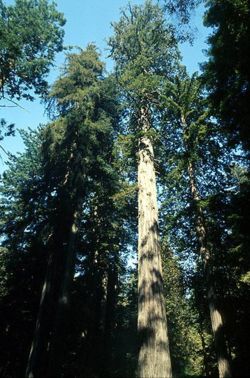
250px-coastredwood.jpgOver at Edenmakers' Shirley has a post about a couple of neighbors who each feel they are environmentalist, yet felt it necessary to head to the courts over their dispute. This is a suburban neighborhood and as such one neighbor wanted to plant a row of Sequoia sempervirens, (Coast Redwood) as a privacy screen. Later the other neighbors installed solar panels on their roof, as well as on a lower trellis. Why head to court? The neighbor with the solar panels sued since the trees had started to block the sunlight reaching the solar panels on the trellis. The bottom line is the neighbors with the trees had to remove a couple of them so light could reach the panels.

When I first read the story I, like Shirley, automatically sided with the tree people. After the automatic “I am for trees” reaction I started to think that maybe those redwood trees we're the wrong choice for a privacy hedge. When you realize that the Coast Redwood can grow up to 100' plus in a residential situation it soon becomes obvious that redwood trees are not the best choice for suburban situations. Yes they grow fast, and are evergreen, but their shear size makes them inappropriate for most suburban situations. Better to have planted trees or tall growing shrubs that max out at a height that provides privacy, but doesn't turn into a giant. These trees can drop all sorts of material over the year and having the trees right next to the fence line means the neighbors might have ended up in court anyway, solar panels or not.

Was this a case of poor research by the home owners? We're these trees recommended by a nursery person who didn't find out what the situation was that these trees would be used in? Redwoods around here are very popular for screening, but we are a mostly rural area. So after siding with the tree people at first, I changed my mind and sided with the solar panel neighbor. Even though the solar panels came after the trees, the neighbors have the right to expect a certain amount of sunshine on their home, and these (eventually) giant trees would have blocked that out. An excellent reason to research the plants you are planting, and finding out their eventual size.

Now fast forward and I head back to Shirley's site and follow the link to the original article. If you look at the picture and read the article, the solar panels in question are mounted on a trellis BELOW the roof, about halfway down the side of the house. Just about anything you plant will shade these panels! Gee, if I put panels on the ground do I still get same expectation of light that a roof mounted system would have?

I think the solution to this problem would have been choosing a more appropriate type of plant for privacy. Something that grows to about 20 feet, but not much taller. Certainly not something that will grow up to a hundred feet tall, and not right on the property line. Even though the panels on the trellis are mounted really low the trees would have eventually, depending on the angle of sun, likely shaded the roof mounted ones anyway.

This could have been prevented by doing a little more research on the type of privacy screen plants available, or talking to an experienced nurseryperson or designer.


Gift cards are BIG business!

Here is some good news for the people of the Atlanta area who we're bemoaning the auction of assets of Pike Nurseries. It looks like 400 of the 700 employees will keep their jobs as the stores change hands, but stay open.

Here is the part that really opened my eyes. You have heard how retail just loves gift cards. Supposedly we are excited because a certain percentage of people never redeem them. They get lost, stolen, or just forgot about, so the store never has to redeem them. Well its nice to hear that Armstrong Nurseries, the California nursery chain that bought many of the stores will honor the outstanding gift cards from the former Pike Nursery. There are over $800,000 of outstanding gift cards that will be honored.

$800,000! I found this number absolutely amazing! This now gives us a better idea of why gift cards are so popular. It's a credit to the new owners that they will honor these cards. Actually thats really the only thing they could do. Imagine how upset the future potential customers of the new Pike Nurseries would be to be told they cards are worthless. This will help bring those customers back into the stores so they can get a taste of the new operations. I have heard about situations like this where the retailer will not honor the cards. After all its money that was collected by the former owners, and now merchandise from the new owners will be used to honor these cards.

The bottom line is its a good business decision since we are trying to build relationships, not fret over whether to honor a $25 gift card transaction. I want people to redeem the gift cards. I don't see any benefit to selling the card only to never have it redeemed. Quite often these cards are given to people who haven't been in the nursery before, and its a way to introduce ourselves to them.

California nursery Armstrong buys North Carolina's Pike Nursery

Pike Nurseries which went on the action block, has had various assets bought up by several different people and companies. This one caught my attention. Armstrong Garden Centers of California has bought the Charlotte, NC store for over $5 million. They get the right to use the Pike Name as well as some other retail locations and assets.

Armstrong nurseries have been a southern California staple for years. They have begun moving into northern California with the opening of their store in Dublin, in the Bay Area. Now they are moving into North Carolina. Here is a list of all the Armstrong Stores and their locations.

With over thirty-two stores when does an “independent” cross that divide to “chain store”? Is this move to a completely different environment than California a good one for this organization. I have my doubts, but I haven't been following Armstrong that closely.

Armstrong does seem to be a lot like Pike Nurseries was, so it may be a good fit. Armstrong Nurseries have a generally good reputation from what I can gather, so it's nice that where there was a Pike Nursery there will now be an Armstrong (Pike) to shop at. I am just wondering about a move outside of the region they have worked for so many years. While the drought won't last for ever, what will Armstrong do until then? They have to get the store up and running before spring only to stare straight into the face of water restrictions and negative press. It will be interesting to watch.

One of the largest independent garden centers in U.S. on auction block

It looks like the drought in Georgia has taken a big toll on garden centers. Pike Nurseries, a $68 million a year chain, and one of the country's largest independent nursery is going on the auction block. They employ over 700 people between 15 stores and 5 garden centers. According to an article in The Atlanta Journal-Constitution, “Pike owes $5.6 million to at least 20 lawn and garden businesses across the Southeast, West and Midwest...” According to the paper, “Neal Aronson, of Roark Capital, told the Atlanta Journal-Constitution in a Feb. 1, 2008 story, that Pike "isn't overleveraged; it doesn't have a lot of debt. It's just unfortunate that the drought was out of everybody's control."

As I went through the comments at the papers story I found it interesting that some of the commenter's said it wasn't the drought, but a combination of things that caused the downfall. Some commenter's blamed management, others the government restrictions on planting, still others blame Pikes “high prices”. Some took delight saying how they would shop at Home Depot or Lowe's and not miss a step. One said, “The blame falls on the private equity firm that bought the company from the Pike family a few years ago.” Another said, “They were just not good at being nurserymen. Better yet they didn't forgot how to play in the dirt. They just didn't like the dirt.”

Having been through a total ban on planting during a drought here in the 80's I can say its hard to stay in business under those circumstances. Combine that with what appears to be some management issues and the result is here for all to see. The comment from “employee 16” sums up the whole affair, “6:30 am get to work, turn on over head sprinklers. put money in the registers. open all gates. customers start entering parking lot. the rush of a spring saturday morning kicks in your a pike nursery store manager and the best gardeners in the state of georgia come in to buy the best plants available. I never did it for the money I did it because I believed in who I worked for and what I was selling. There will never be another Pike Family Nurseries. Thank all of the people who gave me a job and truly know what a real nursery can offer. May the horticultural gods bless us all.”


Public speaking

I received an e-mail from a friend in the retail nursery business. She will speaking before 60 people today. Like most of us in the business she realizes it's important, but that doesn't make it any easier. She really just wanted to be reminded of what all of us know, public speaking is a great, but scary way to reach potential customers. Here is the e-mail I sent back to her. Your right! Its too important not to do this. I don't know if you are taking props along, but I have found that when I have something to hold in my hand it helps. I almost always bring some samples of plants, gardening tools, or some fertilizer thats new. Also I like to have some type of handout that everyone can take away with them, of course with our name, phone number, web page, and address on it. Encourage questions right from the get go. Get a couple of good questions, and its just like being at the nursery. As a matter of fact you have to be careful about the questions, since the next thing you know you have run out of time! Also if possible move around a bit. Don't just stand behind a table. It helps keep the blood flowing and keeps the audience aware.

We know it but its hard to quiet that little, sometimes loud voice in our heads. You have to embrace your fear! As hard as it is to do, the times when my business or I have grown is when we have done something that made me nervous, or frightened. The results we're so worth it! So many people miss out on the great things in life because of fear. Think about how great you will feel when its all done and its achieved the results you wanted.

After being in the business as long as we have we forget that we are the experts! You'll be fine, and at the end the audience will want to come up and tell you just how great your talk was. In addition other offers to talk will arrive, since its so hard to get anyone to speak. I use to try and space these talks out because I just didn't like the fear component. Now I will jump at the offer to talk to just about any group. By jumping right back in it starts to become just a regular thing that I do, and the fear diminishes over time. Never completely gone, but much diminished.

Our small garden center works just too hard to stay in business that to miss out, or allow someone else to speak to all those potential customers just will not do. It's amazing what you can do when the survival and growth of your business is at stake. If we don't get out there and spread the word, no one else will. Or, the competition will finally figure it out and do it themselves.

Here is a link to another post on public speaking.

Not giving up on bare root, yet.

I am interested in Don mentioning in the last post that bare root sales are strong this year for his nursery, and that Dave Wilson Nursery, the wholesale supplier for much of the fruit trees we retail nurseries in nor. Cal. sell, is showing an upswing in sales. Also Melinda, who works at a well established nursery, also sells a lot of bare root. We are located at 2000' elevation compared to Dons or Melinda's locations which are close to sea level. That means we are about three weeks behind in the march toward spring. That may mean are in for an up-tick in bare root sales as we get closer to what most people associate with planting time.

Having been in business for only four years at our current site, we may be getting a false impression of bare root sales potential. I do know that fewer garden centers are carrying bare root. On a trip today Monica and I visited Bushnell's Nursery in Granite Bay, High Hand Nursery in Newcastle, and The Flower Mill Nursery in Loomis. None had bare root for sale! High Hand doesn't sell fruit trees, The Flower Mill was selling fruit trees in pots planted last year, and Bushnell's had a few fruit trees in fiber pots, none bare root. This may explain why people drive to Redwood Barn Nursery in Davis!

I suppose its like anything. The amount of enthusiasm we put into a venture the more we get out of it. I don't intend on giving up on fruit tree sales as they do sell well for us in spring as potted plants. Being that we are a mountain nursery its harder for people to get enthused about gardening as early as the folks in the valley, where today the quince and flowering plums we're blooming.

Thanks Melinda for finding my blog "excellent"! Knowing that people actually read what I write is quite a thrill.