Bare root season ain't what is used to be

We had a great weekend with weather in the high 60's and clear skies. People are starting to come in and check things out. Surprisingly shrubs and trees we're high on the list for people, while the bare root fruit trees just sit there. I think that bare root is a dying aspect of our business. I wish it wasn't so, but people just don't seem to understand the concept of bare root. It seem most people are more interested in buying fruit trees in the spring and that means they are containerized. We potted up half of our bare root right off this year. Maybe next year we will pot up even more. I shouldn't get ahead of myself though as we often have a last minute rush to buy the bare root in early spring, by which time they have started to leaf out.

People are interested in fruit tree gardening. They just don't want to deal with it in the winter, so it's up to us to make sure we have the fruit trees when they want them, in spring. I think thats the hardest part for us in the business, changing our habits to coincide with the customers new habits. I think interest in gardening is there, its just not following the patterns of the past. We can sit around until we are blue in the face shouting the praises of lower prices and better selection of bare root, but it doesn't make a difference if people just don't understand bare root.

I think the death of bare root came about when we started to see fruit trees packaged in plastic bags at the chain stores. You can pick up the tree, take it home and deal with it in a couple of days. If you buy true bare root you have to “heal the roots in” right away. “Heal it in”, whats that? Besides we have to pull them out of the bin for you, while the packaged trees can be picked up self-service by the customer. It's clear that bare root season for us is a declining season, as far as sales.

As a customer do you know about, or care about bare root? As a retailer do you find bare roots sales declining or growing? If they are growing, what are you doing? Are you selling more container grown fruit trees as opposed to bare root? I am not sure the decline in bare root sales for us is a bad thing, as long as we can make it up with the trees we have “canned up” for spring sales.

Update on two horticultural (at onetime) powerhouses

Some posts just keep on giving. Two that have gotten attention well after they day they we're posted are about two companies having problems with their business. Aquascapes is the largest supplier of pond related products in the U.S. Greg Wittstock, the CEO started a blog called Pondemonium in which he details his thinking on what is up with the company. Reading the comments from Greg's supporters as well as his detractors is an excellent lesson for any CEO considering a blog. Greg even mentions here about quitting the blog because of the reactions. He asks, “Here's the ultimate blog question to all of you in blog heaven or hell. Should I just button up and close this blog down? Or should I continue to reveal the good, the bad, and the ugly that comes with running any business? You tell me.”

Another post is about Hines Nurseries, one of the largest wholesale plant growers in the U.S. They have been having financial problems and we're de-listed on the stock exchange about a half a year ago. Commenter Robert Jones has some of the latest on what's up with the company. He says, “Hines may be going up on the 'For Sale' block soon! Rumor has it that a small financial group lead by a former Hines employee is charging ahead with a offer to purchase the failing dirt pile that today’s upper management has created.”

It's interesting to see these two one time powerhouse companies as they try to steer a course through the choppy waters of doing business these days. Concerning Hines, I had always thought what Robert stated, “... maybe someone with some intellect will look at the crappy business model that creates the illusion of actually making money by selling lower to box stores than it costs to grow the plants! I could never figure that one out!” I can't either!

We sell organic fertilizer

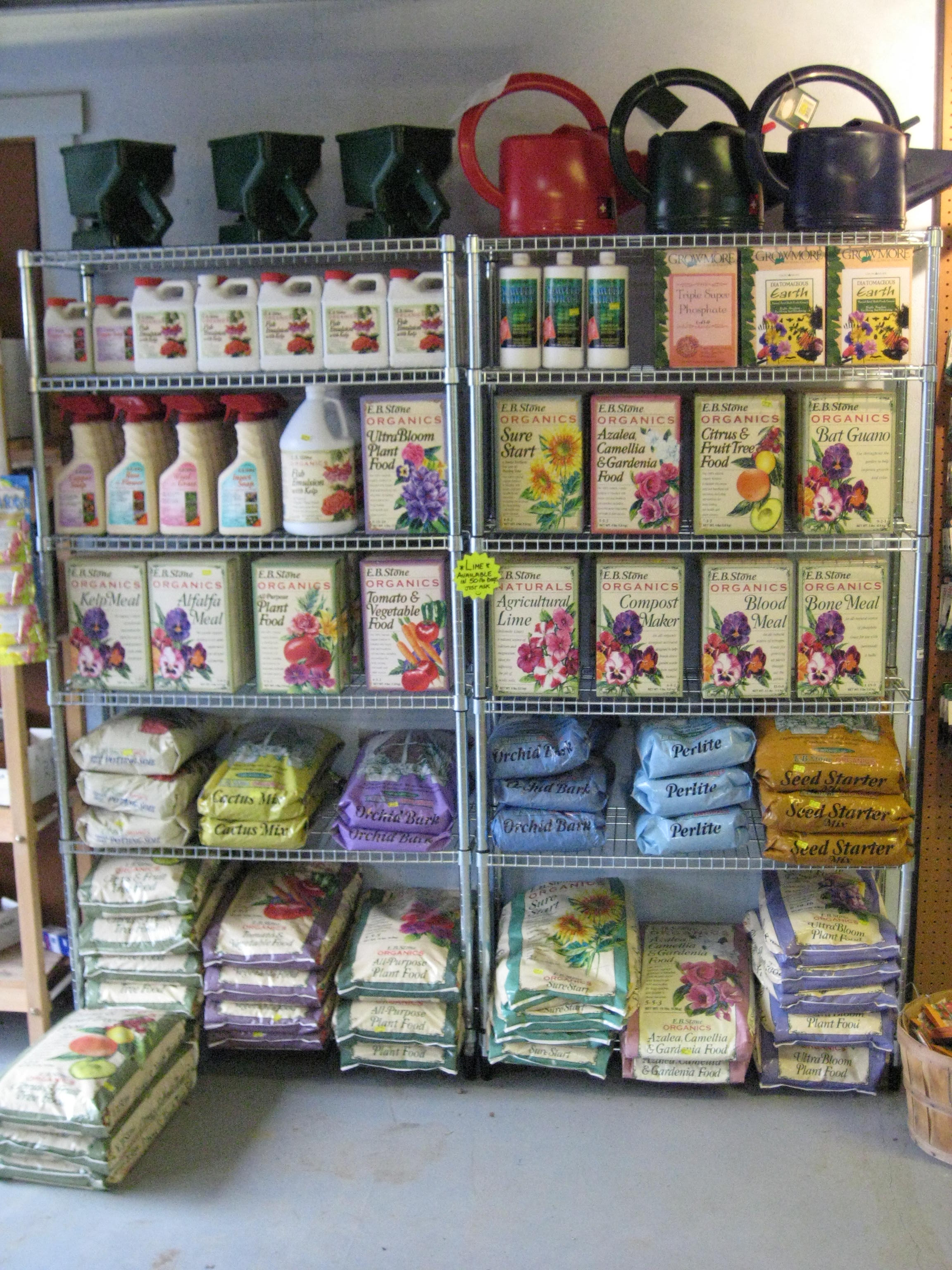
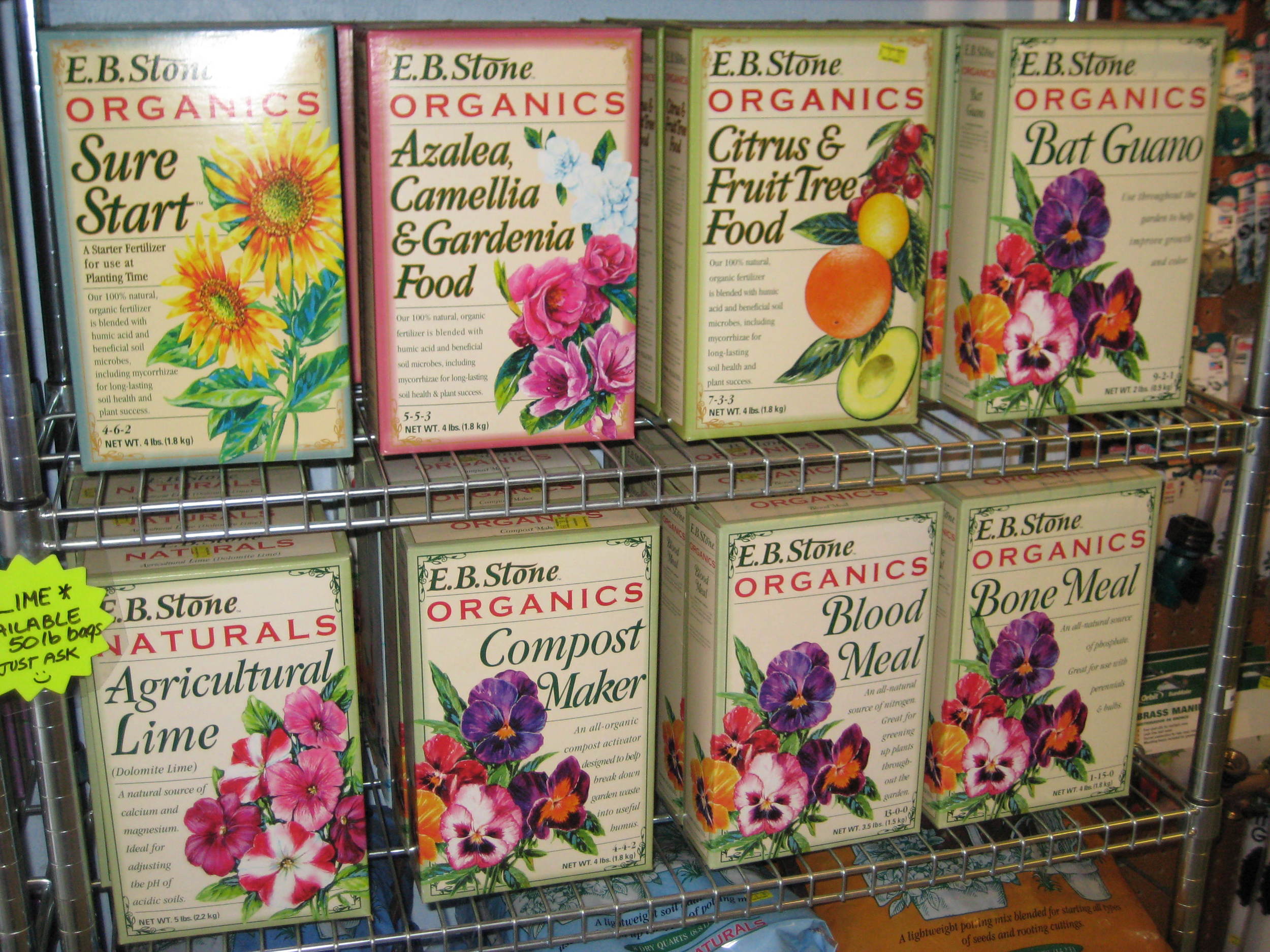
020208-014.JPGWhile we haven't gone completely organic, over 90% of our fertilizers are. My largest organic line is E.B. Stone Organics. All the fertilizer in the picture are organic. What I like about these fertilizers, besides being organic is the addition of Humic Acids and soil microbes including mycorrhizal fungi. We have been recommending mycorrhizal fungi be added to the soil for years. These fungi are part of the web of life in the soil that is often missing from soil that has been disturbed, (digging, tilling, grading).

Our best seller in the organic line is Sure Start. In the beginning we always recommend the addition of Sure Start at planting time with supplemental feedings of the All-Purpose. The E.B. Stone line also has specialty foods like Azalea-Camellia food or Tomato and Vegetable food which are also popular. The Tomato Vegetable food is great for those trying organic food growing. We like the Fish Emulsion too, since it also has Kelp Meal added which seems to make a difference.

You'll see that we do not carry any Miracle-Gro. We decided a while ago to stay away from the easily identifiable products sold by the chain stores. The other reason is Miracle-gro in our area seems to cause tomatoes to grow, but delay the blooming and fruiting. This is quite common as we have lots of customers who come in early summer complaining about the lack of fruiting. “Sure the plants grow great , but...” Nine time out of ten they are feeding with nitrogen rich Miracle-gro. We try and get them to use our organic Tomato and Vegetable food which usually solves that problem. I love it since it shows that we are different, with ideas that work. 020208-015.JPG

I would imagine that there are some customers who choose not to buy the organics based on price or lack of name recognition. After a couple of years of carrying the organics most now know what we offer and either jump on the organic bandwagon or still head to the box for what they know. I will say however that being known as the place to find organics is a great thing. If you have been thinking about switching some of your fertilizer lines to organic I don't think you will be sorry. Its hard at first when you get the confused look some people give when you tell them you don't have Miracle-gro. Nothing like seeing someone leave without purchasing, but it takes time to get the word out. Once the word is out those looking for that lifestyle choice will find you and others will learn why organic fertilizers are actually better than synthetics.

Do you want the empty pots back?

What to do with the excess plastic containers that are used to grow plants in has always been a dilemma. This has been addressed before, with one company in England taking the lead. After talking to our garbage/ recycle company Sierra Disposal I have been told that we can recycle our plastic nursery pots with them. We have a dumpster that in the past was just for cardboard. Recently it was changed to a recycle bin that can take card board, plastic, aluminum, etc. They have told us that we can place the pots in the container and they will recycle them.

This is great news. In the past we just couldn’t take back the pots people wanted to return. We would end up with a giant pile of pots we just couldn’t use quickly enough. Now we can offer to take back the empty cell packs, gallon, and larger pots from the customer once they have finished their planting. I would like to encourage that they only bring back the pots from plants they have bought from us, but we won't get upset if a Home Depot pot or two shows up.

I don’t know if Sierra Disposal realizes the amount of plastic cans a nursery can end up with. For now we will see if we can fit them in the hopper we have, but I could see having a dedicated container just for the pots. Will start with this and see what happens.

Do other waste collection companies offer this to nurseries? What do other nurseries do with the empty pots they can’t use in their operation?

"A gardener can have no better friend than an experienced nurseryman or woman."

These instructive words and more can be found in an article by Valerie Easton of The Seattle Times. Her article, “Word to Live By” talks about the importance of having a trustworthy nurseryman or woman available.

“There's nothing as instructive as pumping a knowledgeable nursery person for information”, continues the article. Yes! I love reading stuff like this on a cold, rainy Sunday.

Puppies, party, new home, decorate, wellness, organic, fresh, first holiday at home?

Here is an interesting piece on how to attract Generation X and Y to the garden center. It is written by Ian Baldwin, a well known nursery consultant. The piece I have linked to is written by a Generation X worker in the horticultural industry. Be sure to follow the links to read the original article by Ian.

One thing that stood out was Ian's recommendation to, "write an active blog with your name all over it. You want their 24hour blog scan to pick up on key phrases like 'party', 'puppies', 'new home', 'decorate', 'wellness', 'organic', 'fresh', 'first holiday at home', and so on." I don't know about trying to fill the blog with key phrases to attract search engines. It's easier to just write what's on you mind, and let the story speak for it self. Never the less its good to see the value of blogs being recognized by the industry.

Spreading the word

From the comments I received at the last post it would appear that we are all ready for the idea that vegetable and fruit growing will be on the rise. Genie mentioned that the resurgence in vegetable gardening may be partly because we “have the Food Network to thank for some of this. People are learning how to cook better, and therefore want better ingredients, and a lot of that is because they’re being exposed to cooking in a way they hadn’t ever before.” I think Genie is correct. I have always found the Food Network a source of interesting programming and have spent time watching Emeril, Bobby Flay, and the rest. I think however that the real action is on the Internet. Lets face it, we are a voyeuristic society and find it fun to see what our neighbors are up to. That's why I think its more fun to see what Genie or Melinda have cooked up. People want to be a part of a community, and its a lot easier to be a part of a food bloggers community than Bobby Flays.

I noticed that Melinda is involved in a “dark days of winter” food challenge. Here are the rules, “eat 90% local for every meal, an average of 50% from the garden. If we can’t get something local, we’ll purchase bulk and organic from a local supplier. Coffee, tea, spices and sugar will be organic, sustainable harvested and fair trade whenever possible. (There are some exceptions for traveling when we do.)" What I take away from this is her enthusiasm for the challenge. Its not a drag to do these things, but fun!It's a challenge and its fun to see if you can do it. Gardening and eating local can be fun? Who would have guessed.

Here is why I think this stuff will lead to a growth in vegetable and fruit gardening. We're talking about it! People are talking and sharing. Its so much easier to comment at a garden/food blog than at HGTV. Sure they accept e-mail but do you really think Emeril is going to write back? Community is built by a back and forth between community members. That back and forth is easily facilitated by blogging. This acts as a magnet for other people who feel the same way. Its starting to happen. Like Top Veg said "It is interesting to see how everything is coming together - to bring the increased interest in gardening. It is certainly happening in the UK." It's happening here, too.

Organic vegetable and fruit gardening will lead the way.

What with the concern over the younger generations seeming lack of interest in gardening this prediction would seem out of the blue, but I think vegetable and fruit gardening is going to become quite fashionable over the upcoming years. Vegetable gardening would seem the obvious area of interest in gardening for most people, including the younger generations. It's will just take the right series of circumstances for it to go viral. The interest in organic food would seem to indicate that organic is likely to go mainstream, if it hasn't already. The next step from buying organic would be growing organic. In the not so distant future it will be a source of pride to have a dinner party with organically grown food from the garden. What with the interest in eating local food, you can't get any more local than that. "Those delicious squash we're organically grown, BY ME!"

So you have two big trends that will work toward the resurgence of vegetable gardening, the organic movement and the "buy and eat local" movement. There is another movement, the "slow food movement", which advocates eating our meals slower and savoring the flavors of the food and enjoying the company of friends. Its more about the process than the end result, food in our stomachs. In addition to the slow food movement there is the whole eating healthier movement which means eating more fruit and vegetables. As people realize that home grown tastes better they will have more reason to grow their own since you can extract he greatest flavor from home grown.

There is also the self-sufficiency idea of vegetable gardening which is quite empowering once experienced. "I can grow my own food" is a big draw for many people who feel they have lost the ability to fend for themselves. It empowers. I am not talking survivalist thinking but more like someone that installs solar panels so they don't feel be-holden to the utilities. Its liberating.

From the interest in growing vegetables will flow an interest in gardening in general. Once people realize that they can change the world by growing their own food they will gain an interest in landscaping the yard. They will find that by planting this or growing that they can impact peoples emotions. It will become fashionable to have areas in the garden that are designed to affect how we feel and react. Meditation areas, inspiration areas, energy areas, calming areas, play areas, romantic areas, etc.


I feel we are on the verge of a whole new renaissance in growing our own food. Not just for survival, but for the aesthetic, social and physiological benefits that growing our own food organically brings. When it's all said and done, it will be the outstanding flavor and pride that comes with growing your own that will really get people on the bandwagon. Until you have tasted the difference between a home grown tomato and store bought one you wont understand.

When it doubt blame Generation X and Y

This is interesting yet not un-expected. Langeveld Bulb Co has filed for bankruptcy protection. Check out this quote, “many insiders are speculating that the closing is mostly the result of declining sales of bulbs, which are less popular with younger consumers, who want instant results in the garden.”

Yep, it’s those dang generation X and Y folks that are to blame. It appears that these two generational demographics are almost entirely responsible for the decline in our industry. It’s becoming fashionable for closing businesses to blame the younger generation. After all the older generations still support the garden industry, NOT!

I have noticed a decline in interest in bulbs for a number of years and it’s not just the younger generation. It’s also “Baby Boomers” who have other things to do with their time. It also explains the decline in bare root sales that I have been noticing over the years. Both bulbs and bare root are available in the winter when lots of folks just don’t get out in the garden anymore. Hey, if they want bulbs or fruit trees they figure we should have them in spring when they are doing their shopping.

I think the industry is so caught up in trying to appeal to Gen X and Y they are missing the big picture. Generation X and Y want to garden just as much or little as the other generations. They are the up and coming home owners who with a patch of ground want to see what they can grow on it. Most of the boomer generation is just as fickle with its gardening and would just as soon be skiing or traveling to warmer climates.

I think we need to quit trying to appeal to particular generations. Try instead appealing to people who are interested in gardening regardless of age. What with Urban Outfitters entering the gardening market we are all standing around just waiting to see the magic that they posses with these younger generations. It’s like we have to completely rethink gardening to appeal to these people. I like what the comments at the end of this post said. Don said this, “I read a lot of analysis about what “Gen X” and “Gen Y” wants, and I find a lot of it pretty patronizing.” I think a lot of generation X and Y think it’s a bit patronizing.

When all is said and done I think the decline in bulb sales is a result of all generations having a lot more that they can do with their time. It’s the big companies that have the most to loose since so much of their sales depend on a larger percentage of each generation buying their products. Let Home Depot, Hines Nurseries, and Scotts’ worry about this stuff. They pay people to worry. The smaller nursery can fine tune its message to gardeners of all ages. I only need 10% of each generation to find gardening interesting and jump in. Yes, it’s good to be small.

Ouch!

It would seem that nursery workers have a image problem when I read stuff like this. In an article on punning in the Kitsap Sun Newspaper in Washington state an article on punning has this, “Poor quality anvil pruners are called the nurseryman's best friend because they lead to so much plant death.” Ouch!

Now I realize that this is suppose to be funny since the idea is plant death leads to people having to replace the plants. That means more money for the nursery. So lets see, nursery folks are hoping you screw up because when you kill plants, you have to buy more.

This is how it works. I hope you buy some great quality Felco pruners so your pruning doesn't kill the tree. That way you will be successful in your gardening ventures and want to continue, which means more money for the nursery. If you fail your more likely to give up on the whole gardening thing.

I can't speak for all nursery people. Maybe some of us do think this way. But I can assure you the last thing I want is for you to fail at your punning. I want you to spend money on a great pair of shears and be successful.

Its funny how the we in the nursery business are thought of by some people. The author of the article just assumes that if the gardener fails they will run back to the nursery and spend more money. If that was the way it worked the industry wouldn't be wringing its hands worrying about the future. And I would be selling cheap punning shears.


Limited guarantees don't resonate with me.

If you think there is a disconnect between wholesale nurseries and retail this will just confirm that. Baileys Nurseries is offering a two-year guarantee for their new “Easy Elegance” Roses. According to their website “Easy Elegance Roses are so easy to grow that we guarantee your success. This limited guarantee covers all residential plantings for two full years from date of purchase and covers the following,• Guarantee applies to residential use only. • Limit of $60 or two roses per household. • Guarantee does not cover damage from animals or roses over-wintered in containers. • Roses can take some time to grow after a hard winter, so be patient. Guarantees are not accepted until after June 15th. Just send us you name, address, receipt, plant tag and a photo of the rose in question...”

Baileys seems to think that's what is keeping younger people from gardening more, a lack of guarantees. They found that Generation X, and Y find roses hard to grow. They equate roses with grandmas garden. Nothing about wanting a guarantee, just old fashioned, and hard to grow. So we are going to solve that by a guarantee. Let me see, I buy a rose and I am suppose to hold on to the receipt for two years, I can't plant it in a container and over water it(which I guess means container gardening must be hard), but I guess if I over water it in the ground thats O.K. Only two roses? Why? If your going to guarantee the roses shouldn't someone who has bought ten of them be entitled to the same guarantee?

This is where the disconnect between some wholesale nurseries and retail operations is growing. My customers do not want more guarantees, but the assurance that the plants they buy are in top condition and that we will be here if they need help. Why only guarantee the roses for two years? What about a lifetime guarantee? How about guaranteeing all the roses a home owner buys instead of just two. Why require the homeowner to deal direct from Bailey's. Shouldn't I be able to take the rose to the retail center where I purchased them and receive my refund or new roses? Do they guarantee the roses will live, or thrive? If they live, but don't thrive as I thought they should, do I still get a refund. Why not give the guarantee to the retail nursery that actually bought the roses from the wholesaler?

Small retail garden center business need to understand that this kind of marketing only benefits the chain stores where this type of mentality reigns. We in the small garden center market are trying to get people interested in gardening, with all the risks and personal responsibility that entails. Who said gardening, or anything worthwhile was risk free? Shouldn't we be encouraging people to make mistakes, learn from them, and jump back in?

Guarantees that have a list of requirements to follow before the guarantee can be enforced just don't resonate with me. Maybe with the market that Bailey's is targeting, but not with the customer I am working with. My customers get a lifetime one-conditional guarantee. The condition is they tell us how to prevent their dissatisfaction in the future. That's it. They also don't have to contact some grower to get the guarantee. They bought the plant from us, and they will deal with us. I'll deal with the wholesale grower.


Keeping it small

061.JPGI wanted to write about why I think small is cool when it comes to business, especially the nursery business. I have friends, a couple who are not in the nursery business but another retail type business. They recently bought out another business so they now have three outlets. When things were good they were great, but now with the softening economy as well as the sub-prime mortgage mess, which hit their business hard, they are having second thoughts. He told me the other day that he admires us and our small operation, and wishes they hadn't expanded so quick.

It started me thinking about how as a small operation we are able to better handle different types of issues that come up for our business. Right now with the softening of the economy and people not able to get money from their homes you can bet that business is holding its breath. Being a small operation if sales don't match up to our wishes we can cut back without doing to much harm. We don't have a lot of employees that will need to be laid off like Aquascapes. Monica and I do most of the work along with my daughter and one helper.

We can also make changes to our operation on a dime, whereas the bigger you become the harder it is to turn the ship in mid-course. My friends now have to decide weather to try and hang in there or close a store and lay off the employees. Just like Greg at Aquascapes said, laying off employees is one of the hardest things you will ever do. I don't know for sure, but I would guess some of Aquascapes problems stem from expanding the business a bit too fast.

I came across this post today over at the gaping void blog It's about a Savile Row tailor and how his business has grown while staying small. It expresses exactly how I feel that a small garden center should proceed. The tailor and we both offer the best quality, have a niche clientel, and are committed to making the customer experience one of a kind. I like this from the post, “We commonly refer to the people who buy our suits as 'customers', though as the relationships deepen with time, that word no longer seems to do the relationship justice. Words like 'allies' or 'partners in crime' seem somehow more appropriate."

There are plenty of examples of large business success. There is nothing wrong with growing and having multiple outlets. Its just not for me. I want to “grow” but not in a physical sense. Our two acres is plenty “large enough”. I was a part owner in a multi-unit operation and can tell you that while its exciting at first the headaches outweighed the benefits.

I want to have a nursery thats not known for its large physical size or the number of outlets but for its incredible “dollars per square foot” figures. The more you sell in a smaller space the higher your dollars made per square foot figure. This would be a sign of using the space to its greatest potential. When it comes to customers its not the volume of customers thats most important but the quality of customer, and the long- lived relationship that we will build with them.

As a small garden center owner I am proud to be small in physical size. I do however want to be HUGE when it comes to name recognition amongst my target audience. That's where the Internet can come in so handy for small business. Using the far reaching potential of this medium a small concern can get its message out, and build its brand into a international one without going back on its values. What an exciting time to be a small business. Small is cool!

Heronswood Voice

It would seem that we are starting to see more heads of larger concerns starting blogs. One notable example is Greg Wittstock owner of Aquascapes, the number one supplier of pond equipment. We talked about it here. Unfortunately Greg had to start, or started his blog because his company got into some financial problems. Doesn’t matter, because at least now he is out their trying to explain his reasoning for doing what he has done. Greg had to lay off some employees recently, and I bet there are times when Greg wishes he had turned off the comment function at his blog. Some of the ex-employees visit the blog and give Greg a piece of their mind. It makes for great reading for those of us interested in how business works.

Another new blog, at least for me, is also from the world of horticulture. Its Heronswood Voice, written by George Ball. I ended up there after George said some nice things about my blog. George Ball, if you didn’t know owns Burpee Seed as well as Heronswood, the much discussed nursery founded by plantsman Dan Hinkley and architect Robert Jones in 1987. There are passionate feeling about the subject and no mincing of words when it comes to some peoples feeling about Burpee and George. I never really got into the situation at Heronswood since until just a couple of years ago I hadn’t even heard of it. Yes its true, I had little knowledge of Dan Hinkley or Heronswood until the fuss over the sale. Most of my knowledge of the place was gathered at Garden Rant where there have been numerous discussions of the subject and the comments have been generally negative of George and Burpee.

Whatever you think of the Heronswood situation, it’s good to see George out there talking. After all, I have been harping about how important a blog is to a business, especially a large one where people often feel a disconnect with the ownership of the business. Scotts CEO Jim Hagedorn would be well advised to start one about now. I think the disconnect that a lot of people are feeling with Scotts could be discussed through a blog, but back to George and his blog. I wanted to leave a comment, but there is no comment feature. I like having the comment feature turned “on” because thats what starts a “conversation”. Of course I don’t run a multi-million dollar enterprise, despite what Stuart thinks. If I did it might just be too much to deal with all the comments. The solution is to allow trackbacks at the end of each post. One of the most popular bloggers around, Seth Godin, does not allow comments at his blog but does have the trackback feature. That way if you want to comment on something he has said you can, on your own blog, and it will show up as a trackback. This is another way to have a “conversation” without having to answer the comments, yet allowing people to have their say.

Welcome to the blogroll George. Come on over anytime, and feel free to participate.